
Ampullariidae (apple snails): biology, distribution, and human interactions
Ampullariidae, known as apple or mystery snails, are large freshwater snails with dual respiration, an operculum, and diverse roles as aquarium pets, food, and invasive species worldwide.
Ampullariidae, commonly called apple snails or mystery snails, are a family of relatively large freshwater gastropods found across tropical and subtropical regions. Members of this family are notable for their size compared with other freshwater snails, their distinctive reproductive habits, and their importance to people as aquarium animals, food in some cultures, and — in a few cases — invasive pests. For a general overview see further resources.
Image gallery
1 Image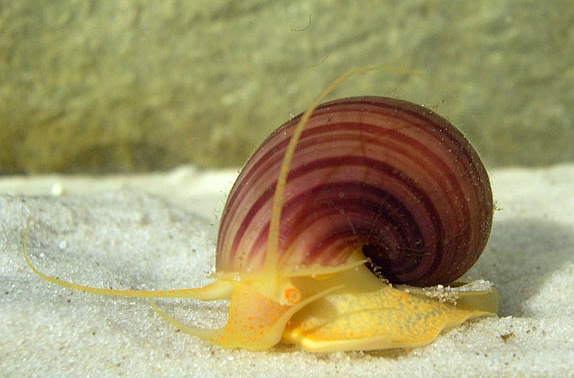
Key characteristics
Apple snails share a set of anatomical and behavioral traits that distinguish them from many other freshwater snails. Typical features include an operculum (a hard plate that closes the shell opening), a siphon used to breathe air while submerged, and the presence of both a gill and a pulmonary sac, which allow dual respiration. Most species are dioecious (separate males and females) rather than hermaphroditic.
- Shell: usually globose to rounded and often fairly large for freshwater snails.
- Respiration: gill plus lung; many can breathe air at the surface.
- Reproduction: eggs are commonly deposited in conspicuous clutches above the waterline.
- Diet: generally omnivorous—algae, plant material, detritus, and sometimes small invertebrates.
Distribution, genera, and habitats
Ampullariidae occur naturally in South and Central America, the Caribbean, parts of Africa, and Asia. Different genera are associated with different continents: Pomacea and Marisa are primarily Neotropical, while Pila and Lanistes are found in Africa and parts of Asia. They inhabit slow-moving or standing waters such as ponds, marshes, rice paddies, and rivers with abundant vegetation.
Life cycle and notable behaviors
Reproduction often involves females laying egg clutches above the water surface on emergent plants or hard substrates; these gelatinous or calcareous masses may be brightly colored (pink or orange) in some species. Eggs laid above the water reduce predation from aquatic predators but can make some species easy to detect. Juveniles hatch and drop into the water, where they grow to adulthood. Many species display rapid growth and high reproductive output under favorable conditions.
Human uses and ecological impact
Apple snails are popular in the aquarium trade for their size, varied shell colors, and ability to consume algae and detritus. Several species are also harvested for food in local markets. Conversely, a few Pomacea species have become serious agricultural pests after being introduced outside their native ranges; they can damage rice and other aquatic crops and alter wetland ecosystems. Management of invasive populations includes physical removal, habitat management, and public awareness.
Distinctions and conservation
Not all ampullariids are problematic: many remain important components of healthy freshwater ecosystems and are valued by hobbyists. Conservation concerns for some species relate to habitat loss, pollution, and competition with introduced congeners. Correct identification to genus and species is useful for ecological studies and for preventing accidental introductions that could have economic or environmental consequences.
Questions and answers
Q: What is Ampullariidae?
A: Ampullariidae is a family of large freshwater snails.
Q: Where are apple snails most commonly found?
A: Apple snails are most commonly found in Africa, South and Central America, West Indies, Southern USA, and Asia.
Q: Can apple snails be found all over the world?
A: Yes, apple snails can be found all over the world.
Q: Why are apple snails preferred as pet snails?
A: Apple snails are preferred as pet snails because of their appearance and size.
Q: What are some other names for apple snails?
A: Apple snails are also called golden mystery snails, golden snails, and mystery snails.
Q: Are apple snails well adapted to their region?
A: Yes, apple snails are well adapted to their region.
Q: Can apple snails be bought at most pet stores in the US?
A: Yes, apple snails can be bought at most pet stores in the US.
Tags
Related articles
Author
AlegsaOnline.com Ampullariidae (apple snails): biology, distribution, and human interactions Leandro Alegsa
URL: https://en.alegsaonline.com/art/3663
Sources
- hdl.handle.net : hdl.handle.net/10088/7390
- doi.org : doi:10.1007/s10750-007-9012-6
- doi.org : doi:10.1111/j.1095-8312.2009.01246.x
- applesnail.net : The Apple Snail (Ampullariidae) Website
- snail-world.com : snail-world.com/Snail-Anatomy/