
Free Trade Party (Australia): history, policies and legacy
Concise history of the Australian Free Trade Party (1889–1909): its origins, policy on tariffs, leaders, renaming as the Anti‑Socialist Party and merger into the Commonwealth Liberal Party.
Overview
The Free Trade Party was an Australian political grouping active from the late 1880s until 1909. Formally known in many sources as the Australian Free Trade and Liberal Association, it campaigned for low or no tariffs on imported goods and opposed trade restrictions that were seen as impediments to economic efficiency. Its advocacy of tariff reduction was a defining issue during colonial politics and the early federal period, and it influenced debates about the nation’s economic direction after federation.
Image gallery
5 Images


Origins and organisation
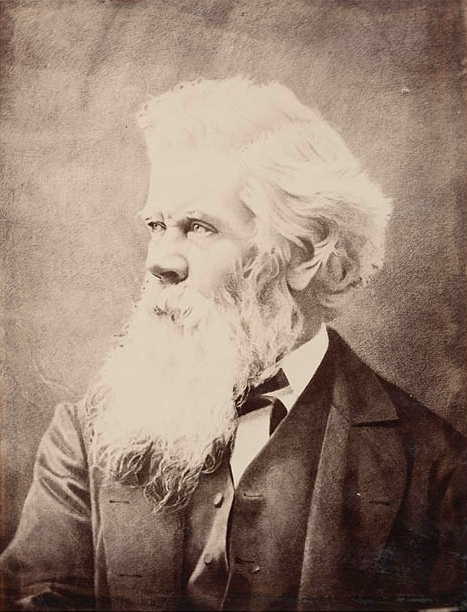
The movement emerged most strongly in New South Wales, where a commercial economy and urban constituencies favoured freer access to imported goods. Key colonial figures associated with free-trade ideas included Sir Henry Parkes and Sir George Reid; both played significant roles in New South Wales politics and in the transition to national government. The group was sometimes known by alternative names at state level, such as the Revenue Tariff Party in some jurisdictions, reflecting local differences over whether duties should be used mainly for protection or simply to raise revenue.
Policy and ideology
At its core the party argued that open markets and competition would lower prices for consumers, increase the efficiency of industry and encourage international commerce. While its public stance favoured the removal or reduction of tariffs, many members accepted modest duties where necessary to fund government services. The Free Trade position was therefore contrasted with the protectionist argument for using tariffs to shelter nascent local manufacturing and industry.
Support base and political context
Support for the Free Trade Party came largely from urban merchants, sections of the business community, and voters in New South Wales who saw free trade as consistent with economic growth. Its main political rivals were the Protectionist Party and an emergent labour movement represented by the Australian Labor Party. Federal politics after 1901 forced these groups into new alignments as parties sought to form governments in a three-way contest.
Leaders and parliamentary role
Following federation the Free Traders became the second-largest group in the House of Representatives at the first federal elections, winning a substantial number of seats and providing the first formal Leader of the Opposition. Sir George Reid led the party in federal politics and served briefly as Prime Minister in 1904–05. Other prominent figures associated with the party included William McMillan and Joseph Cook, who later succeeded to party leadership, and veteran colonial politicians such as Sir Henry Parkes whose earlier career shaped the party’s outlook. A small Tasmanian Revenue Tariff group also cooperated with the Free Traders in federal parliament after winning seats in 1903.
- Key individuals: Sir George Reid, Sir Henry Parkes, Joseph Cook, William McMillan.
- Related organisations: political parties and groups concerned with tariff and trade policy.
Renaming to Anti‑Socialist Party
As policy disputes moved beyond tariffs, party leaders searched for new defining themes. By the mid-1900s Sir George Reid and others emphasised opposition to socialist ideas and to policies promoted by the Australian Labor Party. In 1906 the Free Trade Party formally renamed itself the Anti‑Socialist Party to signal that shift in focus, seeking to position itself against state intervention associated with labour organisation and socialist policies.
Merger and later developments
Continuing electoral competition and realignment among non‑Labor political forces culminated in a merger in 1909. Under the leadership of Joseph Cook the Anti‑Socialist group joined with the Protectionist elements led by Alfred Deakin to form the Commonwealth Liberal Party. The new party aimed to consolidate the anti‑Labor vote and provide a united alternative to the Labor Party in federal politics.
Significance and legacy
The Free Trade Party played a formative role in early Australian federal politics by framing debates about tariffs, the role of government in the economy and the limits of state intervention. Its transition to an explicitly anti‑socialist posture and subsequent merger demonstrate how single-issue movements can broaden or shift priorities in response to changing political landscapes. The party’s history also illustrates regional variation in Australian politics, with New South Wales serving as its principal base and other states developing different local arrangements such as the Revenue Tariff groups in Tasmania.
Timeline and key events
- Late 1880s: formation and growth of free-trade organisations, especially in New South Wales (pre-federation politics).
- 1901: representation in the first Commonwealth Parliament and role as formal opposition (first federal elections).
- 1903: cooperation with a Tasmanian Revenue Tariff group following federal contests (Tasmanian politics).
- 1904–05: Sir George Reid serves briefly as Prime Minister (Prime Ministership).
- 1906: renaming to the Anti‑Socialist Party to emphasise opposition to Labour and socialist policies (anti-socialism, Australian Labor Party).
- 1909: merger into the Commonwealth Liberal Party to unite non‑Labor forces (Commonwealth Liberal Party, Alfred Deakin, Protectionist Party).
For readers seeking more detail on institutional context, electoral records and biographies of leading figures, consult reference entries on early Australian party politics, tariff debates and federation-era leadership: tariff policy, taxation, imports, exports, and the House of Representatives as a parliamentary chamber. Additional material on political organisation and party evolution can be found under general treatments of political parties and modern Australian political history (party organisation, Joseph Cook).
This summary is based on widely reported facts about late 19th- and early 20th-century Australian politics and aims to describe the party’s priorities, changes in name and organisation, key personalities and enduring influence without attempting to exhaust the detailed archival and secondary literature available on the subject.
Questions and answers
Q: What was the official name of the Free Trade Party?
A: The official name of the Free Trade Party was the Australian Free Trade and Liberal Association.
Q: What did the party want to do?
A: The Free Trade Party wanted to remove tariffs (taxes on imports and exports) as well as other restrictions on trade.
Q: Where was the party based?
A: The party was based in New South Wales, where its leaders were Sir Henry Parkes and Sir George Reid.
Q: How many seats did they win in the first Commonwealth Parliament elections?
A: In the first Commonwealth Parliament elections, the Free Traders won 25 seats.
Q: Who became leader of Opposition after these elections?
A: After these elections, Sir George Reid became leader of Opposition.
Q: What happened when William McMillan retired in 1903? A: When William McMillan retired in 1903, Joseph Cook became deputy leader of the party.
Q: What did Alfred Deakin's Protectionist Party oppose? A: Alfred Deakin's Protectionist Party opposed socialism.
Related articles
Author
AlegsaOnline.com Free Trade Party (Australia): history, policies and legacy Leandro Alegsa
URL: https://en.alegsaonline.com/art/36475
Sources
- adb.anu.edu.au : "Reid, Sir George Houstoun (1845–1918)"
- commons.wikimedia.org : Free Trade Party