
Frederick McCubbin: leading figure of the Heidelberg School
Frederick McCubbin (1855–1917) was an influential Australian painter of the Heidelberg School, noted for plein air depictions of the bush, narrative canvases, and his long service as a teacher at the National Gallery School.
Overview
Frederick McCubbin was an Australian artist whose work helped define a distinctly local approach to landscape and national identity in late 19th- and early 20th-century Australia. Born in Melbourne in 1855, he became known as an accomplished Australian painter and a practitioner of plein air methods associated with what is now called the Heidelberg School. His canvases combined careful observation of light and atmosphere with narrative, often subtle stories set in the landscape.
Image gallery
10 Images




Training and early career
McCubbin trained at the National Gallery of Victoria School, where he studied drawing and composition while supporting himself with part-time work. There he encountered peers and collaborators such as Tom Roberts, and absorbed lessons from older landscape traditions as well as newer plein air practices. He showed paintings at local exhibitions in the late 1870s and early 1880s and began to attract critical attention and sales, including awards and national prizes that helped establish his reputation.
Style and themes
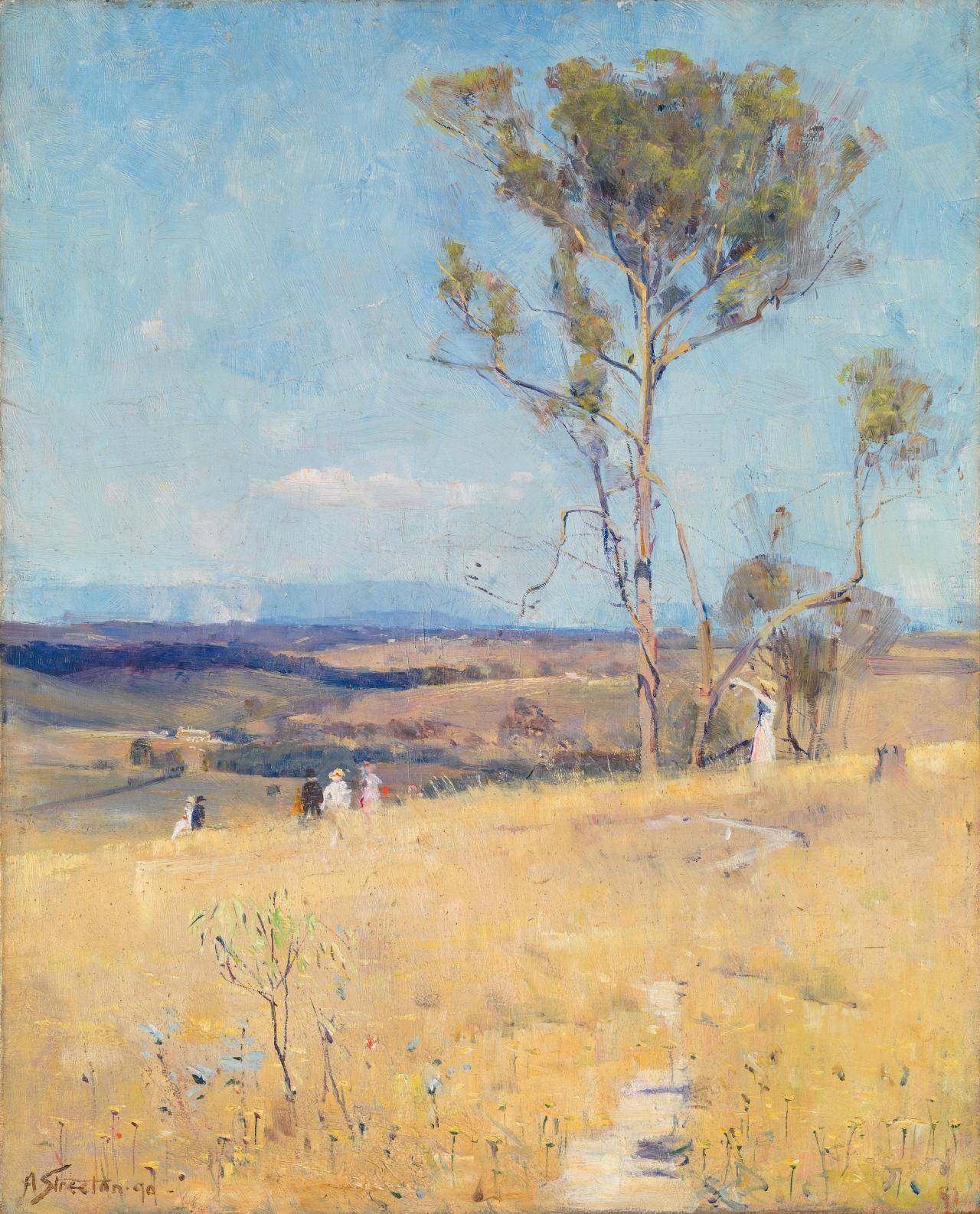
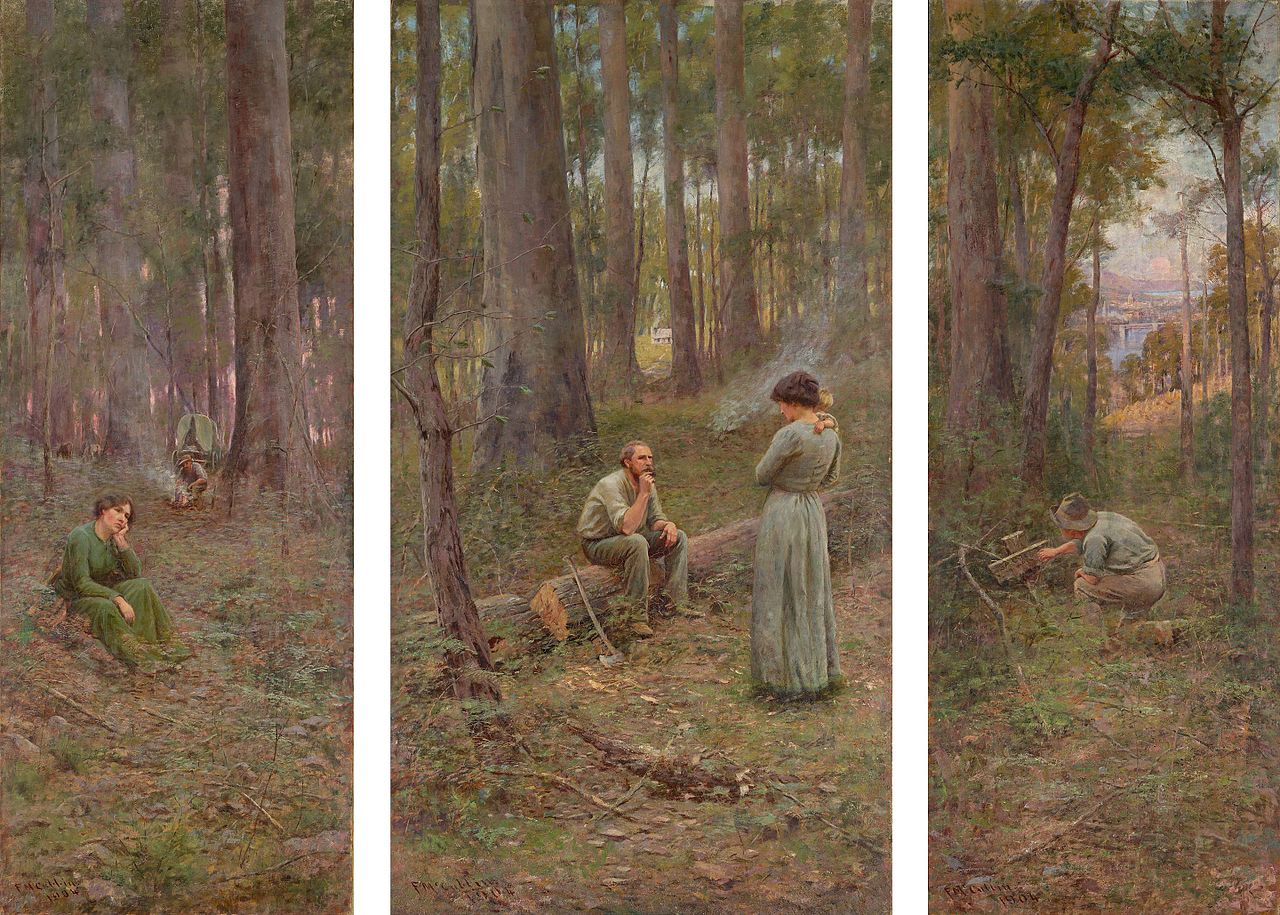
McCubbin is often described as a plein air painter whose work emphasized mood and storytelling. Rather than presenting the bush as untouched wilderness, he frequently portrayed people and traces of settlement within natural settings, creating narratives about settlers, solitude and the harshness of colonial life. His palette tended toward earthy tones and subtle shifts of light, and his brushwork balanced realism with an atmospheric softness. From the mid-1880s his attention increasingly focused on the Australian bush as subject and symbol.
Major works and examples
- Well-known narrative canvases that are often cited in studies of Australian art include examples that pair human figures with open landscape to suggest story and emotion.
- McCubbin produced smaller sketches and larger, formally composed paintings; some of his works were arranged as sequences or multi-panel pieces that explore themes of migration and settlement.
Teaching, later life and death
In 1888 McCubbin was appointed instructor and later master at the School of Design of the National Gallery, where he taught a generation of younger artists and influenced the development of Australian painting practice. He married Annie Moriarty in 1889 and raised a large family; in 1901 he moved with his family to Mount Macedon, continuing to work and exhibit into the early 20th century. As Europe entered World War I and public life changed, McCubbin's health declined and he died in 1917 of a heart attack.
Legacy and significance
McCubbin is remembered both for his role within the Heidelberg School and for paintings that helped Australians see their landscape as a site for modern art and storytelling. His teaching at the National Gallery School extended his influence beyond his own canvases, and major public galleries in Australia hold and exhibit his work. Collectors, historians and the general public continue to study his paintings as key documents of an important formative period in Australian visual culture.
Questions and answers
Q: When was Frederick McCubbin born?
A: Frederick McCubbin was born on 25 February 1855 in Melbourne, Australia.
Q: Where did he study art?
A: He studied art at the National Gallery of Victoria's School of Design and the Victorian Academy of the Arts.
Q: How did his work become famous?
A: His paintings won several prizes from the National Gallery, which helped to make his work famous by the early 1880s.
Q: What type of painting is he remembered for?
A: He is remembered for his paintings focused on the Australian bush.
Q: What job did he have at the National Gallery?
A: At the National Gallery, he became instructor and master of the School of Design.
Q: Who did McCubbin marry?
A: In March 1889, McCubbin married Annie Moriarty.
Q: When did he die? A:McCubbin died in 1917 from a heart attack.
Related articles
Author
AlegsaOnline.com Frederick McCubbin: leading figure of the Heidelberg School Leandro Alegsa
URL: https://en.alegsaonline.com/art/36427
Sources
- adb.online.anu.edu.au : "McCubbin, Frederick (Fred) (1855 - 1917)"
- worldcat.org : 59254986
- abc.net.au : Vale Charles McCubbin
- abc.net.au : Artist Charles McCubbin dies at 79