
Fraternities and Sororities
Voluntary social organizations found mainly on North American campuses. They use Greek-letter names, organize chapters and housing, and focus on social life, leadership, philanthropy—and sometimes face controversy.
Fraternities and sororities are voluntary social organizations commonly found on college and university campuses across the United States and elsewhere. They are a form of student society that groups members by shared membership, rituals, and often by common goals such as leadership development, community service, and social networking. On many campuses these groups are a prominent part of student life; they are one category among wider student organizations and are most visible on traditional residential campuses and college campuses.
Image gallery
10 Images

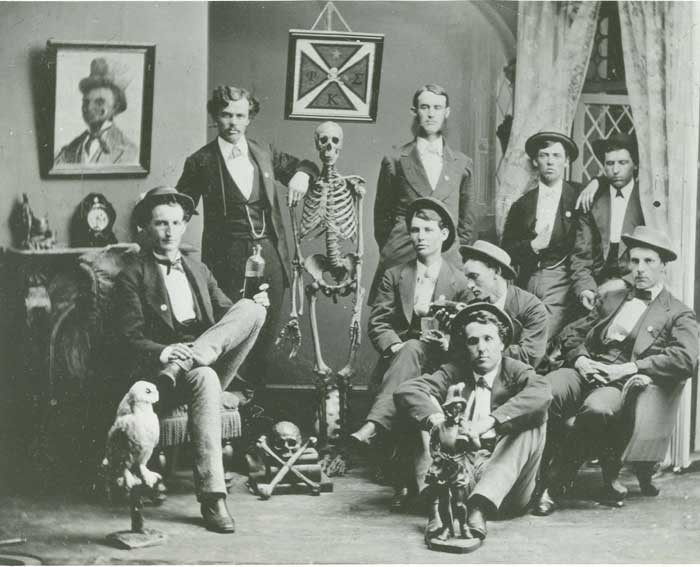


Structure, names and symbols
Most fraternities and sororities use combinations of two or three Greek letters as their public name. Organizations operate as national or international bodies with local branches called chapters, which may be identified by additional Greek-letter designations. Chapters can own or lease a chapter house where members live and socialize. Membership may be single-sex, coeducational, or affiliated with specific identities; historically, "fraternity" has meant men's groups and "sorority" women's groups, though many exceptions and variations exist.
Typical activities and organization
Common activities include recruitment (often called "rush" or intake), regular meetings, social events, philanthropic projects, and leadership training. Many groups emphasize community service and raise funds for charities; they also provide alumni networks that can aid career development. Within colleges, fraternities and sororities are often overseen by coordinating councils such as interfraternity or panhellenic councils that set standards and mediate disputes.
- Chapters: local units attached to a national organization.
- Housing: voluntary residential life in chapter houses on or near campus.
- Rituals and symbols: private ceremonies, pins, colors, and mottos.
- Philanthropy and service: regular charity events and volunteer work.
History and geographic presence
The modern fraternity and sorority movement traces its roots to collegiate societies formed in the late 18th and early 19th centuries. It expanded widely through the 19th and 20th centuries in North America and later to other regions. While most prominent in the United States and Canada, related forms exist in parts of Europe and elsewhere; some secondary schools operate smaller, locally governed groups as well (high schools sometimes have local fraternities or service clubs).
Importance, criticisms and reform
Supporters point to benefits such as social support, leadership opportunities, academic mentoring, and long-term alumni networks. Critics note issues including exclusivity, allegations of hazing, alcohol misuse, and instances of discrimination. In response, many institutions and governing councils have adopted anti-hazing policies, risk-management rules, and educational programs. Debate continues about the role these organizations should play in modern campus life and how best to balance tradition with student safety and inclusion.
For readers seeking more detailed policies and historical records, national councils and many campus offices maintain public resources and guides to local chapter activity and rules. For broad context on naming and insignia, see references to common uses of Greek letters; for regional prevalence and regulations consult campus administrative pages or coordinating associations at larger institutions.
Questions and answers
Q: What are fraternities and sororities?
A: They are social groups for college students, sometimes found in high schools, that exist mostly in the United States and Europe.
Q: What is the meaning of the Latin words frater and soror in relation to these groups?
A: Frater means "brother" and soror means "sister," which are used to show closeness between members and to denote whether the group is for men or women.
Q: Can women join fraternities?
A: Some fraternities are specifically for women, but most fraternities are only open to men.
Q: How are fraternities and sororities identified?
A: Each fraternity or sorority is given two or three Greek letters to call themselves, such as Alpha Phi or Alpha Chi Omega. Each chapter is then given another set of Greek letters to differentiate it from other chapters.
Q: Do fraternities and sororities have houses?
A: Some chapters have houses on or near the campus of the college where members can live.
Q: Are fraternities and sororities involved in community service?
A: Yes, many fraternities and sororities participate in community service.
Q: In which countries are fraternities and sororities most commonly found?
A: Fraternities and sororities are most commonly found in the United States and Europe.
Related articles
Author
AlegsaOnline.com Fraternities and Sororities Leandro Alegsa
URL: https://en.alegsaonline.com/art/36332
Sources
- stophazing.org : "State Anti-Hazing Laws"