
Frank Worrell: West Indies cricketer and respected captain
Sir Frank Worrell (1924–1967), Barbadian batsman and leader of the West Indies team; famed for elegant batting, inclusive captaincy, the Frank Worrell Trophy, and lasting Caribbean legacy.
Sir Frank Mortimer Maglinne Worrell (1 August 1924 – 13 March 1967) was a Barbadian cricketer and later a public servant whose playing style, leadership and conduct left a lasting mark on West Indies cricket and Caribbean life. Commonly known by the nickname Tae, Worrell combined graceful right-handed batting with useful left-arm seam bowling and was widely admired for his temperament, sportsmanship and ability to unify a diverse team.
Image gallery
1 Image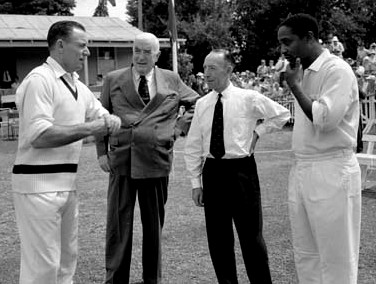
Early life and background
Worrell was born in Bank Hall, in the parish of St Michael, on the island of Barbados. He emerged from a cricketing culture that produced many fine West Indian players and developed a reputation early on for timing and elegant strokeplay rather than sheer power. His cricketing progress brought him recognition at regional level and eventually selection for the West Indies Test side.
Playing career and style
As a batsman Worrell was known for a fluent, orthodox technique and an ability to build long innings. He favoured placement and timing and was effective against varied bowling attacks. Although primarily a batsman, he could contribute with left-arm seam when conditions suited. Among notable facts often quoted in accounts of his career is that he is the only batsman to have featured in two 500-run partnerships in first-class cricket, a testimony to both his endurance and his capacity to play long, cooperative innings.
Captaincy and the 1960–61 Australia series
Worrell's appointment as captain of the West Indies in the late 1950s and early 1960s is widely regarded as a turning point in the team's history. He was the first black man to hold the post on a full-time basis and his leadership is credited with fostering team unity across social and regional lines. The 1960–61 series against Australia, played with great intensity and high standards, included the historic tied Test and is commemorated by the creation of the Frank Worrell Trophy. That trophy is now awarded to the winner of Test series between Australia and the West Indies and symbolises the spirit of that contest; see general accounts in related cricket histories for broader context.
Public life, honours and writing
Off the field, Worrell took on public roles and served his community; he also served as a senator in Jamaica. He was knighted for his services to cricket and public life, a recognition of both his sporting achievements and his wider contribution to Caribbean society. Contemporary journalism and biography recorded his career: among these, Caribbean journalist Ernest Eytle wrote a study titled Frank Worrell: The Career of a Great Cricketer, which appeared while Worrell was still living and provides a contemporaneous account of his playing days.
Legacy and memorials
Worrell died suddenly in Kingston, Jamaica, on 13 March 1967. His death was widely mourned across the Caribbean and beyond. His name and example have been kept in public memory by a variety of honours and memorials: one of the halls of residence at the University of the West Indies, Cave Hill Campus, bears his name; the Frank Worrell Trophy continues to be contested in Test cricket between Australia and the West Indies; and he was commemorated on Barbadian postage in 1988. Worrell is often remembered less for statistical records than for the manner in which he led and played: combining technical skill, dignity and an inclusive approach that helped shape modern West Indian cricket.
Further reading and context
- Biographical and cricket histories provide fuller accounts of his career and the social significance of his captaincy; see the contemporary account by Ernest Eytle and broader historical surveys at related cricket histories.
- For geographic and cultural background, entries on St Michael, Barbados and Kingston offer regional context to his life and career.
Frank Worrell remains a central figure in West Indian cricketing memory: a gifted batsman, an influential captain and a symbol of sporting dignity whose impact extended into public service and Caribbean identity.
Questions and answers
Q: Who was Frank Worrell?
A: Frank Worrell was a West Indies cricketer and Jamaican senator.
Q: What was Frank Worrell's nickname?
A: Frank Worrell's nickname was Tae.
Q: What was Frank Worrell known for in the 1950s?
A: Frank Worrell became famous in the 1950s as the first black captain of the West Indies cricket team.
Q: What is the Frank Worrell Trophy?
A: Since the 1960-61 series, the Frank Worrell Trophy is awarded to the winner of the Test series between Australia and West Indies.
Q: Where can we find a Halls of Residence named after Frank Worrell?
A: One of the two Halls of Residence at the University of the West Indies, Cave Hill Campus in Barbados is named after Frank Worrell.
Q: Has there been a biography written about Frank Worrell?
A: Yes, Caribbean journalist Ernest Eytle wrote a biography of Worrell titled Frank Worrell: The Career of a Great Cricketer in 1963.
Q: Has Frank Worrell ever been featured on a stamp?
A: Yes, Frank Worrell was celebrated on the $2 Barbadian stamp along with the Barbados Cricket Buckle in June 1988.
Related articles
Author
AlegsaOnline.com Frank Worrell: West Indies cricketer and respected captain Leandro Alegsa
URL: https://en.alegsaonline.com/art/36204
Sources
- news.bbc.co.uk : news.bbc.co.uk/sport1/hi/sports_talk/stump_bearders/4816384.stm
- news.google.com : Report announcing the Frank Worrell Trophy, Glasgow Herald, 10 February 1961