
François Pierre de La Varenne — founder of modern French cuisine
17th‑century Burgundian chef and author of Le Cuisinier françois (1651). He codified techniques and sauces (roux, béchamel, bisque), promoted fresh flavors, and shaped professional French cookery.
François Pierre de La Varenne (1615–1678) was a Burgundian cook whose books established the conventions of classical French cuisine for the era of Louis XIV. Trained and employed in noble households, La Varenne wrote directly for kitchen professionals and offered practical, structured recipes that moved French cookery away from heavily spiced medieval practice toward an emphasis on natural ingredients and clarified technique. He was born in Burgundy and died in Dijon, and his writing helped to define a national style that became closely associated with the courtly and provincial kitchens of seventeenth‑century France under Louis XIV.
Image gallery
1 Image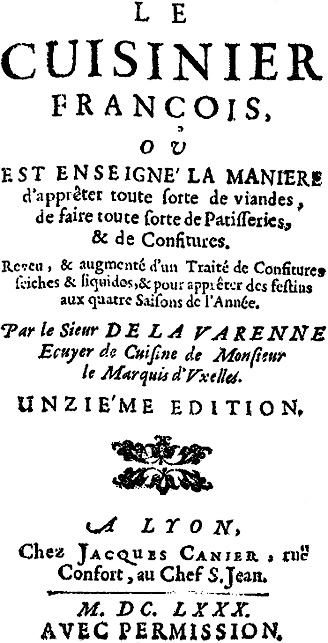
Historical context and culinary shift
During the transition from medieval to early modern cooking, European palates and kitchens underwent significant change. The richly spiced sauces and heavy masking of ingredients that characterised much of the Middle Ages gave way to preparations that sought to preserve the flavour, texture and appearance of each ingredient. Exotic seasonings such as spices including saffron, cinnamon, cumin, ginger, nutmeg, cardamom and nigella were increasingly used sparingly, with pepper remaining one of the few ubiquitous exotic seasonings (pepper). Local herbs—parsley, thyme, bay, chervil, tarragon—and a growing variety of vegetables were brought forward in recipes. New or newly popular vegetables such as cauliflower, asparagus, peas, cucumber and artichoke were treated with care so that freshness and texture remained central. Meats (meat), vegetables (vegetables) and fish (fish) were to be handled so their intrinsic qualities were not obscured by excessive seasoning or overlong cooking.
Key innovations and techniques
La Varenne introduced several practical techniques and preparations that became staples of French cooking. He popularised the use of a roux—a mixture of fat and flour—as the foundation for sauces, replacing crumbled bread and other thickeners. He advocated butter over lard in many applications, refined stock preparation (fonds de cuisine), reductions, and the practice of clarifying broths with egg whites. Among the sauces and preparations associated with his work are an early form of béchamel, a boldly flavoured hollandaise‑like asparagus sauce, and the first printed bisque. He documented fine chopping and seasoning techniques for mushroom mixtures now known as duxelles, traditionally accented with shallots.
Major works and publication history
La Varenne's principal publications appeared in the early 1650s and were aimed at professional cooks rather than domestic amateurs. His cookbook Le Cuisinier françois (1651) is considered the founding text of modern French cuisine; it was preceded by a volume on preserves and confections (confitures, 1650) and followed by Le Pâtissier françois (1653), a systematic work on pastry. The three works were later issued in combined editions (the first combined edition appeared in 1662) and reprinted repeatedly; contemporary demand and frequent use in kitchens meant that many copies were worn out. The popularity of Le Cuisinier françois crossed linguistic borders: it was translated into English as The French Cook (1653), became widely pirated in the Low Countries, and influenced other European culinary manuals.
Practical influence and culinary vocabulary
Beyond recipes, La Varenne helped standardise culinary vocabulary and method—terms such as bouquet garni, fonds de cuisine and various cooking descriptors entered professional use through his pages. He recorded early versions of layered pastries (mille‑feuille) and wrote one of the first clear discussions of vegetable cookery and sauce construction in print. His dedication of works to patrons and his experience as chef de cuisine to the Marquis d'Uxelles also produced lasting associations: the fine minced mushroom preparation duxelles is often linked in culinary histories to this circle of cooks and patrons.
Legacy and notable facts
La Varenne's books mark a shift toward clarity, method and respect for primary ingredients that would shape French cookery for centuries. His recipes and techniques formed part of the toolkit used by later chefs and eventually influenced systematic culinary writing and teaching. While editions of his original printings are rare in museum collections because they were heavily used, modern reprints and translations have kept his contributions available to scholars and cooks.
Related names, terms and places
- Burgundy
- Dijon
- Louis XIV
- Middle Ages
- Exotic spices
- Saffron
- Cinnamon
- Cumin
- Ginger
- Nutmeg
- Cardamom
- Nigella
- Pepper
- Parsley
- Thyme
- Chervil
- Tarragon
- Cauliflower
- Asparagus
- Cucumber
- Artichoke
- Meat
- Vegetables
- Fish
- Béchamel sauce
- Roux
- Lard
- Butter
- Hollandaise (early form)
- Salads
- Pastry
- Mushrooms / Duxelles
- Shallots
For readers seeking primary texts, modern editions and historical studies reprint or analyse La Varenne's works and place them in the broader development of European culinary practice. His practical, methodical approach remains a touchstone for anyone studying the origins of classical French technique.
Questions and answers
Q: Who wrote Le Cuisinier français?
A: François Pierre de la Varenne wrote Le Cuisinier français in 1651.
Q: What was the purpose of La Varenne's book?
A: La Varenne wrote his book for professional chefs and to codify French cuisine for the age of Louis XIV.
Q: What were some of the new ingredients introduced by La Varenne?
A: La Varenne introduced new vegetables such as cauliflower, asparagus, peas, cucumber and artichoke. He also replaced exotic spices with local herbs like parsley, thyme, bayleaf, chervil, sage and tarragon.
Q: How did La Varenne revolutionize French cooking?
A: La Varenne broke with Italian traditions that had revolutionized mediaeval French cookery in the 16th century. He gave special care to the cooking of meat in order to conserve maximum flavour and he focused on preparing food that respected its natural flavours instead of masking them with spices. He also introduced bisque and Béchamel sauce as well as roux for sauces instead of crumbled bread and butter instead of lard.
Q: What other works did La Varenne write?
A: In addition to Le Cuisinier françois, La Varenne wrote a book on confitures (jams, jellies and preserves) as well as a comprehensive work on pastry-making called Le Pâtissier françois which was published in Paris in 1653.
Q: When was an English translation of Le Cuisinier français released?
A: The English translation titled The French Cook was released in London in 1653. It became very popular; over 250 editions were printed until 1815.
Q: How many editions were there of Le Cuisinier français during its lifetime? A:Le Cuisinier français ran through some thirty editions over seventy-five years
Related articles
Author
AlegsaOnline.com François Pierre de La Varenne — founder of modern French cuisine Leandro Alegsa
URL: https://en.alegsaonline.com/art/36122