
Four temperaments (classical personality theory)
A historical classification that divides personalities into sanguine, choleric, melancholic and phlegmatic types, originating in ancient medical theory and later used in literature and folk psychology.
Overview
The four temperaments are a traditional framework for describing human personality and typical patterns of emotion and action. Rooted in pre-modern medicine, the idea proposes broad behavioral tendencies tied to bodily balances. It has been influential in literature, education and popular descriptions of character, and is sometimes discussed in modern psychology overviews as an early attempt to systematize individual differences.
Image gallery
4 Images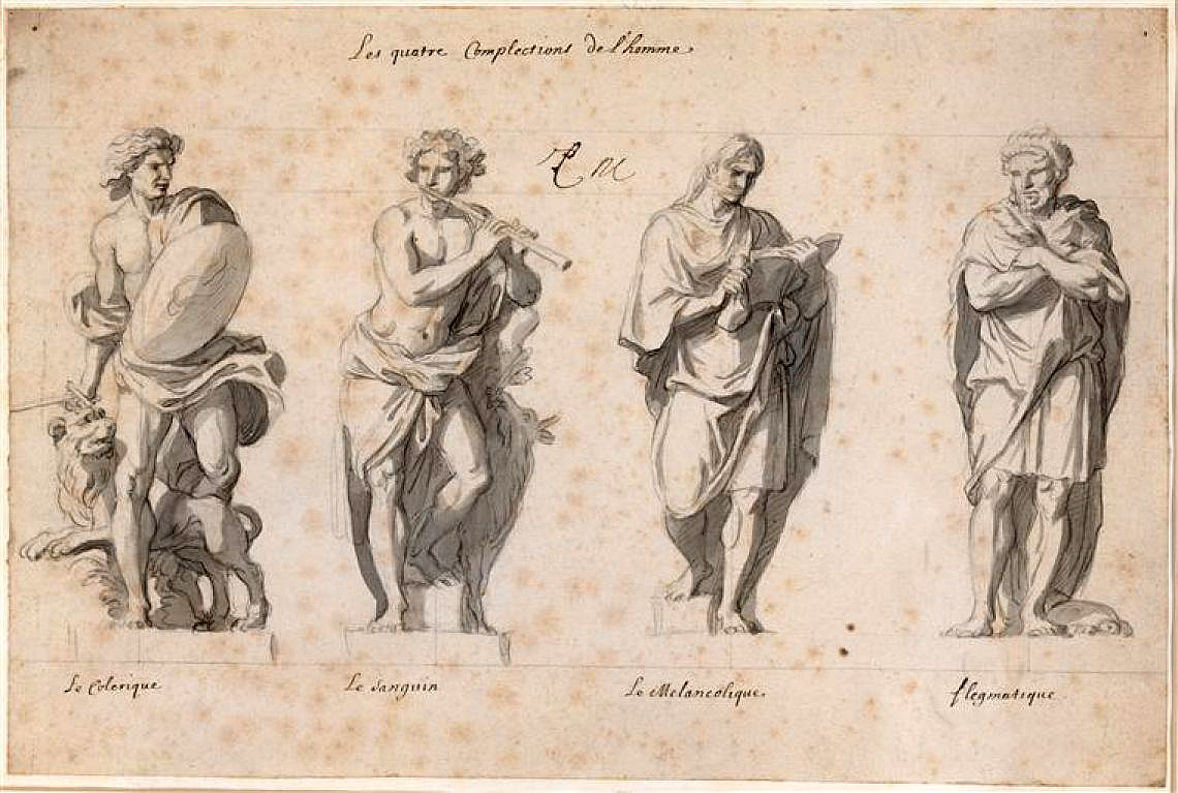


Historical background
Originating with ancient Greek physicians, the system was elaborated by figures associated with Hippocratic medicine and later by Galen. Practitioners associated each temperament with one of four bodily fluids or "humours" and believed that excess or deficiency shaped mood and disposition. The model persisted through medieval and Renaissance medicine and into early modern cultural thought, where it informed explanations of health, temperament and social role.
The four temperaments
- Sanguine — generally described as sociable, optimistic and lively. Sanguine people are often portrayed as warm, talkative and enthusiastic, though occasionally inconsistent or impulsive.
- Choleric — seen as goal-oriented, assertive and energetic. Strengths include leadership and decisiveness; weaknesses may include impatience or aggression.
- Melancholic — associated with thoughtfulness, seriousness and sensitivity. Melancholic temperaments can be introspective, careful and artistic, but prone to worry or pessimism.
- Phlegmatic — characterized by calmness, steadiness and reliability. Phlegmatic people are often composed and cooperative, though they may be perceived as reserved or slow to change.
Uses and modern reception
Historically the temperaments guided medical treatment, lifestyle advice and character analysis. Later they influenced drama and character types in literature and visual arts. In contemporary contexts the four temperaments survive in popular personality quizzes, pedagogical discussions and some counselling frameworks, though they are treated as heuristic rather than diagnostic. Connections are sometimes drawn, cautiously, between these types and dimensions in modern trait models of personality research.
Limitations and notable distinctions
Modern science does not support the humoral explanation that physical fluids determine disposition, and empirical psychology favors multivariate trait models. Critics point out that the fourfold scheme is overly coarse and culturally specific, yet proponents value its simplicity for teaching basic differences. The temperaments remain a notable historical bridge between medicine, bodily humors theory and cultural descriptions of human behaviour.
Questions and answers
Q: What is the theory of psychology known as the Four Temperaments?
A: The Four Temperaments is a theory of psychology about personality traits and behavior.
Q: How many temperaments are there in the theory of Four Temperaments?
A: According to the theory of Four Temperaments, there are four temperaments that affect human personality traits and behavior.
Q: What are the four temperaments in the theory of Four Temperaments?
A: The four temperaments in the theory of Four Temperaments are sanguine, choleric, melancholy, and phlegmatic.
Q: Can bodily fluids affect human personality traits and behavior?
A: According to the theory of Four Temperaments, bodily fluids can affect human personality traits and behavior.
Q: How does the theory of Four Temperaments explain human personality?
A: The theory of Four Temperaments suggests that bodily fluids affect human personality traits and behavior, with each temperament representing a different combination of bodily fluids.
Q: What is the significance of the four temperaments in psychology?
A: The four temperaments in the theory of Four Temperaments are significant in psychology as they provide a framework for understanding and categorizing human personality traits and behavior.
Q: What are some examples of traits associated with the four temperaments?
A: Some examples of traits associated with the four temperaments in the theory of Four Temperaments are sanguine (optimistic, outgoing), choleric (ambitious, passionate), melancholy (thoughtful, introverted), and phlegmatic (calm, easy-going).
Related articles
Author
AlegsaOnline.com Four temperaments (classical personality theory) Leandro Alegsa
URL: https://en.alegsaonline.com/art/35900