
Four Sons of Horus
Ancient Egyptian funerary deities who protected the internal organs of the dead, guarded the cardinal points, and were depicted as human or animal-headed figures associated with canopic jars.
Overview
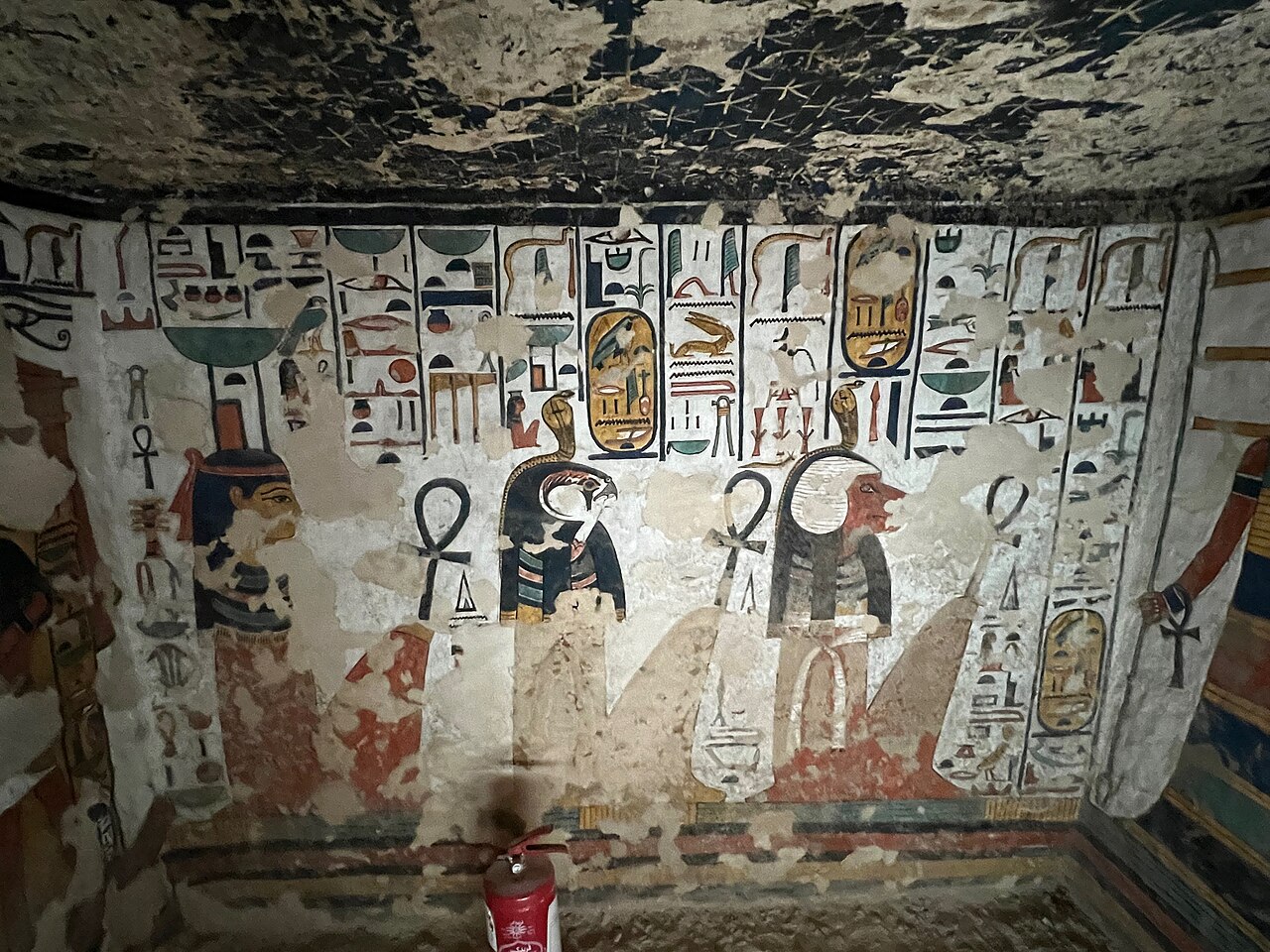
The Four Sons of Horus are a group of protective deities in ancient Egyptian religion closely associated with mummification and the afterlife. They appear in funerary texts, tomb art and on coffins as guardians who watch over the internal organs of the deceased and stand as protectors at the corners of burial equipment. Although described as "sons of Horus," their exact parentage and mythic biographies vary in sources; their consistent role across periods is protective and preservative.
Image gallery
8 Images



Names and roles
Each son is identified by a distinctive head and by a traditional responsibility for one or more viscera removed during embalming. The commonly cited correspondences are:
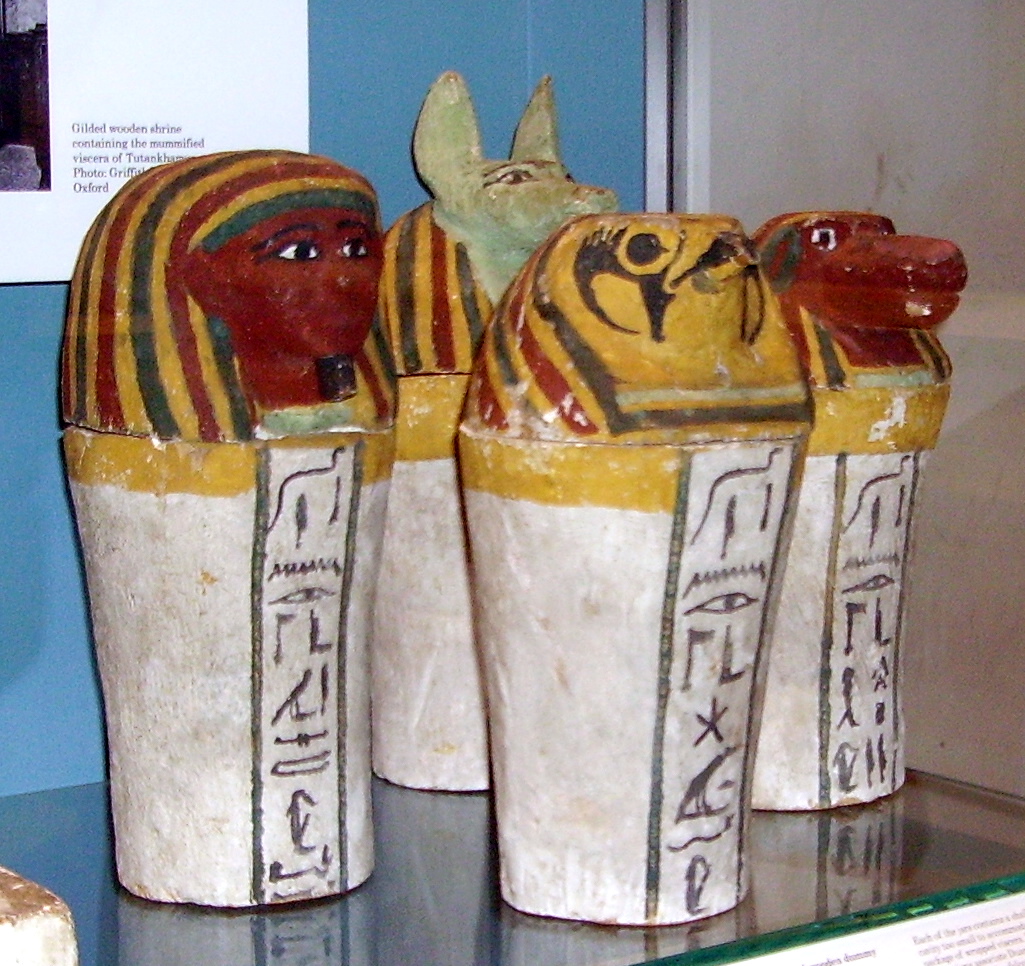
- Imsety (human head) — guardian of the liver; frequently paired with the goddess Isis.
- Duamutef (jackal head) — guardian of the stomach; often under the protection of Neith.
- Hapi or Hapy (baboon head) — guardian of the lungs; associated with Nephthys. This Hapi should not be confused with the Nile god of the same name.
- Qebehsenuef (falcon head) — guardian of the intestines; commonly linked with the scorpion goddess Serqet or other protective goddesses.
Historical development and religious context
The idea of protecting a deceased person’s organs is ancient and developed alongside evolving embalming methods. References to these figures appear in Middle Kingdom coffin texts and become more standardized in New Kingdom funerary literature and in the Book of the Dead. The Sons of Horus are invoked in spells promising bodily integrity, safe passage through the afterlife, and eventual resurrection.
Iconography and funerary practice
Material culture shows the Four Sons depicted in several ways: as four separate standing figures, as a composite four-headed image, and most recognizably as the lids of canopic jars that once held the removed organs. Early on the jars actually contained the viscera; in later periods, after changes in practice, the jars or their images often served a symbolic role while the organs might be returned to the wrapped body. The four figures are typically placed at the cardinal points around a coffin or inside a canopic chest to create a guarded ritual space.
Associated deities and ritual function
Each son is paired in ritual contexts with a protective goddess, forming a network of divine guardianship around the deceased. The pairing reflects how Egyptian ritual combined complementary male and female forces to secure protection. In tomb scenes and on coffins the Sons of Horus may be accompanied by amulets, inscriptions and invocations that stress their role in maintaining bodily wholeness.
Archaeology and legacy
Canopic jars, coffin paintings and small statuettes of the Sons of Horus survive in museum collections and excavated tombs, making them among the most recognizable symbols of Egyptian funerary religion. Variations in spelling and depiction occur across time and region, but their symbolic function as guardians of life after death persisted and continues to be studied in the contexts of art history, archaeology and the history of religion.
Questions and answers
Q: Who are the Four Sons of Horus?
A: The Four Sons of Horus are a group of gods who protect the dead soul.
Q: What do the Four Sons of Horus look like?
A: The Four Sons of Horus appear as canopic jars, with each having a different head. Imsety has a human head, Duamutef has a jackal head, Hapi has a baboon head, and Qebehsenuef has a falcon head.
Q: What is the role of Imsety?
A: Imsety is one of the Four Sons of Horus and he appears with a human head. His role is to protect the liver of the deceased.
Q: What is the role of Duamutef?
A: The role of Duamutef is to protect the stomach of the deceased. He is one of the Four Sons of Horus and appears with a jackal head.
Q: What is the role of Hapi?
A: Hapi is one of the Four Sons of Horus and appears with a baboon head. His role is to protect the lungs of the deceased.
Q: What is the role of Qebehsenuef?
A: Qebehsenuef is one of the Four Sons of Horus and appears with a falcon head. His role is to protect the intestines of the deceased.
Q: How are the Four Sons of Horus used?
A: The Four Sons of Horus are used as canopic jars to store the four organs they protect. These jars were placed in the tomb with the mummified body of the deceased.
Related articles
Author
AlegsaOnline.com Four Sons of Horus Leandro Alegsa
URL: https://en.alegsaonline.com/art/35897