
Fort-Liberté — coastal city and departmental capital in northeastern Haiti
Fort-Liberté is a coastal city in northeastern Haiti, capital of the Nord-Est department, noted for its sheltered bay, colonial fortifications, fishing economy and role as the seat of a local arrondissement.
Overview
Fort-Liberté is a coastal city in northeastern Haiti. Its Creole name is rendered as Fòlibète and its English translation is often given as "Fort Liberty". The town stands on the sheltered Baie de Fort-Liberté, facing the Atlantic across a narrow coastal inlet and forming part of Haiti's northern coast.
Image gallery
3 Images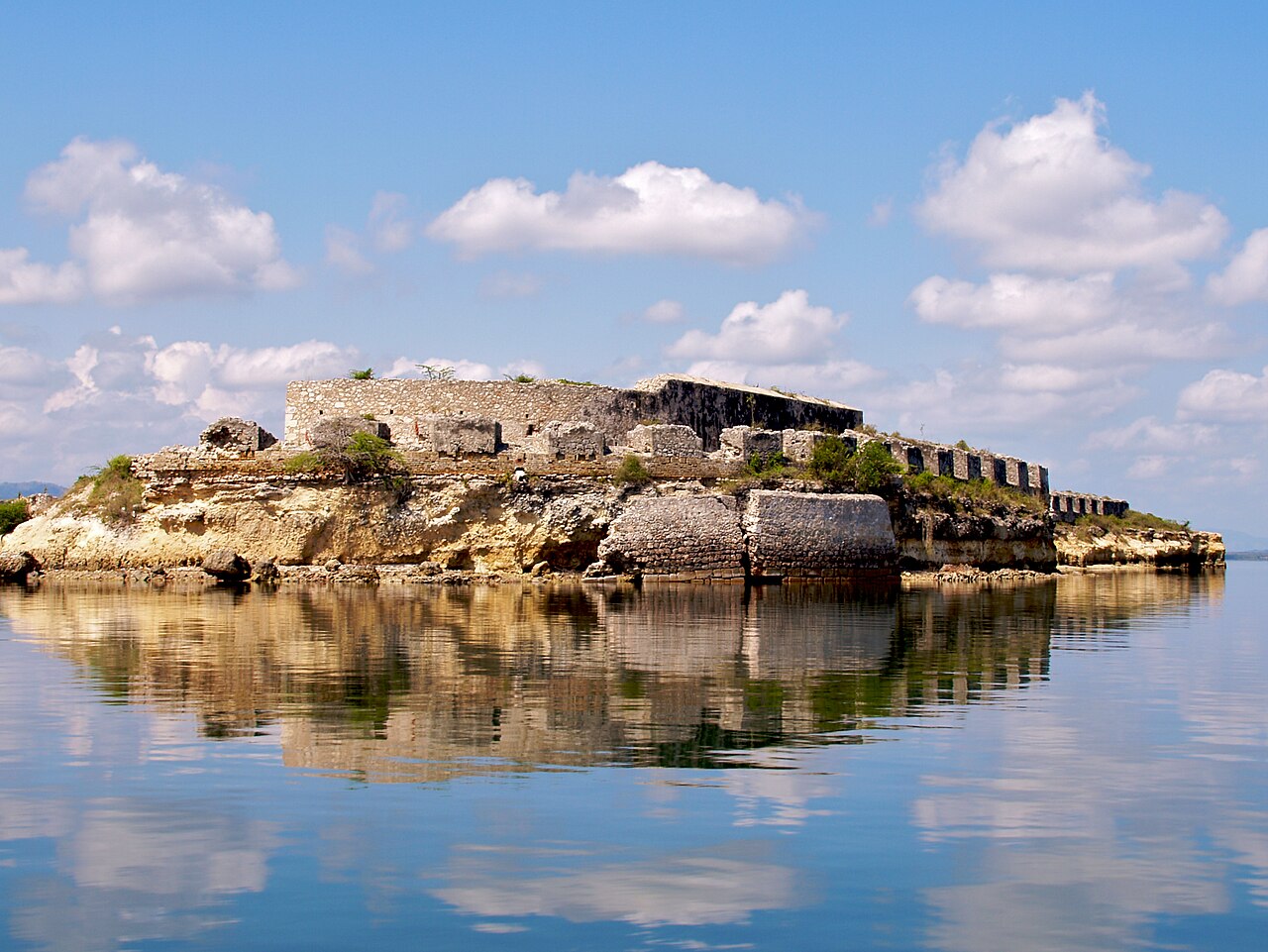


Geography and administration
Fort-Liberté serves as the capital of the Nord-Est Département. It lies to the east of larger regional centers and is roughly equidistant by road from the provincial hubs to the west; the city is also relatively close to the border with the neighboring Dominican Republic. Administratively, it is the chief town of an arrondissement that contains three communes: Fort-Liberté itself, Ferrier, and Perches.
History and fortifications
The town grew around a colonial-era fortress and a string of defensive works that overlook the bay. Those fortifications were erected during the period of European competition for Caribbean ports and later acquired local importance during the era of Haitian independence. Today the forts and bastions remain among the most visible reminders of the town's strategic past and attract interest from visitors and scholars interested in Caribbean military architecture.
Economy, culture and daily life
The local economy is anchored by fishing, small-scale commerce, and services that support residents of the Nord-Est region. Markets near the waterfront sell seafood and agricultural produce brought in from surrounding rural areas. Fort-Liberté retains a regional cultural role: religious festivals, market days and family networks shape the town's rhythms, while modest heritage tourism linked to its forts and shoreline brings occasional visitors.
Transport and connections
Road links connect Fort-Liberté with other towns in northern Haiti and with border crossings toward the Dominican Republic. The bay offers sheltered anchorage for small craft and supports local maritime activity. The city is located east of the larger port of Cap-Haïtien, which provides broader commercial and transport services for the region.
Notable features
- Conspicuous colonial fortifications that frame the bay and town approaches.
- A compact historic center with markets and community institutions serving surrounding communes.
- Role as administrative capital of the Nord-Est Département and seat of an arrondissement comprising Fort-Liberté, Ferrier and Perches.
For readers seeking images, maps or official administrative details, consult regional guides and government resources that cover northeastern Haiti and the Nord-Est département. Further local information and travel considerations can be found through regional tourism and cultural heritage outlets.
Questions and answers
Q: What is Fort-Liberté?
A: Fort-Liberté is a city in northeast Haiti, on the Atlantic coast, and the capital city of the Nord-Est Département.
Q: Where is Fort-Liberté located?
A: Fort-Liberté is located on the Baie de Fort-Liberté ("Fort-Liberté Bay") about 56 km east of Cap-Haïtien and to the west of the Dominican Republic.
Q: What is an arrondissement?
A: An arrondissement is a part of a department in Haiti.
Q: How many communes are there in the Fort-Liberté arrondissement?
A: There are three communes in the Fort-Liberté arrondissement: Fort-Liberté, Ferrier (Kreyòl: Ferye) and Perches (Kreyòl: Opèch).
Q: What is a commune in Haiti?
A: A commune is like a municipality in Haiti.
Q: What language is spoken in Fort-Liberté?
A: The official language of Haiti is French, but the primary language spoken in Fort-Liberté is Kreole.
Q: What is the translation of Fort-Liberté in English?
A: The translation of Fort-Liberté in English is "Fort Liberty".
Related articles
Author
AlegsaOnline.com Fort-Liberté — coastal city and departmental capital in northeastern Haiti Leandro Alegsa
URL: https://en.alegsaonline.com/art/35757