
Form taxon: classification by appearance rather than ancestry
A form taxon groups organisms by shared morphological features rather than by evolutionary relationships. Used in everyday language, paleontology and historical taxonomy, it highlights convenience but not common descent.
Overview
A form taxon is a grouping of organisms (or fossils) assembled on the basis of visible form or morphology rather than on demonstrated common ancestry. Such groupings are pragmatic: they help organize specimens that look alike, especially when evolutionary relationships are unknown or the available material is incomplete. Because they are defined by appearance, form taxa are often not monophyletic and may unite unrelated lineages that evolved similar traits.
Image gallery
1 Image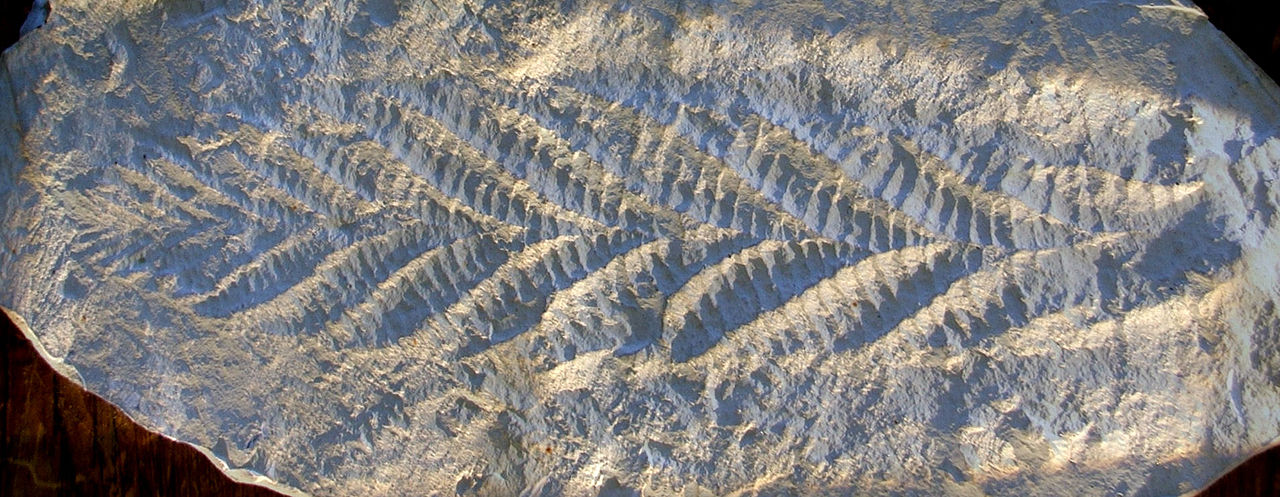
Features and characteristics
- Criteria: members are grouped primarily by outward traits or preserved structures, often described as morphology.
- Limitations: a form taxon typically does not imply a shared evolutionary origin and so does not function as a clade in phylogenetic classification (taxon concepts).
- Practicality: useful for cataloguing, field identification, or working with fragmentary fossils where anatomy is incomplete.
History and uses
Form taxa have a long history in descriptive biology and paleontology. In the fossil record, isolated leaves, teeth, tracks or shells are sometimes named and grouped as form genera or ichnotaxa until more complete material reveals relationships. In mycology and botany, historical practice sometimes named different life stages as separate form taxa before life cycles were understood. Modern taxonomy increasingly seeks to replace form-groupings with phylogenetic taxa, but form taxa remain useful as provisional labels.
Examples and significance
Common parlance offers clear examples: the words snake and lizard describe body plans rather than strict evolutionary groups; some lizard-like and snake-like reptiles are more closely related to other groups than to each other. Conversely, the clade Toxicofera unites many venomous squamates on evolutionary grounds (Toxicofera), showing the distinction between appearance-based and lineage-based grouping. Birds called ducks form a convenient group by habit and shape but span taxa related to geese and swans.
Distinctions and cautions
When encountering a form taxon, it is important to treat it as a working category rather than an assertion of descent. Researchers use them to communicate about specimens, but subsequent phylogenetic study may reassign members to natural groups. Understanding the difference between morphological convenience and evolutionary classification helps avoid confusion in comparative biology, conservation assessment, and scientific naming.
Questions and answers
Q: What is a form taxon?
A: A form taxon is a group of organisms based on what they look like (their morphology).
Q: Does a form taxon always reflect the biological relationships between organisms?
A: No, a form taxon may not reflect the biological relationships between organisms.
Q: Can a form taxon be a clade?
A: A form taxon may not be a clade.
Q: What is an example of a bad taxonomic term?
A: An example of a bad taxonomic term is snake and lizard.
Q: What is Toxicofera?
A: Toxicofera is a good clade that includes all poisonous snakes and lizards.
Q: Are ducks a good taxonomic term?
A: Ducks are not a good taxonomic term because they are in the same family as swans and geese, but called "ducks" because of what they look like.
Q: What is the difference between a good and bad taxonomic term?
A: A good taxonomic term reflects the biological relationships between organisms, while a bad taxonomic term does not.
Related articles
Author
AlegsaOnline.com Form taxon: classification by appearance rather than ancestry Leandro Alegsa
URL: https://en.alegsaonline.com/art/35673
Sources
- ncbi.nlm.nih.gov : ncbi.nlm.nih.gov/pmc/articles/PMC4372529/