
Ford Model A (1927–1931)
The Ford Model A (1927–1931) replaced the Model T with more modern mechanics and styling, offering a four‑cylinder flathead engine, electric starting, many body styles and 4,849,340 units built.
Overview
The Ford Model A was the successor to the long‑running Model T and was produced by the Ford Motor Company from 1927 to 1931. It represented a deliberate modernization of Ford’s passenger cars, retaining ruggedness while introducing more conventional controls, improved comfort and a range of coachwork. During its five‑year production span Ford built and sold 4,849,340 Model As, making it one of the most important American cars of the late 1920s.
Image gallery
10 Images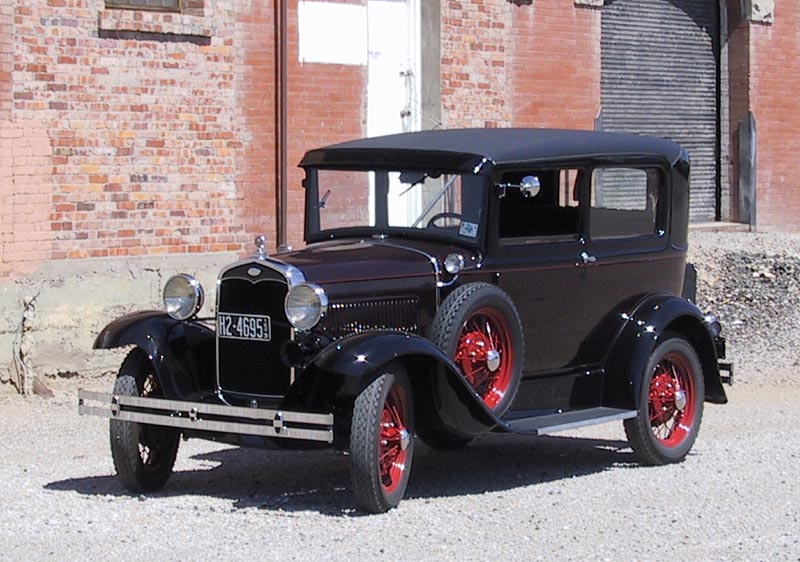


Design and technical features
Mechanically, the Model A used a four‑cylinder flathead engine paired with a three‑speed manual transmission and a conventional clutch/gear layout that drivers recognized from later automobiles. It added an electric starter and a modern electrical system, a full set of brakes acting on all four wheels, and more complete instrumentation than its predecessor. These updates made the car easier and safer to operate than the earlier Model T.
Body styles and variants
Ford supplied the Model A in many factory body styles to suit private and commercial buyers: coupes, sedans, roadsters, tourers, pickups and panel trucks. Coachbuilders and aftermarket firms also created custom bodies and commercial conversions. The Model A was offered in several colors and trim levels, moving away from the near‑monochrome policy that had characterized late Model T production.
Historical context and successors
Introduced as American motorists demanded more comfort and modern controls, the Model A marked Ford’s transition into the late 1920s automotive era. It replaced the venerable Model T and was itself followed in 1932 by the Model B and Ford’s new V‑8 models. The Model A bridged the gap between the brass era and more sophisticated 1930s cars.
Legacy and significance
Today the Model A is valued by collectors and vintage car clubs for its historical importance, relative simplicity and wide availability of parts. It is commonly seen at classic car shows and in restorations. Its large production run and varied applications—private transport, commercial delivery vehicles and light trucks—helped shape interwar motoring and cemented Ford’s continuing mass‑market presence.
Notable facts
- Production: 4,849,340 units produced between 1927 and 1931.
- Engine: four‑cylinder flathead powerplant with conventional three‑speed manual transmission.
- Features: electric starter, improved brakes and more complete controls than the Model T.
The Model A remains an accessible and recognizable example of late 1920s automotive design and is important for understanding the rapid evolution of mass‑market cars between the world wars.


Model AA
Similar to the predecessor, there was also a truck on the same basis. It was called the Ford Model AA. It has longer chassis, a reinforced suspension with steel instead of spoked wheels and double tires for the heavier versions. There was also a licensed build of this model in the Soviet Union, the GAZ-AA. In addition, the Moscow Automobile Assembly Plant assembled kits supplied by Ford as from the passenger car.
· 
Ford Model A
· 
Ford Model A Coupé (1930)
· 
Ford Model A, Type 180 A, De Luxe Phaeton (1930)
· 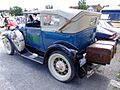
Ford Model A, Type 180 A, De Luxe Phaeton (1930)
· 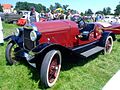
Ford Model A Speedster (1930); not a factory model
· 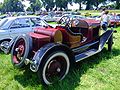
Ford Model A Speedster (1930); the gasoline tank is mounted above the firewall as a standard feature
· 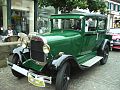
Ford A Tudor (1929)
· 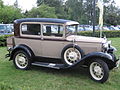
Ford A Tudor Sedan (1930)
· 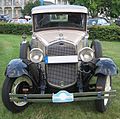
Ford A Tudor Sedan (1930)
· 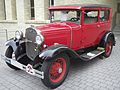
Ford Tudor Sedan (1930)
· 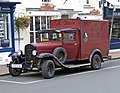
Ford AA Van, ca. 1930
· 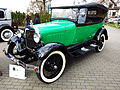
Ford Model A "Standard Phaeton" (November 14, 1928)
· 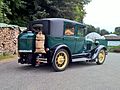
Ford Model A Fordor 1928 with wood gas engine

Related articles
Author
AlegsaOnline.com Ford Model A (1927–1931) Leandro Alegsa
URL: https://en.alegsaonline.com/art/35579
Sources
- fordcarz.com : "The Model A Ford at a Glance"