
Food pyramid: a guide to balanced eating and its development
An accessible guide to the food pyramid: what it represents, the main food groups, history and modern alternatives, practical uses, and common criticisms of the model.
Overview
The food pyramid is a visual framework designed to communicate principles of a balanced diet. It organizes foods into broad groups and suggests relative proportions to emphasize variety and moderation. Simple charts and educational materials labeled as a food pyramid are widely used in schools, clinics, and public health campaigns to help people choose foods that support overall health and energy needs. Examples and historical versions can be found in many resources, such as educational charts.
Image gallery
6 Images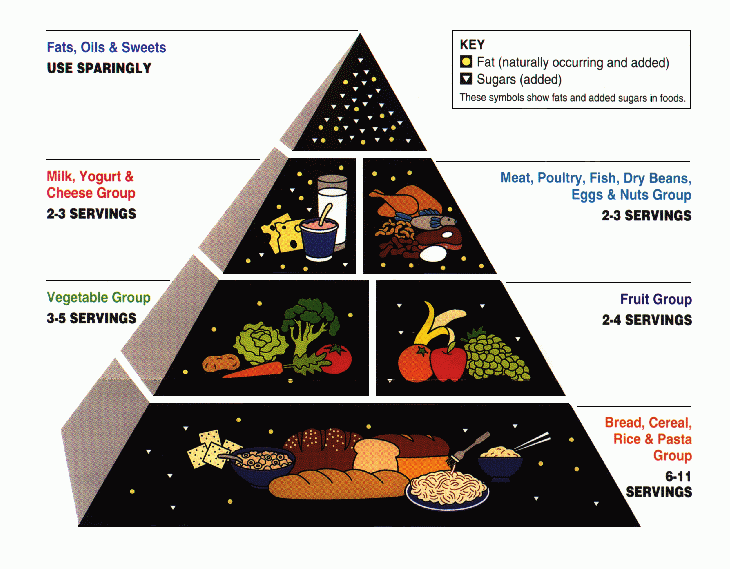


Core components
Although versions vary, most pyramids include several common categories: grains or starchy staples, fruits and vegetables, dairy or calcium-rich foods, protein sources, and oils/fats and sweets. Each group contributes different nutrients—carbohydrates and some B vitamins from grains, vitamins and minerals from fruits and vegetables, calcium and protein from dairy, and essential amino acids and B vitamins from meats and legumes. High-fat and high-sugar foods are placed at the top to indicate limited consumption. Quick references and definitions are often linked in public materials: nutrition charts, food group guides.
Typical layout and interpretation
- Base layer: staple carbohydrates and whole grains as foundational energy sources (whole grain advice).
- Middle layers: vegetables and fruits, emphasizing variety and color for vitamins and fiber (produce recommendations).
- Upper middle: protein-rich foods and dairy for growth and repair (protein choices, dairy information).
- Top: fats, oils and sweets to be consumed sparingly (fat guidance, sugar information).
History and evolution
Food pyramids emerged in the late 20th century as an improvement over earlier linear lists: their shape conveyed relative proportions at a glance. Over time, public health agencies and nutrition scientists revised the model to reflect new research, greater emphasis on whole grains and plant foods, and concerns about added sugars and processed items. Many organizations now provide updated visuals or alternatives, such as plate diagrams and tailored guidelines for different age groups and cultural diets (historical overview, guideline updates).
Practical uses and examples
Educators use pyramids to teach meal planning, grocery shopping, and portion awareness. Health professionals adapt the concept for weight management, chronic disease prevention, and sports nutrition. While the pyramid is a useful starting point, individual needs vary by age, activity level, health status and cultural preferences; therefore, personalized advice is often recommended (meal planning tips, clinical guidance).
Limitations, variations and notable facts
Criticisms of the pyramid include oversimplification, lack of portion specificity, and inconsistent treatment of fats and sugars in older versions. Alternatives have been proposed to emphasize quality (for example, whole versus refined grains), plant-centric patterns, or environmental sustainability. Many modern resources include revised pictograms, interactive tools and culturally specific models to address these concerns (critique and reform, plant-based variants, sustainability considerations).
For additional reading and practical examples, see public health pages and nutrition education materials available through schools, clinics and trusted organizations: public guidance, school resources, clinical tools, consumer advice, meal planning tools, dietary FAQs.
Questions and answers
Q: What is a food pyramid?
A: A food pyramid is a chart that helps people determine how many servings of each food group they should eat each day for good health.
Q: What nutrients do grains provide?
A: Grains provide carbohydrates and some vitamins and minerals.
Q: What nutrients do vegetables and fruits provide?
A: Vegetables and fruits provide a lot of vitamins, some minerals, and few fats, but fruits often have more calories and sugar.
Q: What nutrients do dairy products provide?
A: Dairy products provide protein, some fat, and a lot of calcium, an element that helps build strong bones.
Q: What nutrients do meats provide?
A: Meats provide protein, some fat, and B vitamins.
Q: What do fats, oils, and sweets provide?
A: Fats, oils, and sweets give calories, fats, and sugars but not a lot of nutrition.
Q: Why is it important to follow a food pyramid?
A: It is important to follow a food pyramid because it helps you eat a balanced diet and get all the nutrients your body needs for good health.
Related articles
Author
AlegsaOnline.com Food pyramid: a guide to balanced eating and its development Leandro Alegsa
URL: https://en.alegsaonline.com/art/35473