
Fluvial terrace: formation, types, structure, and importance
Fluvial terraces are former river floodplains left stranded above modern channels. This article explains their structure (tread and scarp), formation processes, material and origin-based classifications, and their significance.
Overview
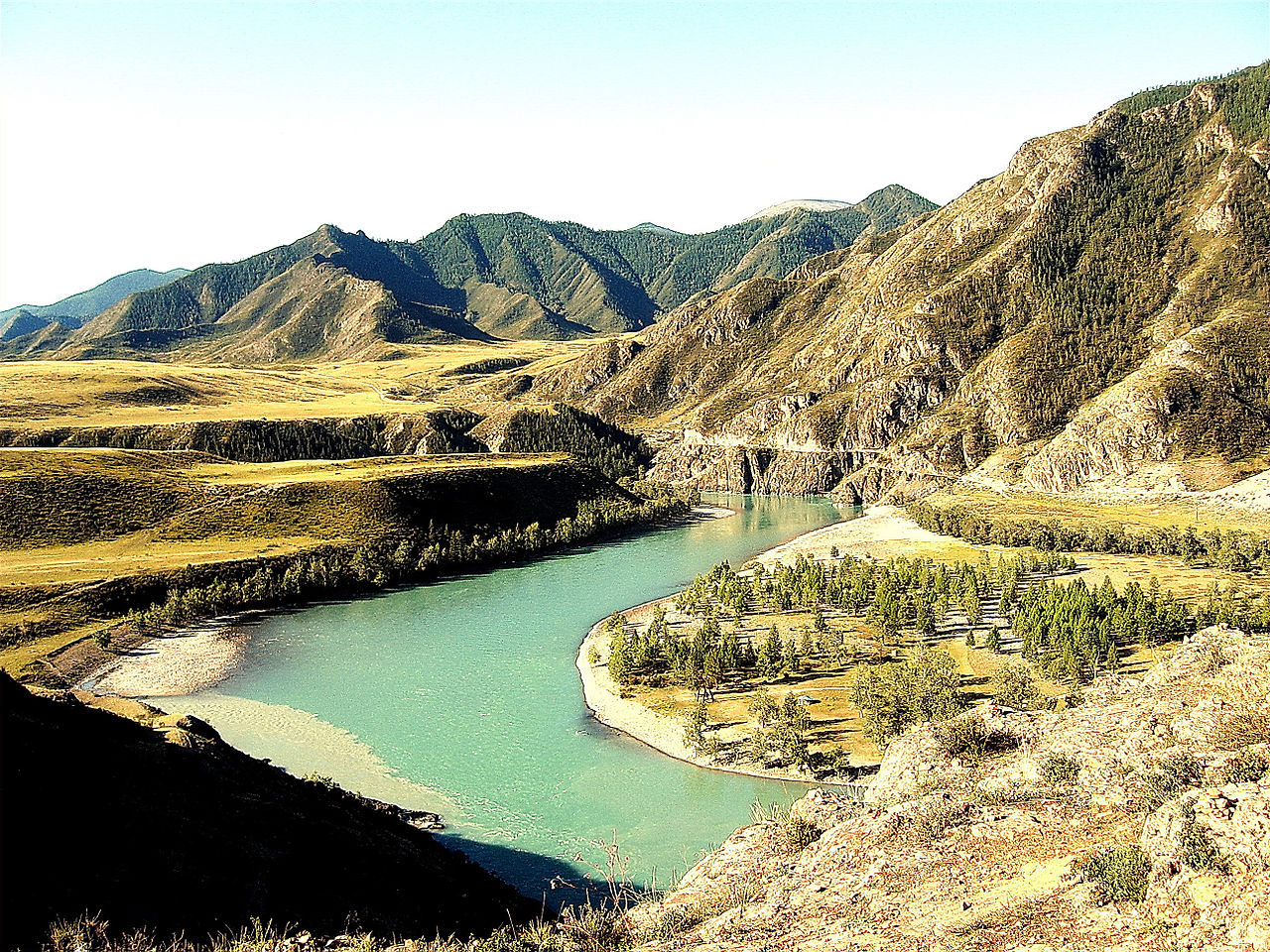
A fluvial terrace is a former floodplain or riverbed surface that now stands above the present level of a stream or river. It records an earlier position of the channel and its adjacent flat area, preserved when the river incised downward or the land was uplifted. Terraces typically appear as a series of flat or gently sloping benches or steps along valley sides and are important markers of environmental change, river dynamics, and landscape evolution.
Image gallery
7 Images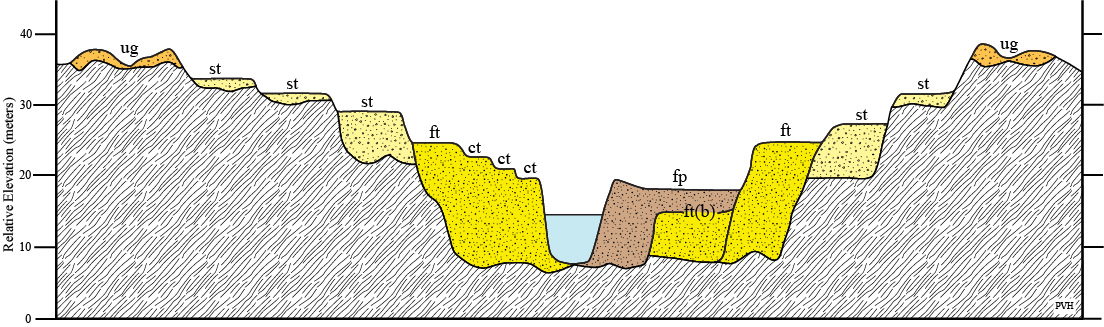


Structure and terminology
Each terrace generally has two basic parts: the tread, a relatively flat surface representing the old floodplain; and the scarp, a steeper slope or cliff that drops from the tread to the lower valley floor. Together these elements form the characteristic bench-like profile. Terraces may be single or multiple, arranged in staircase-like sequences that reflect repeated episodes of river adjustment.
Types and classifications
Geologists classify terraces by the materials that compose them and by the processes that formed them. Common distinctions include:
- Material-based: rock terraces formed on bedrock platforms, and gravel terraces composed mainly of river-deposited gravels and sands.
- Process-based: tectonic terraces produced by uplift of the land relative to the river; and climatic (or river-incision) terraces formed when changes in climate, sediment supply, or base level caused the river to downcut and abandon older floodplains.
Formation processes
Terrace formation commonly involves a shift in the balance between sediment supply and transport capacity, a change in base level (such as sea-level fall), or tectonic uplift. When a river erodes its bed more rapidly than it fills with sediment, it lowers its channel and leaves earlier floodplain deposits as terraces. Conversely, sedimentation during periods of high supply can build broad floodplains later abandoned by renewed incision.
Uses, examples and significance
Fluvial terraces are valuable for reconstructing past river behavior, climate fluctuations, and tectonic history. They are used in geomorphology, archaeology, and soil science: terraces often preserve archaeological sites and fertile soils for agriculture. Engineers and planners also consider terraces when assessing flood risk, groundwater recharge, and land stability.
Notable distinctions
Interpretation of terraces requires care: similar bench forms can result from different causes, and post-depositional processes such as erosion or human activity may alter their appearance. For deeper study and regional examples consult additional resources here.
Questions and answers
Q: What is a fluvial terrace?
A: A fluvial terrace is an abandoned floodplain with a long, narrow stairs that is formed when the river flowed at a higher level than at present.
Q: What are the two parts of a fluvial terrace?
A: The two parts of a fluvial terrace are a tread, which is the flat surface at the upper side of fluvial terrace, and a scarp, which is the steep slope connecting the tread to the downside.
Q: How is a fluvial terrace classified according to its structure materials?
A: A fluvial terrace is classified into Rock terrace and Gravel terrace according to structure materials.
Q: How is a fluvial terrace classified according to its causes of formation?
A: A fluvial terrace is classified as Tectonic terrace and Climate terrace according to causes of formation.
Q: What is the definition of a tread in a fluvial terrace?
A: The tread is the flat surface at the upper side of a fluvial terrace.
Q: What is the definition of a scarp in a fluvial terrace?
A: The scarp is the steep slope connecting the tread to the downside in a fluvial terrace.
Q: What is the cause of formation for a tectonic terrace fluvial terrace?
A: The cause of formation for a tectonic terrace fluvial terrace is tectonic movement or uplift.
Related articles
Author
AlegsaOnline.com Fluvial terrace: formation, types, structure, and importance Leandro Alegsa
URL: https://en.alegsaonline.com/art/35291