
Flickr — photo hosting, community and image‑sharing platform
Flickr is a web-based image hosting and community platform founded by Stewart Butterfield and Caterina Fake. It offers photo and short-video storage, metadata, sharing, Creative Commons licensing and developer APIs.
Overview
Flickr is an online service for storing, organizing and sharing photographs and short videos. Launched in the early 2000s by Stewart Butterfield and Caterina Fake, it combined personal image hosting with social features such as profiles, comments, tagging and user groups. Over time Flickr became widely used by amateur and professional photographers, cultural institutions and media projects for publication, archiving and collaborative discovery.
Image gallery
2 Images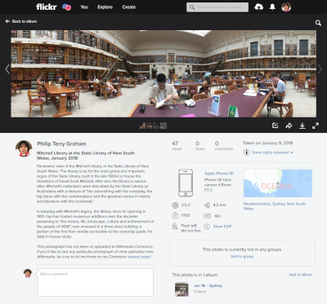

Key features and structure
Users upload images and can add titles, descriptions, tags and technical metadata (EXIF). Photos can be arranged into albums and collections, and visibility is controlled with privacy settings. A central feature is licensing: each image may be released under a range of options, from restrictive personal use to several Creative Commons variants that permit reuse with attribution or other conditions.
- Organization: albums, collections and tagging help users manage large archives and enable searchable discovery.
- Community: groups, discussion threads and comments foster interaction and curation across interest areas and local communities.
- Developer access: published APIs and web services allow third-party applications, plugins and archival projects to integrate with Flickr.
Accounts, ownership and governance
Flickr has gone through changes in ownership and business models; it was acquired by larger companies in the 2000s and later became part of other media services. Account systems and subscription tiers (including options for expanded storage or additional tools) have varied, and users should review current terms and privacy policies before uploading large or sensitive collections.
Community projects and cultural use
Flickr has been used for personal portfolios, news photo distribution, research and museum or archive collaborations. Initiatives such as Flickr Commons invited cultural institutions to publish images with open access terms to improve public availability of historical photographs. When images are released under suitable free licenses, projects like Wikimedia Commons and other repositories may transfer or reuse those files with appropriate attribution.
APIs and technical integration
Flickr provides developer interfaces that support searching, uploading and metadata access, enabling software tools, websites and mobile apps to work with users' photo collections. These APIs have supported a wide ecosystem of third‑party tools for backup, editing and publishing.
Considerations for users
People choosing Flickr should consider licensing choices, expected storage needs, privacy settings and the platform's current subscription options. Policy changes over time have influenced how communities use the site, so checking the service’s help pages and terms is important for long‑term archiving or reuse plans.
For more information see the official Flickr pages, historical and technical context on early Web 2.0 concepts at Web 2.0 resources, and examples of institutional collaborations and reuse under free licenses at Commons and archive project references.
Questions and answers
Q: What is Flickr?
A: Flickr is a website and web services suite that allows users to share photos online.
Q: When was Flickr founded?
A: Flickr was founded in 2002 by Stewart Butterfield and Caterina Fake.
Q: Is Flickr also a community platform?
A: Yes, Flickr is also an online community platform.
Q: What is Web 2.0 application?
A: Web 2.0 application is an internet-based technology that allows users to interact and collaborate with each other in real-time.
Q: Can users upload any photo to Flickr?
A: Yes, users can upload any photo to Flickr.
Q: What licenses are available for releasing photos on Flickr?
A: Multiple licenses are available on Flickr, some of which allow other people to reuse the photos.
Q: Who can register for a Flickr account?
A: Anyone with a Yahoo! ID can register for a Flickr account in a few seconds.
Related articles
Author
AlegsaOnline.com Flickr — photo hosting, community and image‑sharing platform Leandro Alegsa
URL: https://en.alegsaonline.com/art/35113
Sources
- alexa.com : "Flickr.com Site Info"
- inc.com : inc.com/magazine/20061201/hidi-butterfield-fake.html
- flickr.com : Flickr: Help: Free Accounts, Upgrading and Gifts
- flickr.com : Flickr: Upgrade to a pro account
- flickr.com : Flickr:Tools to upload and share