
Flexibility training: principles, methods, and practical benefits
An overview of flexibility training covering what it is, common methods (static, dynamic, PNF), benefits, safety considerations, and how it differs from mobility and strength work.
Flexibility training is the deliberate practice of increasing the available movement at a joint or sequence of joints so that tasks and daily activities can be performed more comfortably and safely. The central idea is improving the range of motion that a person can reach either actively (using their own muscles) or passively (with assistance from a partner or device). Flexibility is joint-specific: one person may have a high degree of motion in the hip but limited rotation in the spine. Many approaches use forms of stretching to influence the muscles, tendons, and nervous system that limit movement.
Image gallery
6 Images


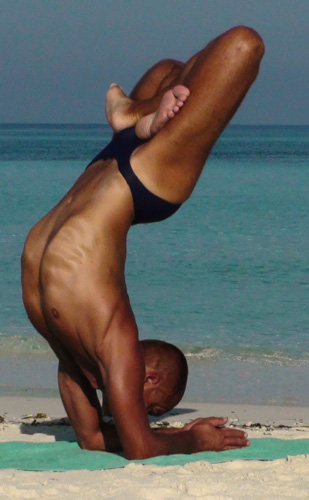
Key concepts and distinctions
Several terms are important to understand. Flexibility often describes the passive limits of motion, while mobility refers to the ability to control that motion with strength and coordination. Active flexibility describes positions you can achieve and hold under your own muscle activation; passive flexibility involves external help. The condition of connective tissues, past injuries, neural tolerance to stretch, and habitual posture all contribute to how flexible a particular joint will be. Improving flexibility does not automatically translate to strength or stability, which is why programs commonly pair stretching with strength and motor-control work.
Common methods
- Static stretching: Holding a position at the end of the comfortable range to let tissues relax and adapt.
- Dynamic stretching: Controlled movements that take a limb through its range repeatedly, often used in warm-ups.
- Ballistic stretching: Bouncing-style movements that use momentum; generally less recommended for most people due to higher injury risk.
- PNF (proprioceptive neuromuscular facilitation): A pattern of contracting and relaxing muscles with a partner or band to increase length and tolerance.
- Active isolated and contract–relax methods: Techniques that emphasize muscle activation and brief holds to improve active control as well as length.
These methods are chosen based on goals: dynamic techniques are commonly used before sport to prepare tissue and nervous system, while static and PNF approaches are often applied during separate flexibility sessions or after activity to influence long-term range.
Historically, systematic flexibility practices appear in many traditional movement arts and were later integrated into modern physical therapy and athletic training. In the mid-20th century clinicians and coaches formalized methods such as PNF and categorized stretching types to match the needs of rehabilitation and performance training.
Flexibility training offers practical benefits: improved comfort in daily activities, easier performance of specific skills (e.g., reaching, squatting, dance positions), reduced stiffness, and potentially better posture. Evidence about injury prevention is mixed; while better suppleness can reduce strain in some situations, adequate strength and technique remain crucial. Health-care providers and trainers increasingly recognize flexibility as an element of comprehensive musculoskeletal care and performance planning—consult a qualified practitioner if you have joint pain or a complex medical history (health-care professionals).
Safety and programming advice: work gradually, respect pain as a warning sign rather than a goal, warm tissues before intense stretching, and include exercises that build the strength needed to control new ranges of motion. Progress is individual: factors such as age, genetics, activity history, and previous injury affect how quickly and how much flexibility can change. Assisted techniques with a partner or equipment can help safely extend range when used correctly, but they should be applied conservatively and with clear communication.
For those designing a plan, combine regular short sessions several times per week with targeted mobility drills and strengthening work to make new ranges both accessible and functional. For additional resources on specific exercises or progression models, see training references and reputable practitioner guidance (range of motion, stretching, joint, health-care professionals).
Questions and answers
Q: What is flexibility training?
A: Flexibility training is a method used to develop a wide range of movement in a joint or series of joints that is attainable in a momentary effort with the help of a partner or a piece of equipment.
Q: Is human flexibility the same in all joints?
A: No, human flexibility is not the same in all joints. Some easily perform longitudinal splits but are very hard in transversal ones.
Q: Can flexibility in some joints be increased by stretching?
A: Yes, flexibility in some joints can be increased to a certain degree by stretching.
Q: Has flexibility training been underestimated by health-care professionals?
A: Yes, flexibility training has long been underestimated and perhaps overlooked by health-care professionals.
Q: What benefits can be gained from improving and maintaining a good range of motion in the joints?
A: The quality of life is considerably enhanced by improving and maintaining a good range of motion in the joints.
Q: Does flexibility training require a partner or a piece of equipment?
A: Yes, flexibility training requires a partner or a piece of equipment to achieve a wider range of movement in a joint or series of joints.
Q: How can one attain a wider range of movement through flexibility training?
A: A wide range of movement in a joint or series of joints can be attained through flexibility training with the help of a partner or a piece of equipment.
Related articles
Author
AlegsaOnline.com Flexibility training: principles, methods, and practical benefits Leandro Alegsa
URL: https://en.alegsaonline.com/art/35111