
Flatboat: simple flat-bottomed cargo craft of inland rivers
A flatboat is a rectangular, flat-bottomed vessel with square ends used historically on inland rivers to carry freight and passengers downstream; often built crudely and dismantled at journey's end.
A flatboat is a simple, rectangular, flat-bottomed boat with squared-off ends that was widely used to move bulk goods and people along inland rivers. Built for buoyancy and heavy loads rather than speed or ocean travel, flatboats were a pragmatic solution for frontier commerce and short-term transport. They are most closely associated with 18th- and 19th-century river traffic, where rivers served as the primary highways for agricultural and manufactured goods.
Image gallery
6 Images


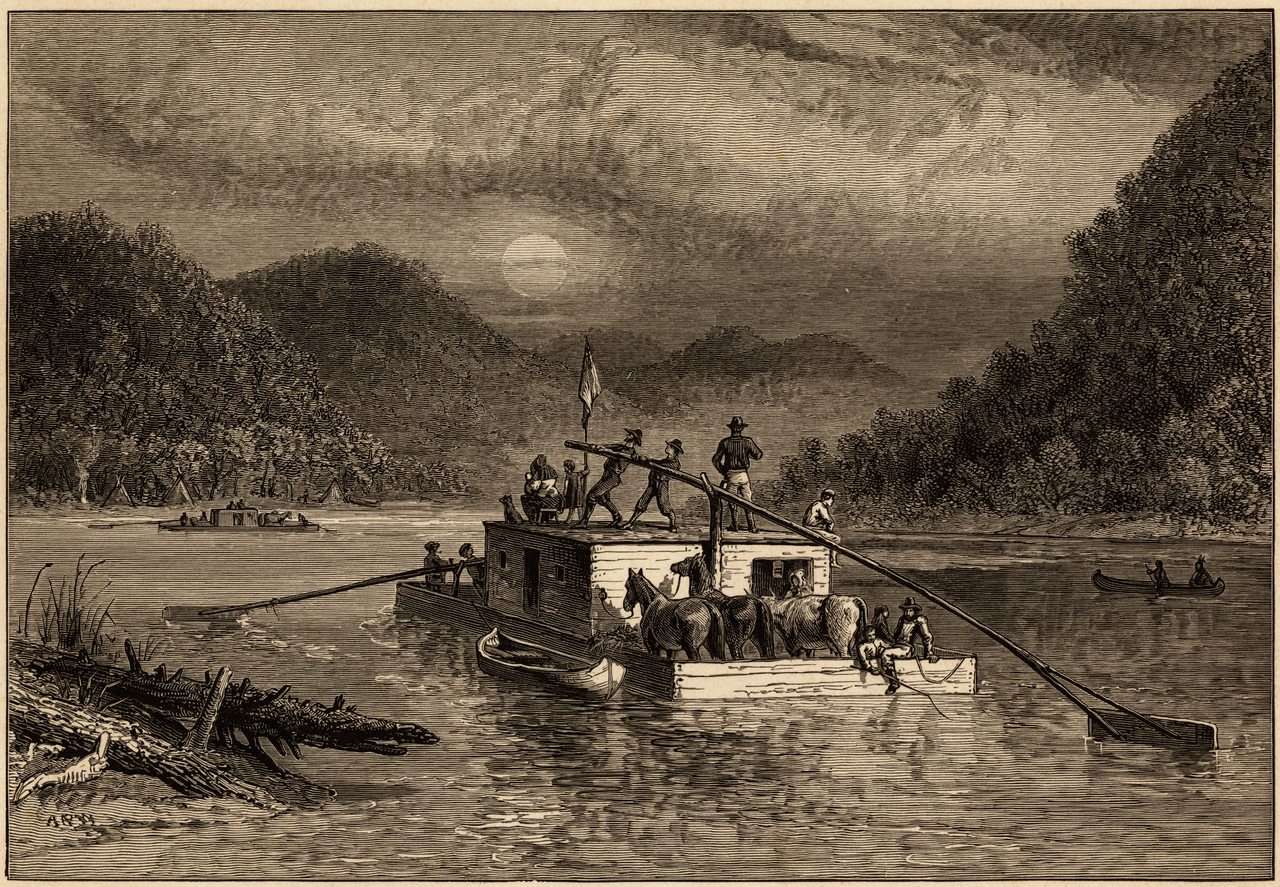


Characteristics and construction
Flatboats are notable for their straightforward design: a broad, flat hull, nearly vertical sides and blunt ends. They were typically built from locally available timber and could be constructed by farmers, carpenters or professional boatbuilders. Sizes varied widely to suit cargo needs; some were modest tubs, while others were large enough to carry several tons of grain or a small herd of livestock. Propulsion was minimal—most flatboats relied on the current to carry them downstream, with steering accomplished by long oars, sweeps or rudimentary rudders. In some cases sails or temporary masts were fitted, or the craft could be towed from the riverbank.
Historical role and development
Flatboats played a central role in riverine commerce before steam power became dominant. In regions with navigable rivers, especially in North America and parts of Europe, flatboats enabled inland producers to reach downstream markets and port cities. Because the voyage used the river's flow, most flatboats were effectively one-way conveyances: upon arrival at the downstream destination the vessel was commonly sold or taken apart for building timber, and crews returned home by other means. The development of steam-powered vessels and improved upstream navigation gradually reduced reliance on flatboats, but they remained important during the early phases of continental expansion.
Uses, cargo and examples
Typical cargoes included grain, tobacco, lumber, household goods, livestock and other bulky commodities that benefited from cheap, voluminous carriage. Flatboats also carried passengers and sometimes served as temporary housing during long migrations. Their low cost and adaptability made them a practical choice for farmers and small merchants who needed to send produce to larger markets. The dismantled timbers often found new life in local buildings and docks at the destination.
Distinctions and legacy
- One-way craft: Unlike keelboats or steamboats, flatboats were most often not designed for return trips upstream.
- Construction simplicity: Easily built from rough lumber without specialized tools or plans.
- Role in expansion: Facilitated trade and settlement by connecting inland producers with coastal and river port markets.
- Contrast with other craft: Keelboats and steamboats provided more maneuverability and upstream capability; rafts and barges differ in construction and typical uses.
For further technical background and historical context on inland navigation and river craft, see inland waterways resources.
Questions and answers
Q: What is a flatboat?
A: A flatboat is a rectangular flat-bottomed boat with square ends used to transport freight and passengers on inland waterways.
Q: What is the hull of a flatboat made of?
A: The hull of a flatboat is made of sturdy lumber.
Q: How does a flatboat typically travel?
A: A flatboat typically travels in one direction on inland waterways.
Q: What happens to a flatboat when it reaches its downstream destination?
A: A flatboat is usually dismantled for lumber when it reaches its downstream destination.
Q: Can a flatboat be any size?
A: Yes, a flatboat can be any size as long as it has a rectangular flat-bottomed shape with square ends.
Q: Is a flatboat commonly used for transporting goods and people?
A: Yes, a flatboat is commonly used for transporting freight and passengers on inland waterways.
Q: Why is a flatboat usually dismantled at its downstream destination?
A: A flatboat is usually dismantled for lumber at its downstream destination because it is almost always a one-way vessel.
Related articles
Author
AlegsaOnline.com Flatboat: simple flat-bottomed cargo craft of inland rivers Leandro Alegsa
URL: https://en.alegsaonline.com/art/35036
Sources
- janessaddlebag.org : "Ohio River Info and History" · web.archive.org
- janessaddlebag.org : "Flatboat History" · web.archive.org