
Flat Earth: history, beliefs, and cultural influence
A neutral overview of flat Earth ideas: ancient models, development of spherical understanding, modern flat-Earth movements, scientific tests, cultural myths, and notable historical references.
Overview
The term "flat Earth" denotes the proposition that Earth's surface is essentially flat rather than a three-dimensional sphere or oblate spheroid. Variants of the idea range from simple flat-disk models to elaborate systems incorporating a circling ocean, a surrounding ice wall, or a solid dome overhead. While such notions appear among humanity's earliest cosmologies, they have been supplanted in mainstream science by an understanding of Earth as a rotating, roughly spherical planet. Discussions of flat-Earth ideas today take place in historical, anthropological and sociopolitical contexts as well as in the small number of contemporary communities that advocate modern flat-Earth models.
Image gallery
10 Images




Characteristics and basic claims
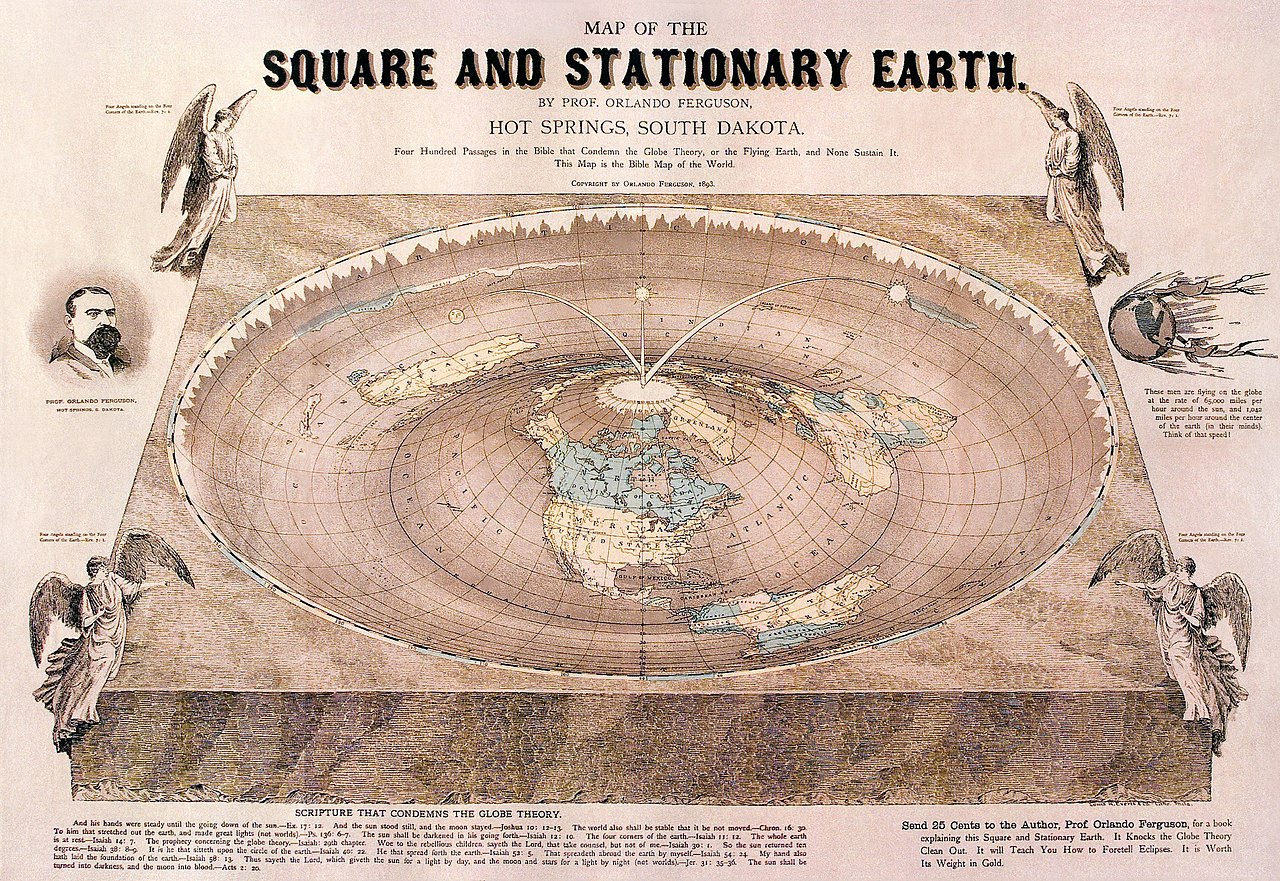
Contemporary flat-Earth claims typically assert that observable local surfaces are flat, that conventional explanations for celestial motion and gravity are mistaken or fraudulent, and that institutions have conspired to hide the truth. Some adherents propose a disk with the Arctic region at the center and an ice perimeter; others posit a domed firmament. Arguments aimed at a non-spherical Earth often rely on perceptual cues—such as the apparent flatness of the ground or the way distant objects and horizons appear—plus critiques of spaceflight evidence. Scientific refutations emphasize multiple independent lines of observation, including circumnavigation, satellite imagery, the way shadows and angles behave on a spherical surface, and measurements of Earth's curvature and gravity.
Historical development
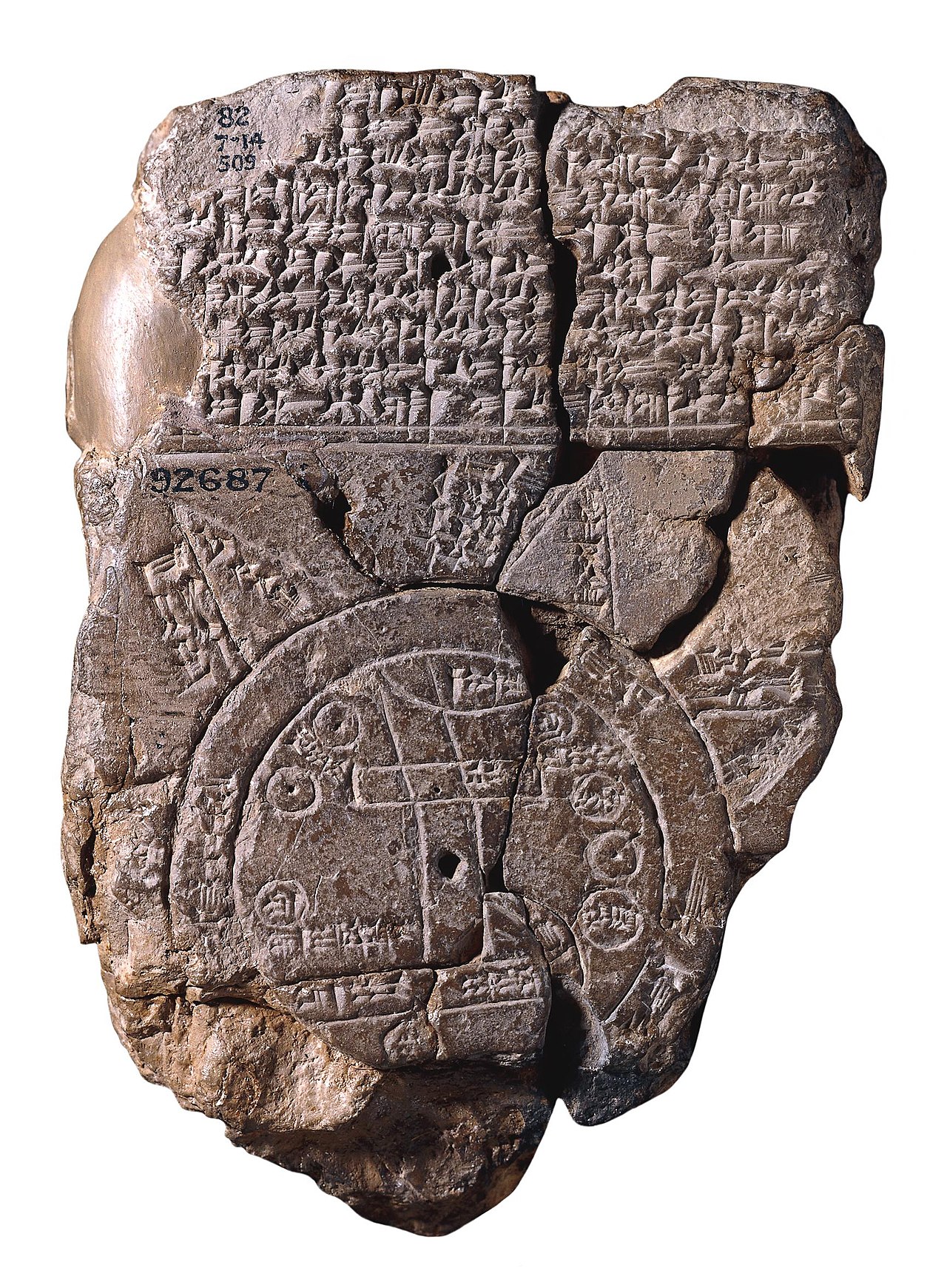
Flat-Earth ideas are attested in ancient cultures. Early Near Eastern maps and cosmologies sometimes depicted the inhabited world as a circular disk surrounded by water. In the Classical Greek era, systematic observations and arguments for a spherical Earth emerged: philosophers and astronomers noted stellar shifts with latitude and the way ships disappear hull-first over the horizon. By Hellenistic times scholars such as Eratosthenes produced quantitative estimates of Earth's circumference that were broadly accurate. During the Middle Ages and the Renaissance, educated European writers and theologians generally accepted a spherical Earth; stories that an entire medieval population widely believed in a flat Earth are now regarded as exaggerated or propagated later as rhetorical devices.
Proofs, voyages, and scientific consensus
From the Late Middle Ages onward, long-distance navigation and exploration contributed practical demonstrations of Earth's roundness. The voyages of late 15th- and early 16th-century mariners showed that ships could sail along routes that returned them to starting points, and the phenomenon of changing star fields with latitude provided consistent evidence for a globe. In modern times, the confluence of geodesy, astronomy, orbital mechanics and direct imaging yields a robust, redundant body of evidence confirming Earth's shape, size and motion. Scientific practice relies on testable predictions and measurements; many tests directly contradict flat-Earth claims and consistently support a spheroidal Earth.
Modern movement, cultural role, and misconceptions
A small but visible modern flat-Earth movement has grown in part through internet communities and social media. Participants vary widely in motivation and conviction; some view their position as a skeptical crusade, others treat it as contrarian identity or performance. Scholars studying the phenomenon point to cognitive, social, and epistemic factors—such as distrust of authorities, pattern-seeking, and group identity—to explain its persistence. The historical narrative that most people in the medieval period believed in a flat Earth is largely a myth; it became more prominent in later centuries through polemical literature and popular engravings. Cultural references and satire have also kept flat-Earth imagery in public view, from plays and parables to modern fiction and commentary.
Distinctions, notable episodes, and examples
- Ancient models often combined observation with mythic elements and local geography, producing a diverse range of flat-world depictions.
- Key scientific milestones that undercut flat-Earth claims include classical measurements of Earth's circumference, circumnavigation by oceanic expeditions, and precise modern satellite and geodetic data.
- Popular myths about a universally flat-believing medieval populace were amplified in later centuries; careful historical work shows medieval intellectuals commonly accepted a spherical Earth.
- Modern cultural references to flat-Earth ideas appear in literature and satire, reflecting social attitudes more than scientific debate.
Further reading and related names
- Earth surface — basic term and observational context
- Plane models — geometric concept and variants
- Mesopotamian cosmology — early maps and mythic disks
- Classical Greek astronomy — origins of spherical reasoning
- Ships and horizons — observational phenomena cited in debates
- Eratosthenes — early measurement of Earth’s circumference
- Circumference estimates — historical methods and results
- Aristotle — philosophical and observational arguments
- Sailors’ knowledge — role of navigation in understanding Earth
- Astronomers’ evidence — celestial observations and models
- Spherical Earth concept — terminology and definitions
- King Alfred — medieval figures associated with scholarship
- Thomas Aquinas — theological engagement with cosmology
- Snorri Sturluson — medieval literature and worldviews
- Marco Polo — exploration narratives
- Dante Alighieri — literary cosmology
- Christopher Columbus — voyages and misconceptions
- Portuguese exploration — routes along Africa and Asia
- Africa — geography in exploration history
- Asia — trade routes and mapping
- Ferdinand Magellan — circumnavigation expedition
- Globe proofs — practical demonstrations of roundness
- Romantic-era interpretations — historiography that amplified myths
- "Dark Age" narratives — simplified portrayals of medieval thought
- Historical research — modern reassessments of claims
- Camille Flammarion — art and popular imagery often misattributed to earlier eras
- Voltaire — later literary sources of medieval anecdotes
- Rudyard Kipling — cultural references and satire
Questions and answers
Q: What is the idea of a flat Earth?
A: The idea of a flat Earth is that the surface of the Earth is flat (a plane).
Q: When did belief in a flat Earth begin?
A: Belief in a flat Earth is found in the oldest writings. Early Mesopotamian maps showed the world as a flat disk floating in the ocean. This was a common belief until the Classical Greeks began to discuss the Earth's shape about the 4th century BC.
Q: Who was Eratosthenes and what did he do?
A: Eratosthenes (276 BC–194 BC) was an ancient Greek mathematician who calculated the circumference of the Earth quite accurately. From then on, few educated people ever believed in its being flat, though it remained popular among those with less education.
Q: Who argued for a spherical or ball-shaped earth?
A: Authors such as King Alfred of Anglo-Saxons, Hildegard von Bingen, Thomas Aquinas, Snorri Sturluson, Marco Polo, Dante Alighieri and Christopher Columbus argued for a spherical or ball-shaped earth.
Q: How did exploration prove that the earth was round?
A: Portuguese explorers explored Africa and Asia while Christopher Columbus sailed to America (1492) and Ferdinand Magellan circumnavigated (sailed all round)the earth (1519-21). This proved finally that our planet is actually shaped like globe.
Q: What woodcut illustrates this concept?
A:The widely circulated woodcut shows someone poking their head through firmament of a Flat Earth to see machines working spheres around it . It cannot be traced back earlier than Camille Flammarion's L'Atmosphère book from 1888.
Q: When does Rudyard Kipling's story about voting for Flat Earthers take place?
A:Rudyard Kipling's story "The Village That Voted The Earth Was Flat" takes place during medieval times when Erasmus Montanus claims that everyone believes it’s flat despite his arguments otherwise
Related articles
Author
AlegsaOnline.com Flat Earth: history, beliefs, and cultural influence Leandro Alegsa
URL: https://en.alegsaonline.com/art/35030