
Flashlight (torch): portable handheld light for illumination and signaling
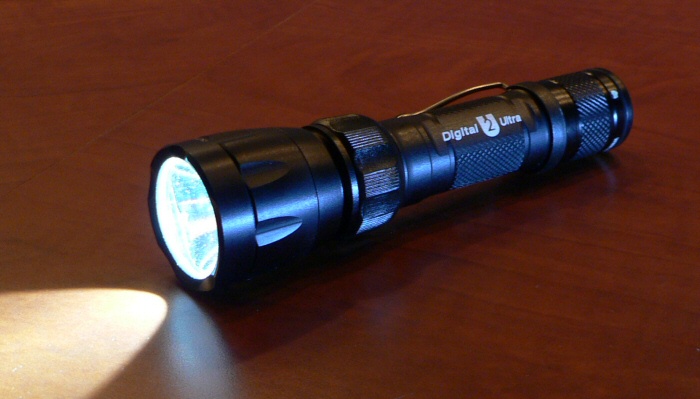
A flashlight (North American English) or torch (Commonwealth) is a portable handheld spotlight that produces a directed beam of light, powered by batteries or small generators; today LEDs dominate.
A flashlight — called a flashlight in North American usage and a torch in many Commonwealth countries — is a compact, handheld spotlight designed to project a controlled beam of light. It is intended to improve visibility in darkness, signal other people, or illuminate confined spaces. Modern flashlights are generally battery powered and range in size from tiny keychain lights to large, high-output units used by emergency services.
Image gallery
10 Images




Design and main components
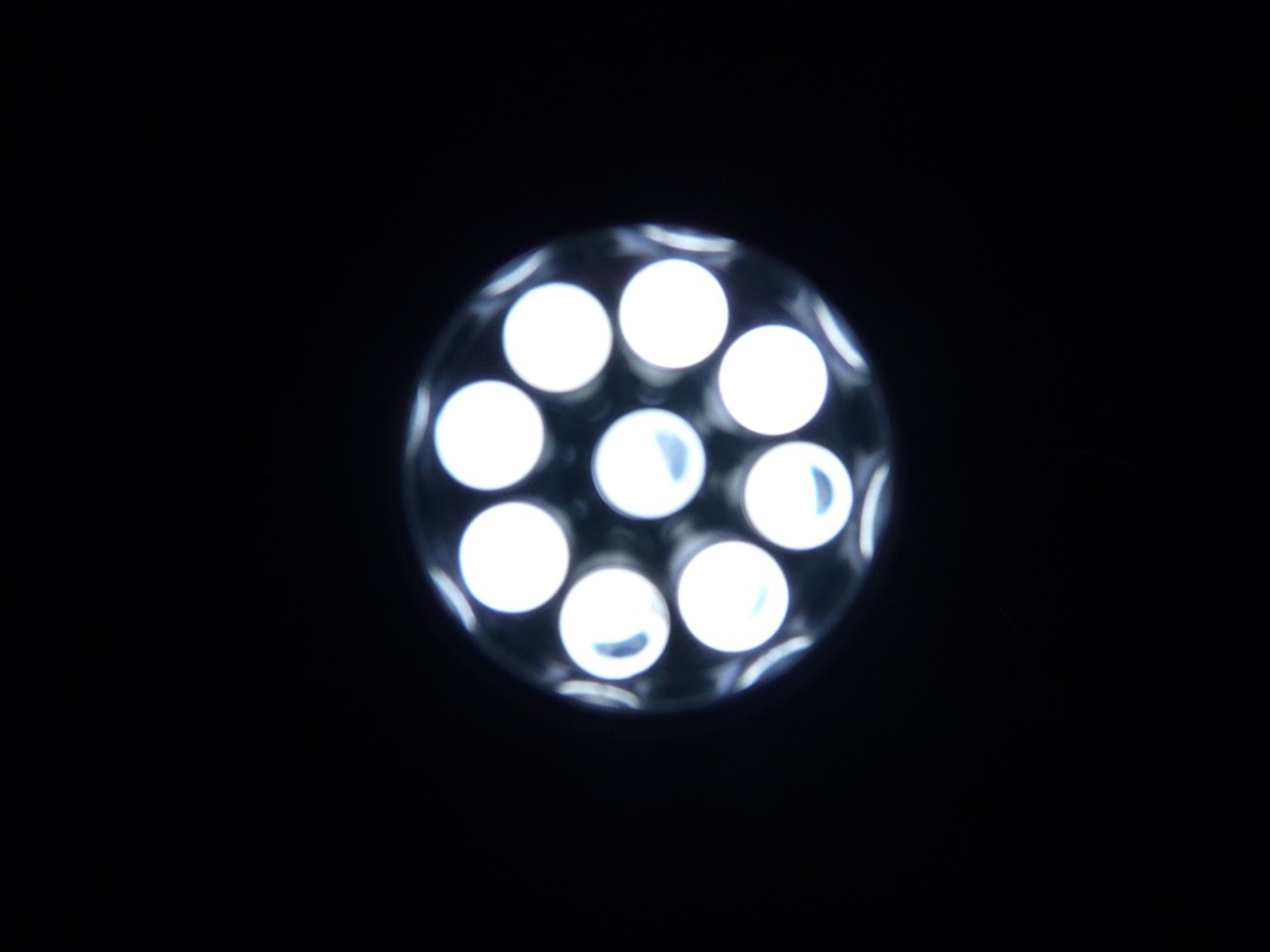
The basic parts of a flashlight are a power source, a light emitter, optics to shape the beam, a switch, and an outer case. The power source can be disposable cells (alkaline), rechargeable cells (NiMH or lithium-ion) or, in some models, a small dynamo or hand crank. The emitter has transitioned from incandescent bulbs to semiconductor devices; the incandescent filament was common in the 20th century, while light-emitting diodes (LEDs) are now standard for their efficiency and durability. The word light bulb is still used loosely to describe the emitter.
History and development
The flashlight became practical after the invention of the dry cell battery in the late 19th century. This type of cell used a paste electrolyte rather than a liquid and therefore could be used in portable electrical devices without leaking. Early flashlights used incandescent bulbs and carbon or zinc–carbon cells; as battery chemistry and emitter technology improved, devices became brighter, lighter and longer-lasting. The late 20th and early 21st centuries saw rapid adoption of LEDs and rechargeable lithium-ion batteries, increasing output while reducing size and heat.
Variants, beam types and features
- Beam shape: Flood (wide) versus spot (narrow) beams; some flashlights offer adjustable focus.
- Output: Measured in lumens; modern lights can range from a few lumens to several thousand.
- Special functions: Strobe, SOS, dimming, and programmable modes for signaling or conservation of power.
- Construction: Water- and impact-resistance ratings, ruggedized tactical designs, and compact everyday carry models.
Specialized formats include headlamps (hands-free), lanterns (area lighting), keychain lights, and vehicle-mounted or searchlights. Tactical flashlights used by police and military often emphasize robustness, high output and simple mode selection.
Uses, maintenance and safety
Flashlights are ubiquitous tools for household tasks, outdoor recreation, professional work, emergency preparedness and signaling. Practical considerations include matching bulb and battery type for desired runtime, keeping spare batteries for emergencies, and following local guidelines for battery disposal to avoid environmental harm. LEDs produce less heat and use energy more efficiently than older incandescent bulbs, which reduces fire risk and extends operating time.
Outside of electrical devices, the word "torch" may also denote a flammable handheld stick used historically for illumination or ceremonial purposes; this older meaning persists alongside the modern, battery-powered flashlight.
For further general information and related topics see regional naming, the concept of a spotlight, safety notes on the beam, basics of the light emitter, historical accounts of the dry cell and the role of batteries in portable electronics.
Questions and answers
Q: What is a flashlight?
A: A flashlight is a small, portable spotlight that produces a beam of light, used to see in the dark.
Q: What is it called in North America?
A: In North America, it is called a flashlight.
Q: What is it called in most Commonwealth countries?
A: In most Commonwealth countries, it is called a torch.
Q: What powers a flashlight?
A: A flashlight is usually powered by batteries.
Q: What kind of light bulb was used in the 20th century?
A: In the 20th century, an incandescent bulb was usually used.
Q: What kind of light bulb is used nowadays?
A: Nowadays, most flashlights use LEDs, which work slightly differently.
Q: What is the first battery suitable for portable electrical devices?
A: The first battery suitable for portable electrical devices was invented in 1896, and it was a dry cell battery that used a paste electrolyte instead of a liquid. It did not spill or break easily and worked in any orientation.
Related articles
Author
AlegsaOnline.com Flashlight (torch): portable handheld light for illumination and signaling Leandro Alegsa
URL: https://en.alegsaonline.com/art/35026