
Flare star: magnetic outbursts on cool, active stars
A flare star is a variable star that produces sudden, short-lived increases in brightness from energetic magnetic flares. Most are red dwarfs, but flares occur across stellar types and affect exoplanet environments.
Overview
A flare star is a type of variable star that exhibits unpredictable, short-duration increases in brightness known as flares. These events typically last minutes to hours and can brighten a star across a wide range of wavelengths, from X-rays through the visible band and into the radio. Flaring is a manifestation of magnetic activity in the star's outer layers, produced by processes that are analogous in many respects to solar flares observed on the Sun.
Image gallery
5 Images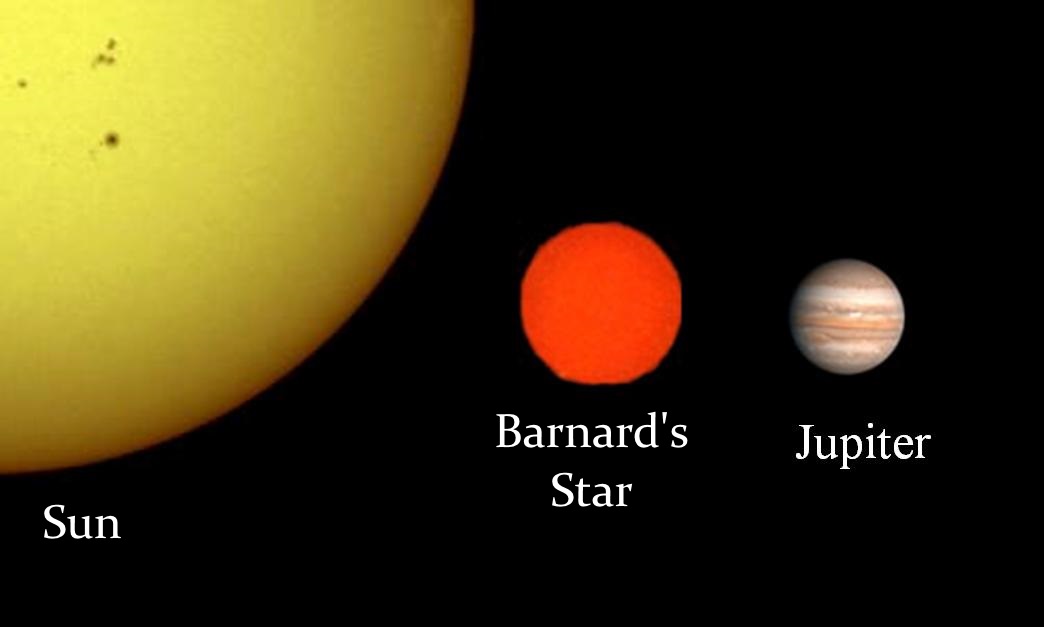


Physical cause and observational signatures
Flares on these stars arise when stored magnetic energy is suddenly released through reconnection and related plasma processes in the stellar atmosphere. The result is rapid heating, particle acceleration, and emission across the electromagnetic spectrum. Observationally, flares are detected by sudden changes in brightness in optical photometry, spikes in high-energy emission in X-ray and ultraviolet instruments, and bursts of radio emission. Astronomers study flare spectra and time profiles to infer temperatures, particle energies, and magnetic field behavior in active stars. The energy output can increase across the entire spectrum, and radio telescopes can capture associated bursts at radio wavelengths.
Typical hosts and notable examples
Most known flare stars are cool, low-mass red dwarfs (M-type stars), whose deep convective envelopes support strong magnetic dynamos. Some objects near or below the hydrogen-burning limit — brown dwarfs — have also shown flare-like activity. Famous historical and nearby examples include the early discoveries V1396 Cygni and AT Microscopii (reported in the 1920s), the prototypical UV Ceti (recognized in 1948), and well-studied nearby examples such as Barnard's Star and Proxima Centauri, the latter being the closest star to the Solar System. These stars display a wide range of flare frequencies — from multiple events per day on very active objects to rare outbursts years or decades apart on less active ones.
Characteristics and classification
- Typical durations: minutes to a few hours.
- Spectral coverage: X-ray, ultraviolet, optical, infrared, and radio.
- Energy scale: highly variable; some flares rival or exceed the most powerful solar flares.
- Stellar types: mainly red dwarfs, but also some Sun-like stars and magnetically active binaries.
- Catalog designation: many flare stars are listed as UV Ceti-type variables in variable-star catalogs.
Related phenomena and distinctions
Flares occur in several astrophysical contexts. In close binary systems such as the RS Canum Venaticorum class, strong mutual tidal interaction and rapid rotation drive enhanced magnetic activity and flaring; in those cases a companion star modifies the system's magnetic field. Some Sun-like stars have shown large flares that may be tied to gravitational or magnetic interaction with a massive, close-orbiting planet — a hypothetical mechanism occasionally invoked for stars with hot, massive exoplanets (a close massive planet similar in scale to Jupiter can alter magnetic behavior).
Importance and effects
Stellar flares are important for several reasons: they probe stellar magnetic dynamos and plasma physics, they provide diagnostic emission across wavelengths useful for stellar characterization, and they can profoundly influence the atmospheres and habitability of orbiting planets. Repeated energetic flares can strip atmospheres or change chemistry on close-in exoplanets, making flare studies relevant to exoplanetary climate and the search for life. Ongoing monitoring with optical, X-ray, ultraviolet, and radio facilities continues to expand our understanding of flare rates, energies, and underlying mechanisms.
For further reading, authoritative summaries and catalog listings describe flare-star behavior and classification in more detail; observational programs frequently update flare event statistics and case studies of particularly active stars. See specialized reviews and survey papers for technical treatments and recent observational results.
Questions and answers
Q: What is a flare star?
A: A flare star is a variable star that unpredictably becomes much brighter for a few minutes at a time. Flares happen on these stars due to magnetic disturbances in the atmosphere of the star, and they increase in brightness across the spectrum from X-rays to radio waves.
Q: When were the first known flare stars discovered?
A: The first known flare stars were discovered in 1924, they were V1396 Cygni and AT Microscopii.
Q: What is the best-known example of a flare star?
A: The best-known example of a flare star is UV Ceti, which was discovered in 1948.
Q: How often do flares occur on Barnard's Star?
A: Flares can occur once every few days or less frequently on Barnard's Star.
Q: Is Proxima Centauri also a flare star?
A: Yes, Proxima Centauri is also a flare star.
Q: What type of stars are most likely to be able to produce flares?
A: Most flare stars are dim red dwarfs, although less massive (lighter) brown dwarfs might also be able to produce flares. The more massive (heavier) RS Canum Venaticorum variables (RS CVn) are also known to produce flares caused by companion stars in binary systems disturbing their magnetic fields.
Q: Are there any similar examples of Sun-like stars producing flares? A:Yes, nine Sun-like stars have been seen to produce flares which may be caused by massive planets like Jupiter orbiting them closely and disturbing their magnetic fields.
Related articles
Author
AlegsaOnline.com Flare star: magnetic outbursts on cool, active stars Leandro Alegsa
URL: https://en.alegsaonline.com/art/35007
Sources
- science.nasa.gov : "Brown Dwarf Solar Flare | Science Mission Directorate"
- arxiv.org : astro-ph/9909188
- ui.adsabs.harvard.edu : 2000ApJ...529.1026S
- doi.org : 10.1086/308325
- arxiv.org : astro-ph/9909187
- ui.adsabs.harvard.edu : 2000ApJ...529.1031R
- doi.org : 10.1086/308326
- arxiv.org : astro-ph/0604343
- ui.adsabs.harvard.edu : 2006ApJ...644L..63K
- doi.org : 10.1086/505423
- ui.adsabs.harvard.edu : 2004ApJ...612.1140C
- doi.org : 10.1086/422803
- arxiv.org : astro-ph/0011153
- ui.adsabs.harvard.edu : 2001ApJ...547L..49W
- doi.org : 10.1086/318888