
Flame fougasse: WWII improvised incendiary mine and anti‑tank device
A flame fougasse is an improvised incendiary mine that uses an explosive charge to project burning liquid. Developed in Britain in 1940, it served as an area‑denial and anti‑armor weapon.
Overview
A flame fougasse is a type of mine or improvised incendiary device that delivers burning fuel onto a target by detonating an explosive charge. The blast ruptures a container of flammable liquid and propels a sheet or jet of burning fuel, creating a short‑range fireball or curtain of flame. Because it combines blast and intense heat it was intended both to damage vehicles and to deny terrain to enemy forces.
Image gallery
8 Images




Design and operation
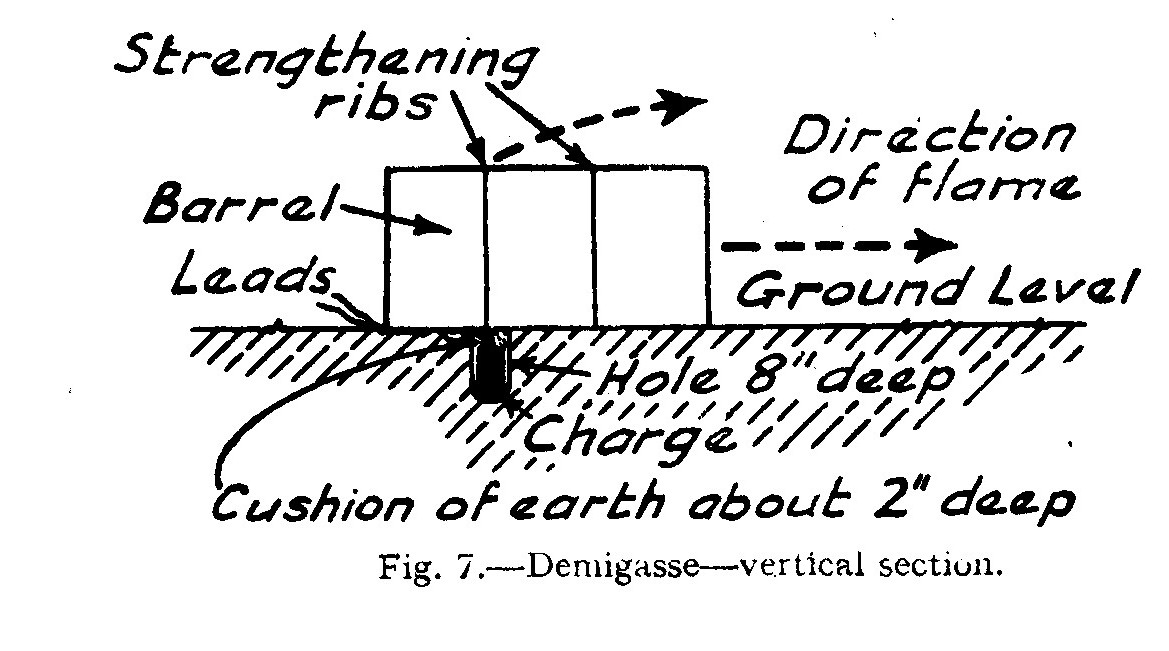
Typical fougasse installations used a metal drum or buried container filled with petrol, oil or other combustible liquids and an explosive charge placed to throw the liquid forward when fired. The charge could be initiated by command, fuse or other means; many wartime British systems were electrically fired by the defenders. Simple fougasses often included improvised additives or thickening agents to increase adhesion of burning fuel to targets.
- Primary elements: container of fuel, explosive charge, directional emplacement.
- Effect: projection of burning liquid, thermal and psychological damage.
- Triggering: command or booby‑trap style fuzes, depending on tactical need.
History and development
The flame fougasse was developed in Britain during the 1940 invasion scare of 1940 as a low‑cost anti‑tank and area‑denial weapon. Authorities deployed large numbers of barrel fougasses in prepared positions across likely invasion routes. These devices are a form of mine and can also be described as an improvised explosive device. The British effort took place in the context of World War II defensive planning and civil engineering measures.
Deployment and examples
During 1940 several thousand fougasse batteries were emplaced, concentrated in parts of southern England and some sites in Scotland. Although they were never used in combat on British soil during the war, examples of the weapon were later used in other theatres, notably in Greece, where similar techniques were employed against advancing forces. The fougasse's value lay in its low cost, ease of construction and strong deterrent and morale effects despite its limited range.
Legacy and distinctions
Flame fougasse should be distinguished from man‑portable flamethrowers and from aerial or incendiary bombing. It is essentially a static emplacement that converts an explosive burst into an incendiary spray. Modern military doctrine treats such devices as hazardous improvised weapons; their historical use illustrates how defensive engineering adapts simple materials for large‑scale area denial. For further technical or historical reading, consult dedicated ordnance and WWII defensive works.
Questions and answers
Q: What is a flame fougasse?
A: A flame fougasse is a type of mine or improvised explosive device that uses an explosive charge to put burning liquid onto a target.
Q: Why was the flame fougasse developed?
A: The flame fougasse was developed in Britain as an anti-tank weapon in the World War II invasion crisis of 1940.
Q: How many flame fougasse barrels were put in batteries during World War II?
A: About 50,000 flame fougasse barrels were put in some 7,000 batteries during World War II.
Q: Where were most of the flame fougasse batteries located?
A: Most of the flame fougasse batteries were located in southern England, but some were also in Scotland.
Q: Was the flame fougasse ever used in combat in Britain?
A: No, the flame fougasse was never used in combat in Britain.
Q: Where did the flame fougasse see action later in World War II?
A: The flame fougasse saw action later in Greece.
Q: What crisis led to the development of the flame fougasse?
A: The World War II invasion crisis of 1940 led to the development of the flame fougasse as an anti-tank weapon.
Related articles
Author
AlegsaOnline.com Flame fougasse: WWII improvised incendiary mine and anti‑tank device Leandro Alegsa
URL: https://en.alegsaonline.com/art/34985