
American spadefoot toads (Scaphiopodidae)
A small family of North American burrowing frogs (Scaphiopodidae) noted for a keratinous hind-foot 'spade', vertical pupils, explosive breeding in ephemeral pools and rapid tadpole development.
Overview
American spadefoot toads belong to the family Scaphiopodidae, a small group of burrowing anurans native to North America. Members of this family are commonly called spadefoots because of a hardened, keratinous projection on each hind foot that is used for digging. They are primarily fossorial, spending long periods underground and emerging opportunistically after rain to feed and breed. A concise family summary and further references are available at the family page Scaphiopodidae overview.
Image gallery
7 Images


Physical characteristics
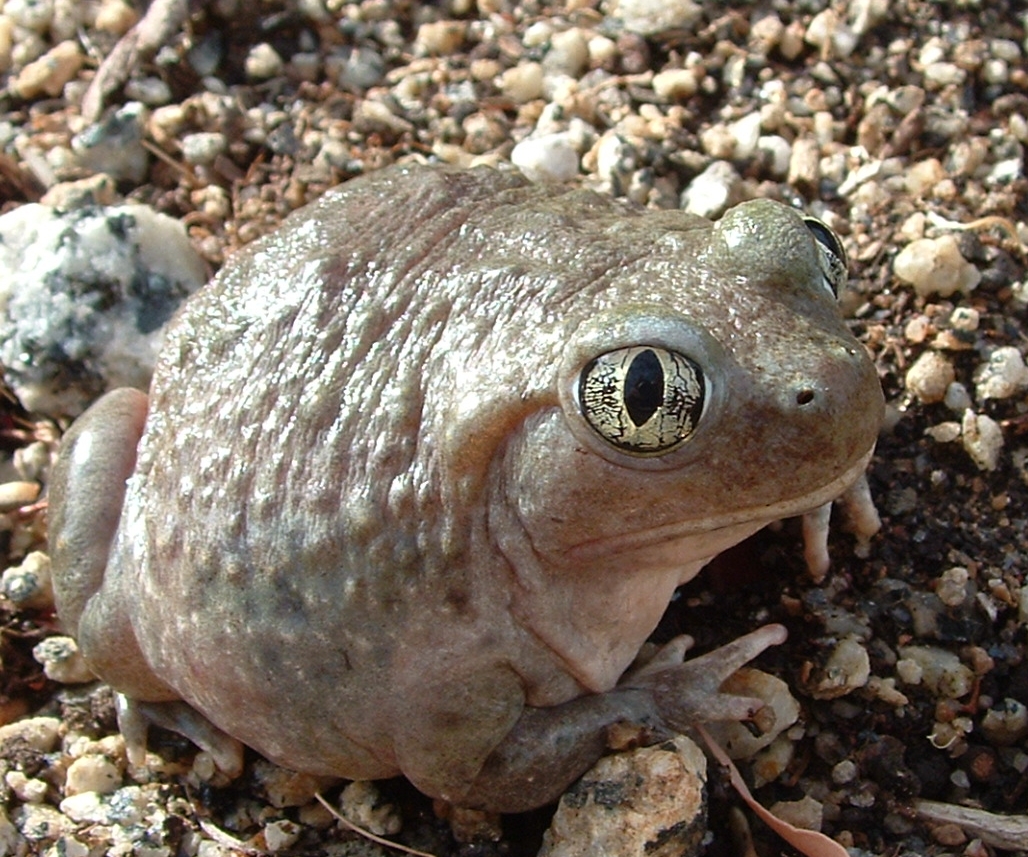
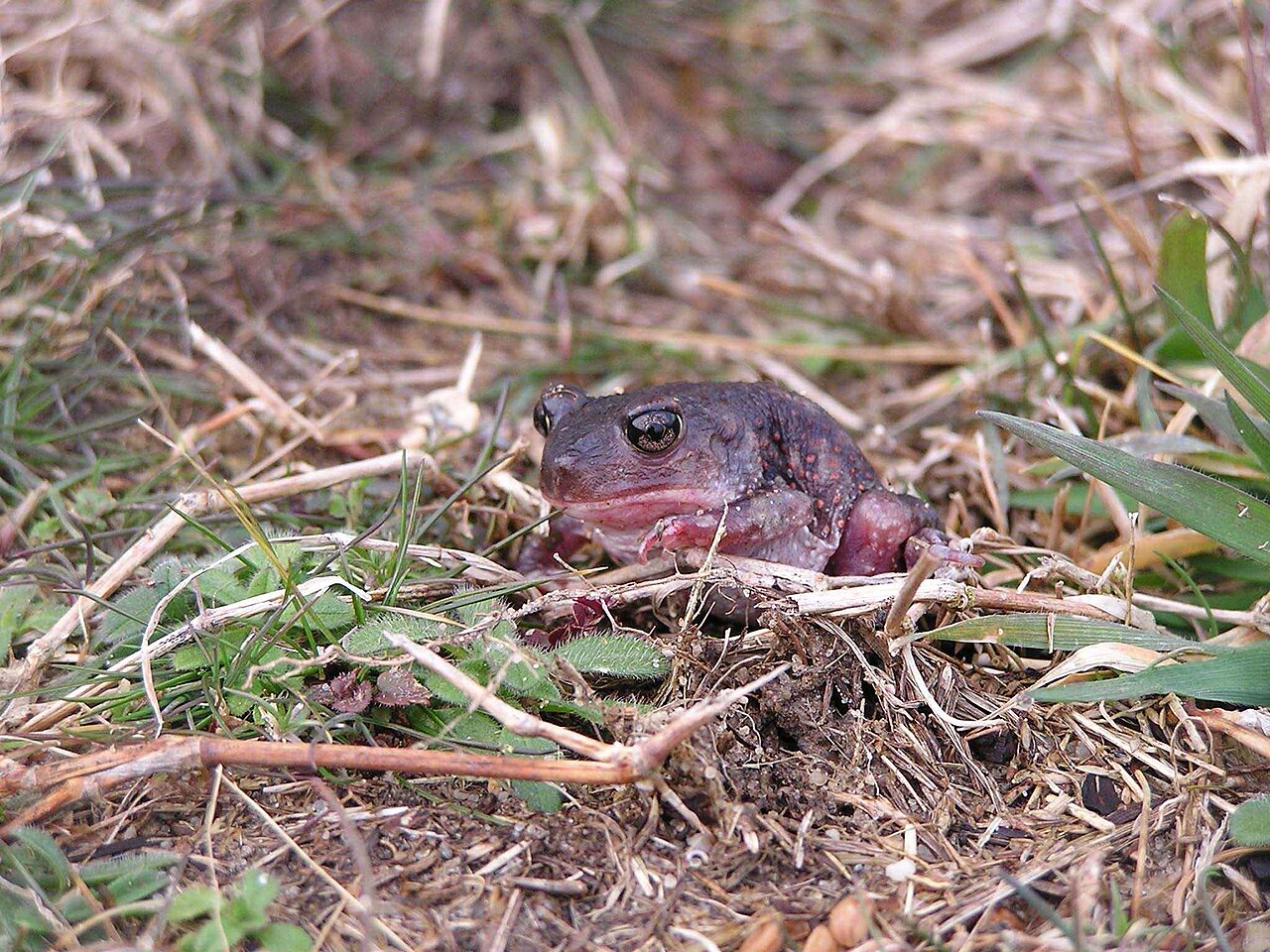
Spadefoots are compact, short-limbed frogs with rounded bodies and eyes that project above the head. Unlike many true toads, they often have relatively smooth skin and vertical pupils. The characteristic digging 'spade' is positioned on the inner rear surface of each hind foot and is used for rapid backward burrowing into loose soil. Coloration tends to be cryptic—shades of brown, gray or dull green—to provide camouflage on the ground and among leaf litter; more detailed identification notes are found in regional guides identification resources.
Behavior and reproduction
These frogs are mostly nocturnal and are adapted to environments with unpredictable water availability. Many species enter estivation, a dormant state underground, during prolonged dry periods. Reproduction is typically "explosive": when rains fill ephemeral pools, adults emerge, often in large numbers, and breed quickly. Males call to attract mates and form brief breeding choruses; eggs are laid in temporary water bodies and hatch rapidly. Tadpoles of spadefoots grow and metamorphose at an accelerated pace to avoid pool desiccation. Under crowded or resource-limited conditions, some tadpoles may exhibit facultative carnivory or other accelerated feeding strategies. For breeding ecology and life-history studies see breeding ecology notes.
Habitat and distribution
Spadefoots occupy a variety of open or semi-open habitats including grasslands, deserts, scrub, and open woodlands. Their range extends across much of temperate North America—from parts of southern Canada through much of the United States and into northern and central Mexico—though individual species have more restricted distributions. The ability to burrow allows them to survive in areas with seasonal or sporadic water by avoiding surface conditions until rains arrive. Regional distribution maps and habitat descriptions are available at specialized resources range and habitat information.
Taxonomy and notable species
The family Scaphiopodidae contains a small number of species placed in a few genera, commonly Scaphiopus and Spea. Depending on taxonomic treatments, roughly seven species are recognized in North America. Well-known taxa include eastern, western and several Mexican spadefoots; field guides and checklists list species-level traits, distributions, and distinguishing characteristics for field identification species checklist and accounts.
Conservation and human interactions
Spadefoots face many of the same pressures as other amphibians: loss and modification of ephemeral wetlands, habitat fragmentation, road mortality during breeding migrations, pollution, disease and the effects of climate variability. Because many species rely on temporary pools, alterations to natural hydrology can have outsized effects. Conservation actions typically focus on protecting breeding sites and surrounding terrestrial habitat, maintaining suitable hydrological regimes, and reducing threats such as roadkill. Status varies by species and region; local conservation authorities provide up-to-date assessments.
Identification tips and notes for observers
- Look for vertical pupils, smooth or slightly textured skin and a rounded body shape when distinguishing spadefoots from other toads.
- Check the hind feet for the characteristic keratinous spade used for backward digging.
- Surveys are most successful after heavy rains when adults congregate at temporary pools; night-time listening for brief breeding calls can help locate populations.
For researchers, naturalists and land managers, combining knowledge of local hydrology, seasonal weather patterns and terrestrial habitat requirements is key to monitoring and conserving spadefoot populations.
Questions and answers
Q: What is an American spadefoot toad?
A: An American spadefoot toad is a type of toad that belongs to the Scaphiopodidae family.
Q: Where do American spadefoot toads live?
A: American spadefoot toads live in North America, from southern Canada down to southern Mexico.
Q: How many species are in the Scaphiopodidae family?
A: There are seven species in the Scaphiopodidae family.
Q: What do American spadefoot toads look like?
A: American spadefoot toads are round with short legs and eyes that stick out. They are typically grey, dull green or brown in color to help with camouflage.
Q: How do American spadefoot toads dig into the ground?
A: American spadefoot toads have a hard growth on their feet which helps them to dig backwards into the ground.
Q: Where do American spadefoot toads live when they are not under the ground?
A: American spadefoot toads live on land when they are not under the ground.
Q: Why are American spadefoot toads usually dull in color?
A: American spadefoot toads are usually dull in color to help them blend in with their surroundings for camouflage.
Related articles
Author
AlegsaOnline.com American spadefoot toads (Scaphiopodidae) Leandro Alegsa
URL: https://en.alegsaonline.com/art/3476
Sources
- livingunderworld.org : "Scaphiopodidae (Cope, 1865) American Spadefoot Toads" · web.archive.org