
Five Easy Pieces (1970 film)
A 1970 American drama directed by Bob Rafelson, notable for Jack Nicholson's performance, its themes of alienation, and several Academy Award nominations; a key film of the New Hollywood era.
Overview
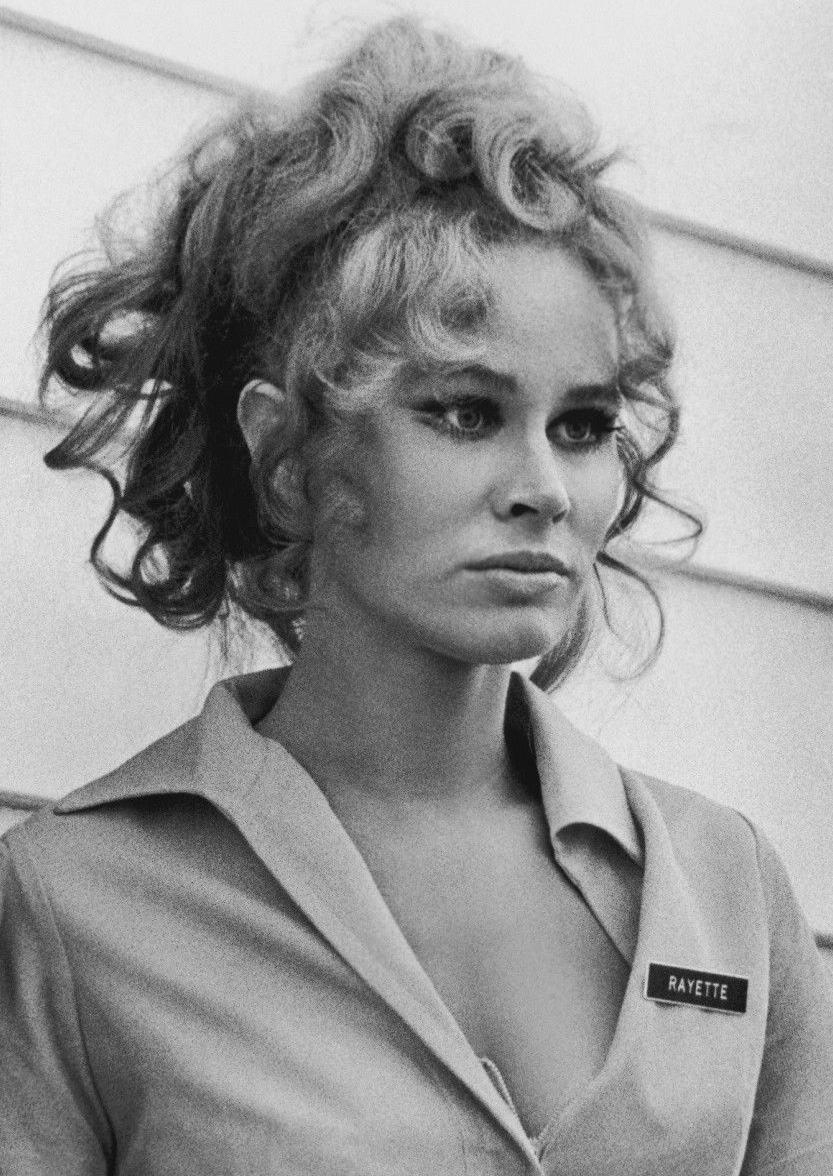
Five Easy Pieces is a 1970 American drama film directed by Bob Rafelson. The movie centers on a restless, self-destructive protagonist whose life straddles working-class labor and an estranged cultured past. It stars a small ensemble cast that includes Jack Nicholson, Karen Black, Susan Anspach, Sally Struthers, and Toni Basil. The film was released in 1970 and received four Academy Award nominations the following year.
Image gallery
2 Images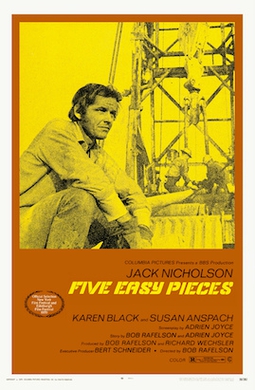
Plot and characters
The story follows Bobby Dupea, a former piano prodigy turned oil-rig worker, as he drifts through relationships, confronts his family background, and wrestles with identity and responsibility. Rather than a plot-driven thriller, the film unfolds through episodes and encounters that reveal its lead character's frustrations and contradictions. Supporting roles portray girlfriends, family members, and coworkers who each illuminate different aspects of his life.
Themes and style
Five Easy Pieces is often noted for its terse realism and subdued emotional register. Major themes include alienation, class tension, and the conflict between cultivated talent and blue-collar survival. The film mixes intimate interior scenes with open landscapes to underscore its protagonist's isolation. A simple but memorable diner scene is frequently cited as an example of the film's attention to character detail and social friction.
Production, release, and reception
Made during the New Hollywood era, the film benefited from a naturalistic acting approach and a restrained directorial style. Critics praised the performances and the film's willingness to leave questions unresolved. Its award recognition helped raise the profile of its lead actor and director, and it found a lasting place in discussions of 1970s American cinema.
Legacy and notable facts
- The film is widely regarded as a key work of the New Hollywood movement and a breakthrough dramatic role for its lead.
- It earned four Academy Award nominations, signaling strong critical esteem upon release.
- Scenes that focus on mundane confrontations and small gestures are often highlighted in film studies for their psychological realism.
Today Five Easy Pieces is studied for its depiction of mid-century American working-class life and for its influence on character-centered filmmaking that followed.
Questions and answers
Q: What is Five Easy Pieces?
A: Five Easy Pieces is an American drama movie directed by Bob Rafelson.
Q: Who are the stars of the movie?
A: The stars of Five Easy Pieces are Jack Nicholson, Karen Black, Susan Anspach, Sally Struthers, and Toni Basil.
Q: When was the movie released?
A: The movie was released in 1970.
Q: Was the movie successful?
A: Yes, the movie was successful, as it was nominated for four Oscars at the Academy Awards in 1971.
Q: Who directed the movie?
A: The movie was directed by Bob Rafelson.
Q: What genre does the movie belong to?
A: The movie belongs to the drama genre.
Q: Can you name some of the actresses who starred in the movie?
A: Yes, some of the actresses who starred in Five Easy Pieces are Karen Black, Susan Anspach, Sally Struthers, and Toni Basil.
Related articles
Author
AlegsaOnline.com Five Easy Pieces (1970 film) Leandro Alegsa
URL: https://en.alegsaonline.com/art/34684