
American robin (Turdus migratorius)
A widespread North American thrush known for its orange breast, ground-feeding habits and spring song; overview of identification, range, breeding, diet, predators and conservation.
Overview
The American robin (Turdus migratorius) is a familiar migratory songbird found across much of North America. It belongs to the thrush family (Turdidae) and is commonly referred to as the North American robin because early European settlers likened its orange breast to that of the European robin. Despite the name similarity, the two species are not closely related; the comparison is primarily a note on appearance (convergent coloration) rather than lineage. The species is usually described using two-part common and scientific names in field guides and natural history accounts (identification resources).
Image gallery
10 Images





Identification and subspecies
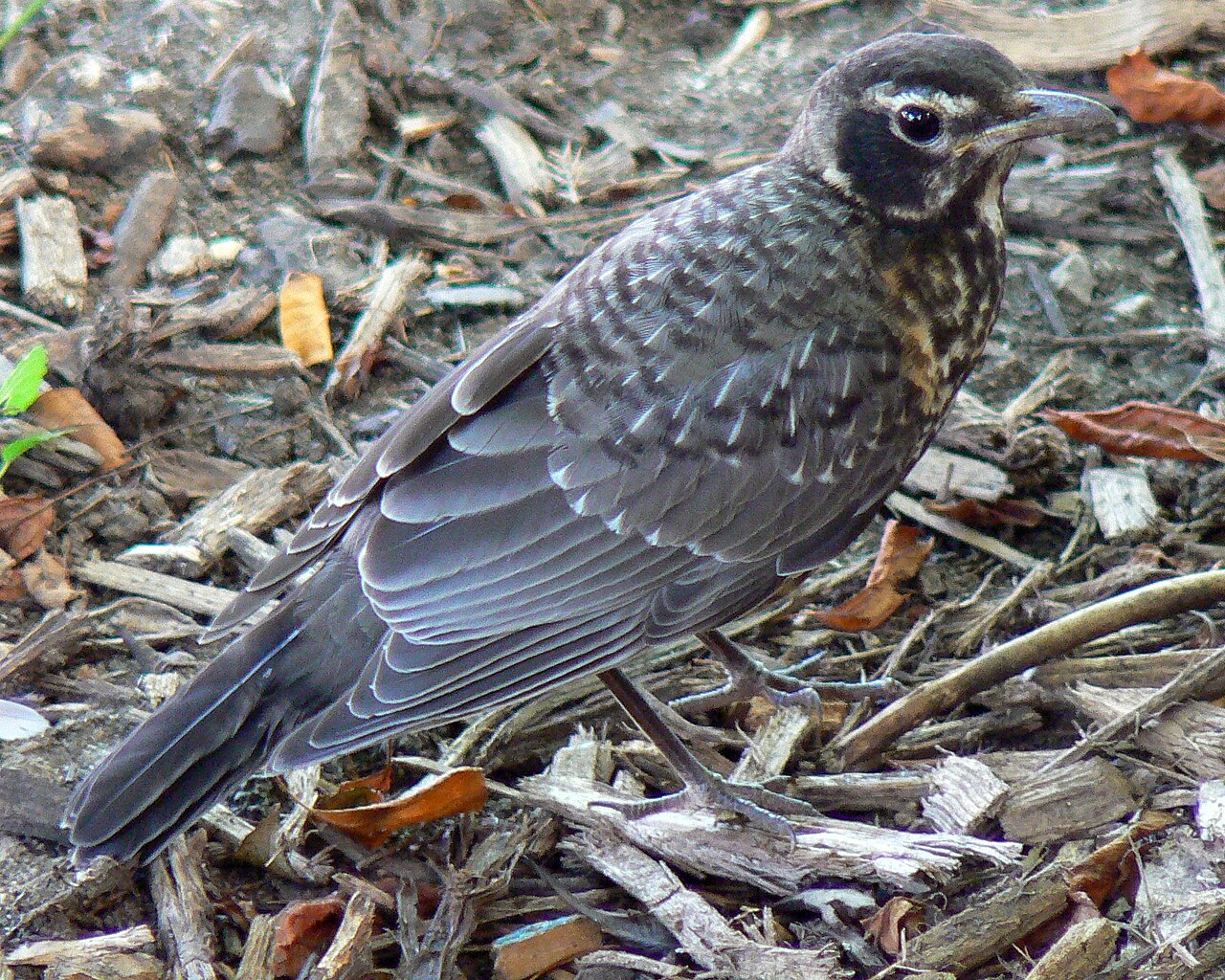
Adult American robins are medium-sized thrushes with a warm orange-red breast, gray-brown upperparts, and a white belly and undertail. Males often have darker heads and brighter breasts than females. Juveniles show spotted breasts and a more muted overall tone. Ornithologists recognize several subspecies across the range; differences are generally subtle and involve size, plumage shade and migratory behavior. One subspecies, T. m. confinis, is noted as relatively distinct in appearance and distribution (subspecies note).
Distribution and habitat
The American robin breeds across Canada, the United States and into parts of Mexico and winters in the southern U.S., Mexico and Central America. It is highly adaptable in habitat selection, occupying open lawns, parks, orchards and forest edges where it can find bare ground for foraging and trees or shrubs for nesting. The species occasionally appears as a vagrant far outside its normal range, with records from western Europe, Greenland and various Caribbean locations (continental range, European vagrant reports, Greenland sighting, Jamaica, Hispaniola, Puerto Rico, Belize). In general it favors sites that combine open ground for hunting invertebrates with woody cover for nesting and roosting (habitat preferences).
Breeding and nesting
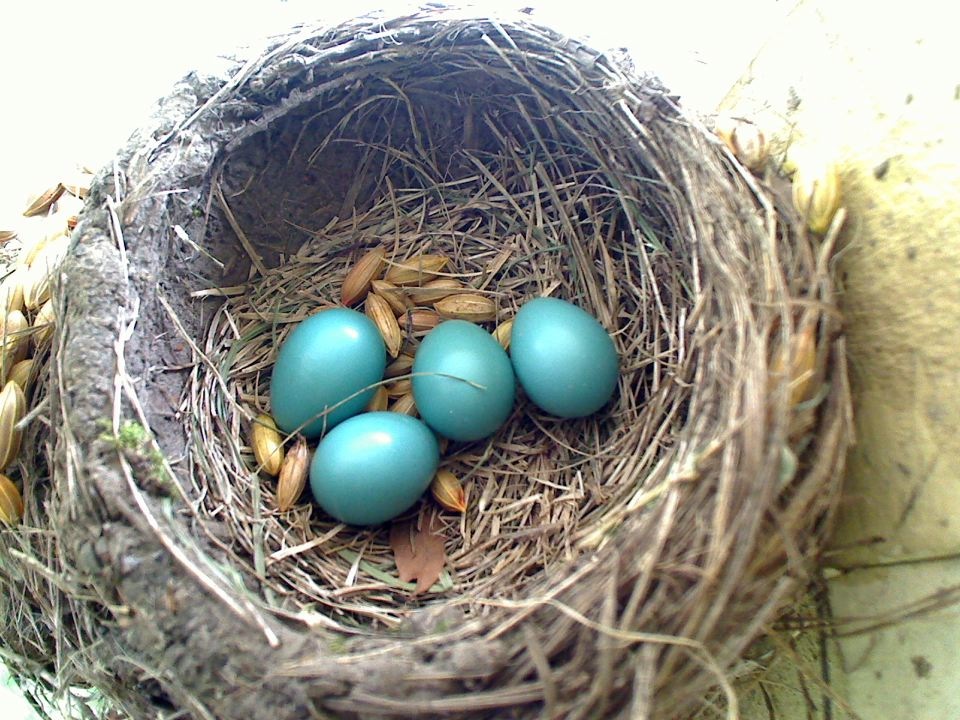
Robins begin nesting soon after returning north in spring. Females select nest sites and build cup-shaped nests, frequently on branches, ledges, porch beams or in hedges. Nest construction uses a mix of grasses, twigs and mud; household materials are sometimes incorporated. Typical nesting components include selected site, grass, small sticks and even paper or other anthropogenic material. Soft lining like feathers, rootlets and moss help cushion eggs. Clutch size is commonly three to five pale blue eggs (egg description), and both parents are involved in feeding young after hatching until fledging and independence.
Diet, predators and brood parasitism
American robins feed mainly on earthworms, insects and fruit, using sight to locate prey on open ground. Their feeding behavior—tugging worms from turf and turning leaf litter—makes them conspicuous on lawns and fields. Eggs and nestlings face predation from a range of animals including squirrels, snakes and corvids such as blue jays and crows. Adult robins can be taken by raptors and mammalian predators including hawks and domestic cats. Brood parasitism by brown-headed cowbirds occasionally occurs (cowbird parasitism); robins frequently recognize and reject foreign eggs, reducing the success of parasitism in many cases (host defenses).
Conservation and human interactions
Thanks to its broad range and adaptable habits, the American robin is classified as a species of least concern by major conservation assessments. It is a cultural symbol of spring in many parts of North America; its clear, melodic song is often one of the first heralds of the breeding season. Urban and suburban landscaping that maintains fruiting shrubs, trees and open lawns can provide habitat for feeding and nesting. Continued monitoring of population trends helps detect regional changes related to land use, climate and predator dynamics.
- Key identification: orange breast, spotted juvenile plumage, ground-foraging stance.
- Common nesting materials: mud, grasses, rootlets and soft lining.
- Importance: widely observed ecological role as insectivore and fruit consumer.
Questions and answers
Q: What is the American robin?
A: The American robin (Turdus migratorius) is a migratory songbird that belongs to the thrush family, Turdidae. It was named after the European robin because they have similar features.
Q: How many subspecies does the American robin have?
A: The American robin has seven subspecies.
Q: Where can the American Robin be found?
A: The American Robin can be found throughout North America and it is also a rare vagrant to western Europe, Greenland, Jamaica, Hispaniola, Puerto Rico, and Belize.
Q: What kind of habitats does the American Robin prefer?
A: The American Robin prefers open areas of ground to feed in and areas with trees or shrubs to breed and sleep in.
Q: Is the population of the American Robin declining?
A: No, due to its large range across North America, according to IUCN Red List data, there is no decline in population so it is listed as least concern.
Q: How do female Robins build their nests?
A: Female Robins build their nests using grass, sticks, paper feathers rootlets and moss. They will lay 3-5 eggs once the nest is built.
Q: What animals prey on adult Robins or their eggs/juveniles?
A: Adult Robins are preyed upon by hawks cats and larger snakes while eggs/juveniles are eaten by squirrels snakes blue jays common grackles american crows and common ravens.
Related articles
Author
AlegsaOnline.com American robin (Turdus migratorius) Leandro Alegsa
URL: https://en.alegsaonline.com/art/3467
Sources
- commons.wikimedia.org : Turdus migratorius
- species.wikimedia.org : Turdus migratorius
- iucnredlist.org : Turdus migratorius
- www3.interscience.wiley.com : "Blood Parasites of Pekin Robins (Liothrix luteus)"
- allaboutbirds.org : "American Robin"
- animaldiversity.ummz.umich.edu : "Turdus migratorius"
- mbr-pwrc.usgs.gov : "American robin Turdus migratorius"
- yorkshiretoday.co.uk : "Village braced for invasion of twitchers as rare visitor flies in"
- iwrc-online.org : "American Robin (Turdus migratorius)"
- sciencedaily.com : "Diversity of birds buffer against West Nile virus"
- 50states.com : "50 States"
- cdnpapermoney.com : "Canadian Paper Money"
- bankofcanada.ca : "1986 Birds of Canada Series"
- books.google.com : Literary Studies in Action
- books.google.com : The Great Fight