
American River (California): course, history, ecology, and recreation
The American River rises in the Sierra Nevada and flows west to the Sacramento River. Known for its Gold Rush history, Folsom Lake and Dam, salmon runs, and extensive recreational corridors and trails.
Overview
The American River is a prominent waterway in northern California in the United States. It is a major tributary of the Sacramento River and has shaped both regional ecology and human settlement. The river's watershed collects snowmelt and rainfall from the western slopes of the Sierra Nevada and conveys water, sediment and biological communities toward the lowland Central Valley.
Image gallery
10 Images


Course and watershed
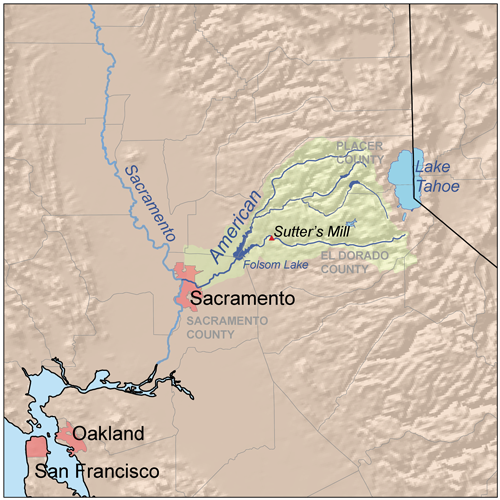
The American's headwaters rise in the Sierra Nevada, where three principal forks—the North, Middle and South Forks—drain steep mountain canyons. Downstream of Folsom Lake the mainstem runs roughly 31 miles west to the city of Sacramento, where it joins the Sacramento River. The watershed covers about 2,200 square miles and includes high-elevation basins, oak-dotted foothills and urban and agricultural lower reaches.
History and cultural importance
The American River basin was central to California's mid-19th century Gold Rush after gold was discovered in the foothills. That period brought rapid population growth, large-scale placer and hydraulic mining, and lasting changes to river channels and floodplains. Indigenous peoples lived in the basin for millennia before European and American settlement; those communities and their landscapes were profoundly affected by mining and later development.
Uses, infrastructure and management
Folsom Dam and Folsom Lake, located on the American east of Sacramento, are key components of regional flood control, water supply and hydroelectric generation. Reservoir operations, diversions and levees are managed to reduce flood risk, provide municipal and agricultural water, and support recreation. These human interventions also alter flow timing and habitat, creating trade-offs between consumptive uses and ecological needs.
Ecology and fishery
The river supports runs of anadromous fish such as salmon and steelhead as well as resident fish, amphibians and riparian bird species. Dams, channel confinement, historic mining and urban runoff have modified habitat quality, sediment transport and water temperatures. Recovery efforts by state and local agencies and nonprofit organizations focus on restoring spawning and rearing habitat, improving fish passage and managing flows to benefit native species while accommodating human water demands.
Recreation and public access
The American River is a well-known recreational corridor. The American River Parkway and an extensive network of multiuse trails provide opportunities for bicycling, walking, birdwatching and picnicking. The river's upper forks and canyons are popular for whitewater rafting and kayaking, while Folsom Lake and other reservoirs attract boating and fishing. Common recreational activities include:
- Whitewater rafting and kayaking in the mountain canyons
- Angling for salmon, trout and warmwater species
- Long-distance bicycling and hiking on parkway trails
- Boating, swimming and shoreline recreation at reservoirs
Conservation and contemporary challenges
Contemporary stewardship focuses on balancing urban growth and water supply needs with habitat restoration and floodplain reconnection. Projects address legacy mining impacts, invasive species, and maintaining adequate flows for native fish. Coordination among federal, state and local agencies, water districts and community groups is essential to sustain the American River's ecological functions while supporting the region's recreational and water-resource uses.
For maps, management plans and more detailed information consult regional agencies and conservation organizations through official resource pages: river overview, regional geography, national context, tributary systems, Sacramento River connections, Sierra Nevada sources and local city resources.
Name variations
The river bore different names in several languages over time:
- American fork
- Rio de los Americanos
- Rio Ojotska
- Wild River
Tags
Related articles
Author
AlegsaOnline.com American River (California): course, history, ecology, and recreation Leandro Alegsa
URL: https://en.alegsaonline.com/art/3466