
Fishstick (fish stick, fish finger)
A fishstick is a breaded or battered white-fish portion, usually sold frozen and reheated by baking or frying. Popular as a quick, child-friendly meal, with many regional variations and serving styles.
Overview
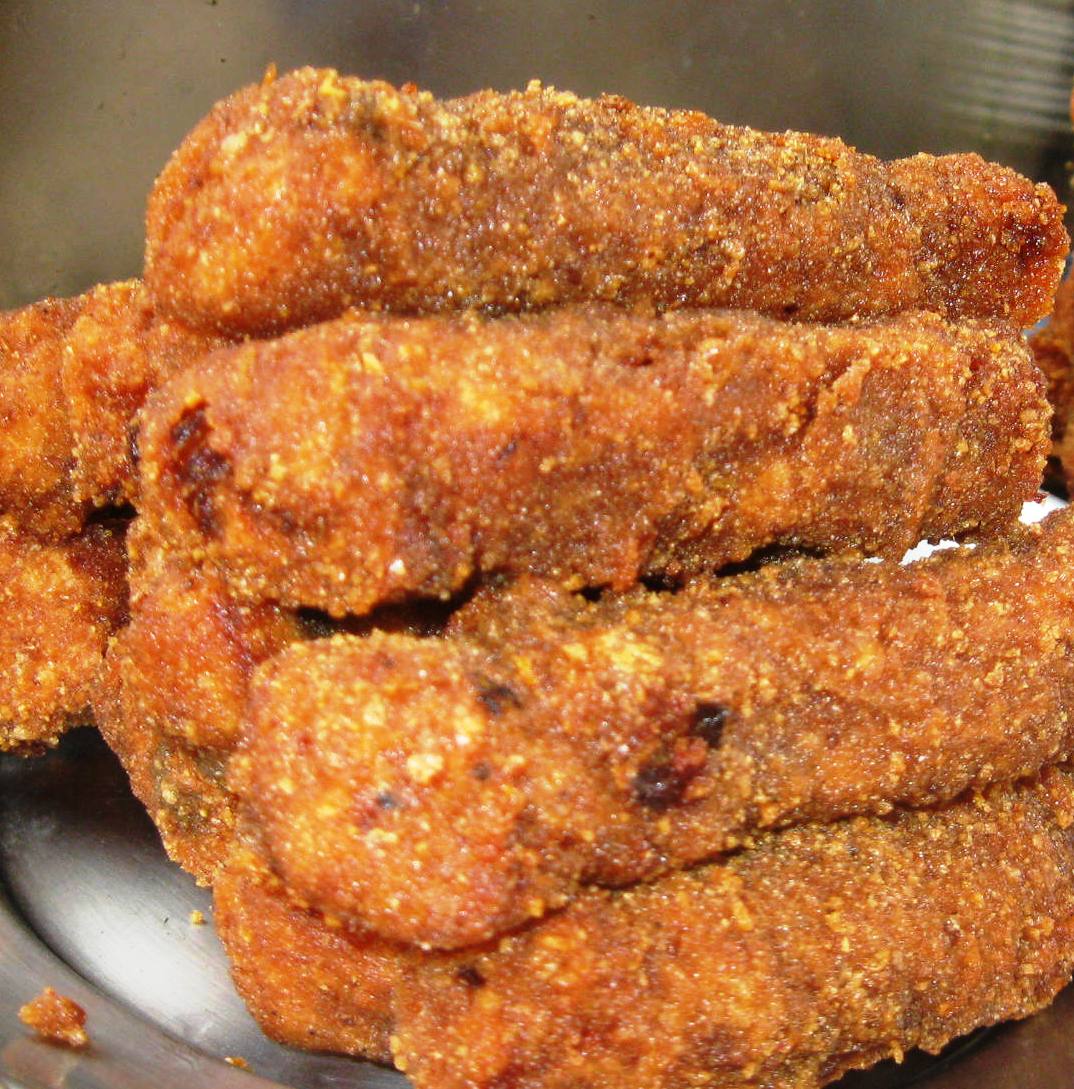
A fishstick—also called a fish stick or fish finger—is a small, rectangular portion of whitefish coated in batter or breadcrumbs and cooked until crisp. Sold fresh or frozen, it is designed for convenience: quick to prepare, portable when eaten by hand, and familiar in many household freezers. The product became widespread as an affordable, easy-to-handle way to serve fish, often appealing to children and busy households.
Image gallery
5 Images


Composition and varieties
Typical fishsticks are made from mild-flavored whitefish such as cod, haddock or pollock; processed fillets are shaped, seasoned, and then coated. Some versions use a light batter, others a dry breadcrumb crust, and more recent products include whole-muscle fillet pieces rather than minced fish. Vegetarian or plant-based alternatives now mimic the shape and texture of traditional fishsticks.
Preparation and serving
Fishsticks are commonly reheated from frozen by baking or pan-frying; deep-frying is also used in some food-service settings. Baking requires less oil and tends to produce a firmer texture, while frying gives a crisper crust. Typical accompaniments include tartar sauce and ketchup, and they are often paired with side dishes like mashed potatoes, peas, or a simple salad.
- Common condiments: tartar sauce, ketchup, mayonnaise
- Cooking methods: oven-bake, shallow-fry, deep-fry
- Sides: peas, chips (fries), mashed potato, coleslaw
History and development
The fishstick emerged in the mid-20th century as refrigerated and frozen food technology expanded, allowing mass production and longer shelf life. Many accounts trace its commercial popularization to manufacturers in the United Kingdom and other Northern European countries before spreading internationally. Over time the product diversified into different coatings, portion sizes and frozen-food lines aimed at both children and adults.
Nutrition and cultural notes
As a processed seafood product, fishsticks provide protein and can be a source of vitamins and omega-3s when made from whole-fish fillets. They can also be high in sodium and, when deep-fried, higher in fat. For those seeking lower-fat options, baked varieties or brands that use whole fillets and minimal breading are recommended. In popular culture the fishstick is often associated with convenience, childhood meals, and economical home cooking.
For more on the product's origins and regional names see historical accounts, and for details on common fish species used consult resources about whitefish such as cod and related species.
Questions and answers
Q: What are fishsticks?
A: Fishsticks are a type of food made from battered and breaded whitefish, usually cod.
Q: Where were fishsticks probably invented?
A: Fishsticks were probably invented in the United Kingdom.
Q: What sauces are often eaten with fishsticks?
A: Fishsticks are often eaten with tartar sauce, cocktail sauce, or ketchup.
Q: Who typically enjoys eating fishsticks?
A: Fishsticks are popular with children and their parents as an easy-to-prepare finger food.
Q: Is eating fishsticks considered healthy?
A: Fishsticks are considered somewhat healthy for kids.
Q: What type of fish is commonly used to make fishsticks?
A: Whitefish like cod are commonly used to make fishsticks.
Q: How are fishsticks prepared?
A: Fishsticks are prepared by battering and breading the whitefish before cooking.
Related articles
Author
AlegsaOnline.com Fishstick (fish stick, fish finger) Leandro Alegsa
URL: https://en.alegsaonline.com/art/34652