
Fishing cat (Prionailurus viverrinus): wetland specialist of South and Southeast Asia
An overview of the fishing cat (Prionailurus viverrinus): appearance, behavior, habitat, diet, threats and conservation, with distinctions from similar small wild cats.
The fishing cat (Prionailurus viverrinus) is a medium-sized wild felid native to parts of South and Southeast Asia. It is the largest member of the small wild cat genus Prionailurus, with a stocky, muscular build and a reputation for hunting in and near water. Fishing cats are roughly twice the size of an average domestic cat and are adapted to capture aquatic prey, especially fish. Their range and ecology are closely tied to wetland systems and riverine landscapes, making them both distinctive and vulnerable among Asian small cats. For a general species profile see species overview.
Image gallery
7 Images


Appearance and distinguishing features
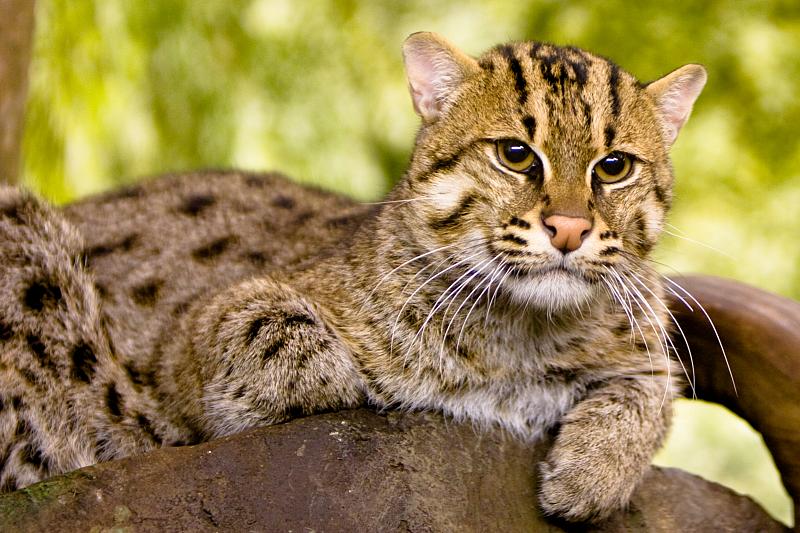
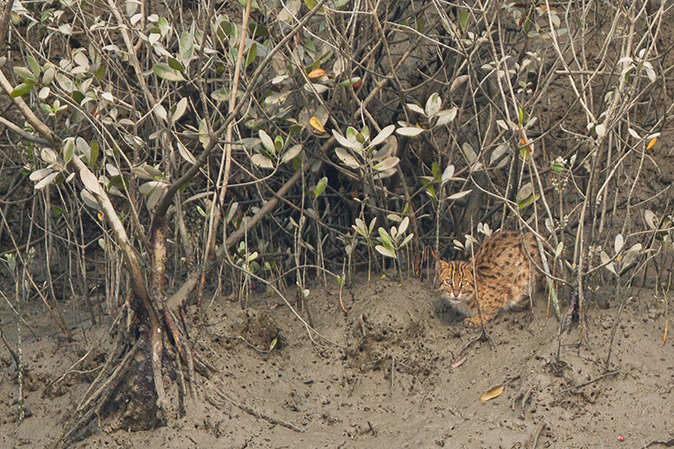
Fishing cats have short to medium-length fur patterned with dark spots and stripes that help break up their outline in reeds and mangroves. Their bodies are relatively compact, with short legs and a thick tail. Key identifying traits include partially webbed toes, a broad head, and dense, water-resistant fur that permits frequent wet activity without rapid heat loss. They are larger and more powerfully built than many other small Asian felids, which aids in handling slippery or struggling prey.
- Size and build: noticeably larger than most domestic cats and other small wild cats.
- Feet: partially webbed toes that assist swimming and paddling—see notes on morphology at webbing adaptations.
- Coat: spotted and striped patterning, typically grayish to brownish background.
- Head and tail: broad skull and relatively short, thick tail compared with more arboreal species.
Range and habitat
Fishing cats occur across a discontinuous range that historically included lowland wetlands from parts of South Asia through much of Southeast Asia. Their preferred environments are freshwater and brackish wetlands: marshes, flooded grasslands, oxbow lakes, rivers and adjacent reedbeds, and coastal mangrove forests. They are especially associated with areas that support abundant fish and other aquatic prey. Typical microhabitats include riverbanks and swampy depressions where water levels fluctuate seasonally and supported vegetation provides cover and hunting opportunities; see links on wetland types like wetlands, streams, mangroves, and swamps.
Behavior and diet
Fishing cats are largely crepuscular and nocturnal, although they may be active in daylight where disturbance is low. They are adept swimmers and often splash, wade or dive to catch fish, amphibians and crustaceans. Their diet is diverse and opportunistic: fish and aquatic animals form an important proportion, but they will also take small mammals, birds and invertebrates when available. Their hunting techniques include stalking along banks, plunging forepaws into shallow water to grasp fish, and ambushing from cover—behaviors that reflect their close ecological relationship with aquatic habitats. The species shares some habitat preferences with the closely related leopard cat, but differs in body build and tendency to forage in water.
Reproduction and life history
Information gathered from field studies indicates that fishing cats do not form social groups; adult individuals maintain territories and meet mainly to mate. Females raise kittens alone in dens placed in thick vegetation, hollow logs or other sheltered sites near water. Litter sizes are typically small and juvenile survival can be sensitive to seasonal flooding and prey availability. Like many small felids, fishing cats invest substantial maternal care during the early months, and juveniles gradually acquire hunting skills by observing and practicing with the mother.
Conservation status, threats and protection
The International Union for Conservation of Nature (IUCN) has assessed the fishing cat as a threatened species; habitat loss and fragmentation have driven steep declines across much of its range. The conversion and degradation of wetlands for agriculture, aquaculture, urban expansion and infrastructure are primary threats. Direct persecution, accidental snaring, depletion of fish stocks through overfishing and pollution also reduce local populations. For official status details see IUCN assessment.
- Habitat loss: draining and conversion of wetlands to farmland or development.
- Water pollution and overfishing: reduces prey base and creates suboptimal conditions.
- Human–wildlife conflict: cats may be killed or trapped where they take domestic fish or poultry.
- Fragmentation: isolates populations and limits gene flow, increasing extinction risk.
Conservation actions focus on safeguarding remaining wetland habitats, restoring degraded areas, creating protected corridors, community engagement to reduce persecution, and improving fisheries management to sustain prey populations. Regional conservation programs and protected area management aim to reconcile human livelihoods with the ecological needs of this wetland specialist.
Identification and notable facts
When distinguishing a fishing cat from similar small felids, consider its larger, heavier build, shorter legs, partially webbed toes and aquatic behavior. It is a remarkable example of a small cat that evolved strong ties to aquatic ecosystems rather than the more typical forest and grassland niches occupied by other Asian felids. For additional resources on taxonomy, ecology and field identification consult detailed species accounts and regional studies via species overview and other referenced material such as genus information and habitat guides available through conservation organizations (South Asia, Southeast Asia field programs).
Questions and answers
Q: What is a fishing cat?
A: A fishing cat is a medium-sized wild cat found in South and Southeast Asia.
Q: How big is a fishing cat compared to a domestic cat?
A: A fishing cat is about twice the size of a domestic cat.
Q: Why are fishing cats endangered?
A: Fishing cats are endangered because their wetland habitats are being settled, degraded, and converted, leading to a decline in their population throughout much of their Asian range.
Q: Where do fishing cats typically live?
A: Fishing cats typically live in wetland habitats, along rivers, streams, and mangrove swamps.
Q: How is a fishing cat adapted to its habitat?
A: A fishing cat is adapted to its habitat by being an eager and skilled swimmer, with partly webbed feet, and the ability to catch fish.
Q: What is the closest relative of the fishing cat?
A: The closest relative of the fishing cat is the leopard cat.
Q: What organization classified the fishing cat as endangered?
A: The IUCN (International Union for Conservation of Nature) classified the fishing cat as endangered in 2008.
Related articles
Author
AlegsaOnline.com Fishing cat (Prionailurus viverrinus): wetland specialist of South and Southeast Asia Leandro Alegsa
URL: https://en.alegsaonline.com/art/34638
Sources
- bucknell.edu : "Order Carnivora"
- google.com : Mammal Species of the World
- worldcat.org : 62265494
- iucnredlist.org : "Prionailurus viverrinus"