
Fish and chips
Fish and chips: the British fried fish fillet and potato chips dish — ingredients, preparation, history, regional variations, cultural role and modern context.
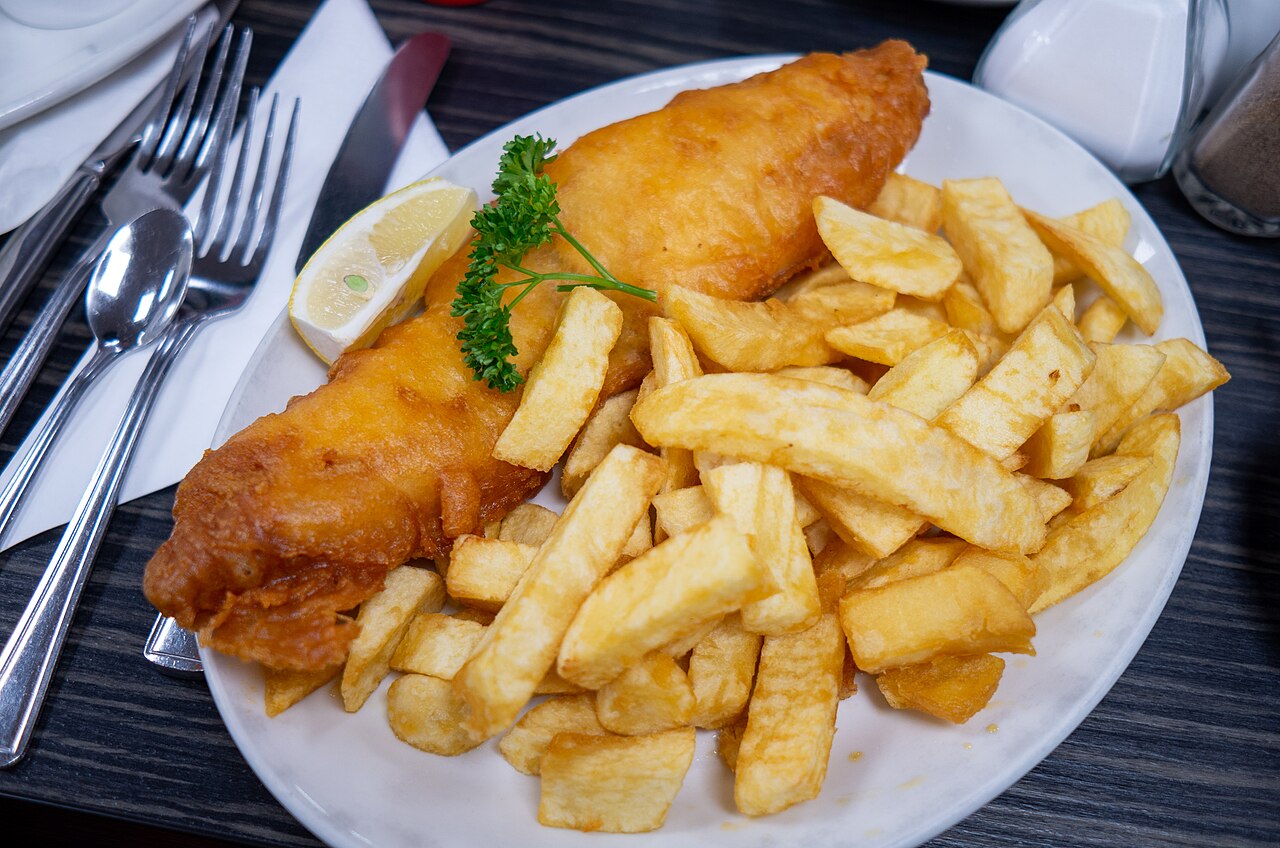
Fish and chips is a cooked meal of a battered or breaded white fish fillet served with deep-fried potato chips. It is widely associated with Britain but is eaten in many English-speaking countries and regions. The dish is commonly offered as takeaway or casual dining and is often categorized as fast food. Typical servings are wrapped in paper or presented in a box, and the combination of crisp batter and chunky chips defines its basic character.
Image gallery
10 Images






Main components and preparation
The two principal components are the fish and the chips. Common choices of fish include cod and haddock, though pollock and other whitefish are also used. The fish is usually coated in a batter made from flour and liquid (water, milk or beer) and then deep fried until crisp. Potatoes are cut into thick strips and fried until golden; they may be cooked twice for extra crispness. Cooking uses the technique of deep frying, which gives the dish its distinctive texture.
Typical condiments and accompaniments include salt and malt or distilled vinegar, tartar sauce, and mushy peas. Many chip shops and restaurants offer extras such as curry sauce, baked beans, or gravy. In some places the fish may be grilled instead of fried, and variations exist in batter recipes and chip thickness.
Origins and historical development
Fish and chips emerged in the United Kingdom during the 19th century as an affordable, caloric meal for working-class people. The pairing of fried fish with chips grew rapidly with improvements in urban transport, industrial fishing, and potato cultivation, and with the spread of specialized takeaways called fish-and-chip shops. While precise early origins are debated, by the late 1800s the dish had become widespread across British towns and cities.
The format traveled with emigrants and cultural exchange; today fish and chips are prominent in countries such as Australia and New Zealand, as well as in former British colonies and port cities. Regional adaptations reflect local fish types, frying fats, and side dishes.
Beyond being a simple meal, fish and chips hold cultural significance as a national comfort food in Britain and a marker of working-class food history. Nutritionally, the dish is energy-dense because of frying and often high in fat and sodium, so it is commonly enjoyed as an occasional treat. Contemporary trends include using sustainable fish sources, alternative oils, and oven-baked or air-fried variations to reduce fat content.
Questions and answers
Q: What is fish and chips?
A: Fish and chips is a traditional British food that consists of chips and a deep fried fish fillet.
Q: Where did fish and chips originate from?
A: Fish and chips originally came from the UK.
Q: Is fish and chips popular around the world?
A: Yes, fish and chips is a popular kind of fast food in some parts of the world.
Q: Where are fish and chips most commonly found?
A: Fish and chips are most commonly found in England, but can also be found in shops and restaurants in Australia and New Zealand.
Q: When were the first fish and chips found?
A: The first fish and chips were found in the East end of London in the late 19th Century.
Q: Is fish and chips considered a traditional British food?
A: Yes, fish and chips is considered a traditional British food, though it is not as traditional as we may think.
Q: What does fish and chips consist of?
A: Fish and chips consists of chips and a deep fried fish fillet.
Related articles
Author
AlegsaOnline.com Fish and chips Leandro Alegsa
URL: https://en.alegsaonline.com/art/34616