
First War of Scottish Independence (1296–1328)
A sustained military and political struggle between Scotland and England from 1296 to 1328, marked by uprisings, major battles, shifting leadership and eventual diplomatic recognition of Scotland’s independence.
The First War of Scottish Independence was a prolonged conflict between the Kingdom of Scotland and the Kingdom of England that began with the English invasion of 1296 and concluded with diplomatic recognition in 1328. It combined conventional battles, sieges and irregular resistance, and it had profound consequences for Scottish governance, national identity and Anglo‑Scottish relations. The war followed a succession crisis and English efforts to assert overlordship over Scotland.
Image gallery
8 Images





Origins and early events
The crisis that precipitated the war centered on disputed succession and English intervention. King John Balliol was forced to abdicate after a decisive English campaign. Scottish forces suffered a major defeat at Dunbar on 27 April 1296, and Balliol was taken into custody. He was initially imprisoned in the Tower of London, later placed in the care of the papacy, and eventually retired to his family estates in Picardy. Despite his removal, many Scots continued to regard him, or the idea of his kingship, as a valid rallying point.
With the throne effectively vacant, resistance hardened into open rebellion. In 1297 local leaders took the field: William Wallace and Andrew de Moray led a coalition that framed its action as defending Scottish rights and, nominally, acting on behalf of Balliol. Their victory at Stirling Bridge was a significant early success for the insurgents, though later engagements shifted fortunes again.
Later development and Robert the Bruce
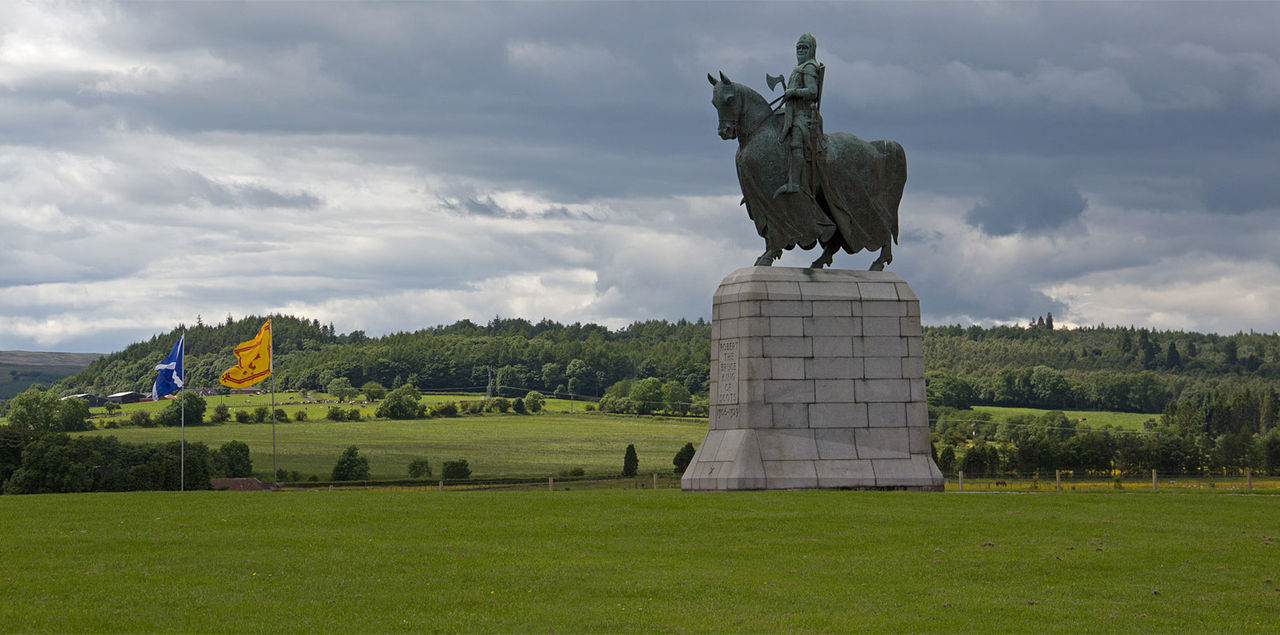
Fragmented leadership and competing noble interests characterized much of the intervening years. Robert Bruce, who would become a central figure, asserted his claim to the throne and was crowned in 1306 after a series of violent events and political maneuvers. As Robert the Bruce consolidated power he pursued both military campaigns and diplomatic recognition. The Scottish victory at Bannockburn in 1314 was a turning point, severely weakening English control and enhancing Bruce’s authority.
Throughout the conflict both kingdoms used legal claims, papal diplomacy and negotiated truces alongside armed action. The Scots appealed repeatedly to international opinion and ecclesiastical authorities to assert their independence. By the 1320s documents such as the Declaration of Arbroath and sustained negotiation helped set the stage for a formal settlement.
Significance, key engagements and figures
The war established enduring symbols and institutions in Scotland and altered medieval politics in Britain. It is remembered for its combination of pitched battles, guerrilla warfare and political maneuvering. Important battles and episodes include:
- Dunbar (1296) — early English victory.
- Stirling Bridge (1297) — major Scottish victory under Wallace and de Moray.
- Falkirk (1298) — English victory that checked Wallace’s campaign.
- Bannockburn (1314) — decisive Scottish victory that shifted momentum toward independence.
Major personalities of the era included John Balliol, William Wallace, Andrew de Moray, Robert the Bruce and successive English monarchs whose policies shaped the conflict. The war formally ended with treaties in 1328 that recognized Scottish independence in practice and diplomacy, closing a tumultuous chapter that shaped the medieval British Isles.
For further contextual reading, contemporary chronicles and modern scholarship offer detailed accounts of battles, legal claims and the social impact of the war. Primary figures and documents remain central to studies of medieval sovereignty and nationhood.
Related names and topics: Scotland, John Balliol, William Wallace, Robert the Bruce.
Questions and answers
Q: When did the First War of Scottish Independence start and end?
A: The First War of Scottish Independence started in 1296 and ended in 1328.
Q: When were the Scots defeated at Dunbar?
A: The Scots were defeated at Dunbar on 27 April 1296.
Q: Who abdicated in Montrose castle in 1296?
A: John Balliol abdicated in Montrose castle on 10 July 1296.
Q: Where was John Balliol imprisoned after abdicating?
A: John Balliol was imprisoned in the Tower of London at first.
Q: Who was John Balliol released into the custody of?
A: John Balliol was released into the custody of Pope Boniface VIII.
Q: When was John Balliol released from custody and where did he live the rest of his life?
A: John Balliol was released around the summer of 1301 and lived the rest of his life on his family's estates in Picardy.
Q: Who was the rightful King of Scotland after John Balliol's abdication?
A: Scotland had no monarch until the accession of Robert the Bruce in 1306.
Related articles
Author
AlegsaOnline.com First War of Scottish Independence (1296–1328) Leandro Alegsa
URL: https://en.alegsaonline.com/art/34599