
Fire salamander (Salamandra salamandra)
A widespread European salamander noted for black-and-yellow coloration, toxic skin secretions, varied reproductive modes, long lifespan, and local conservation concerns from habitat loss and disease.
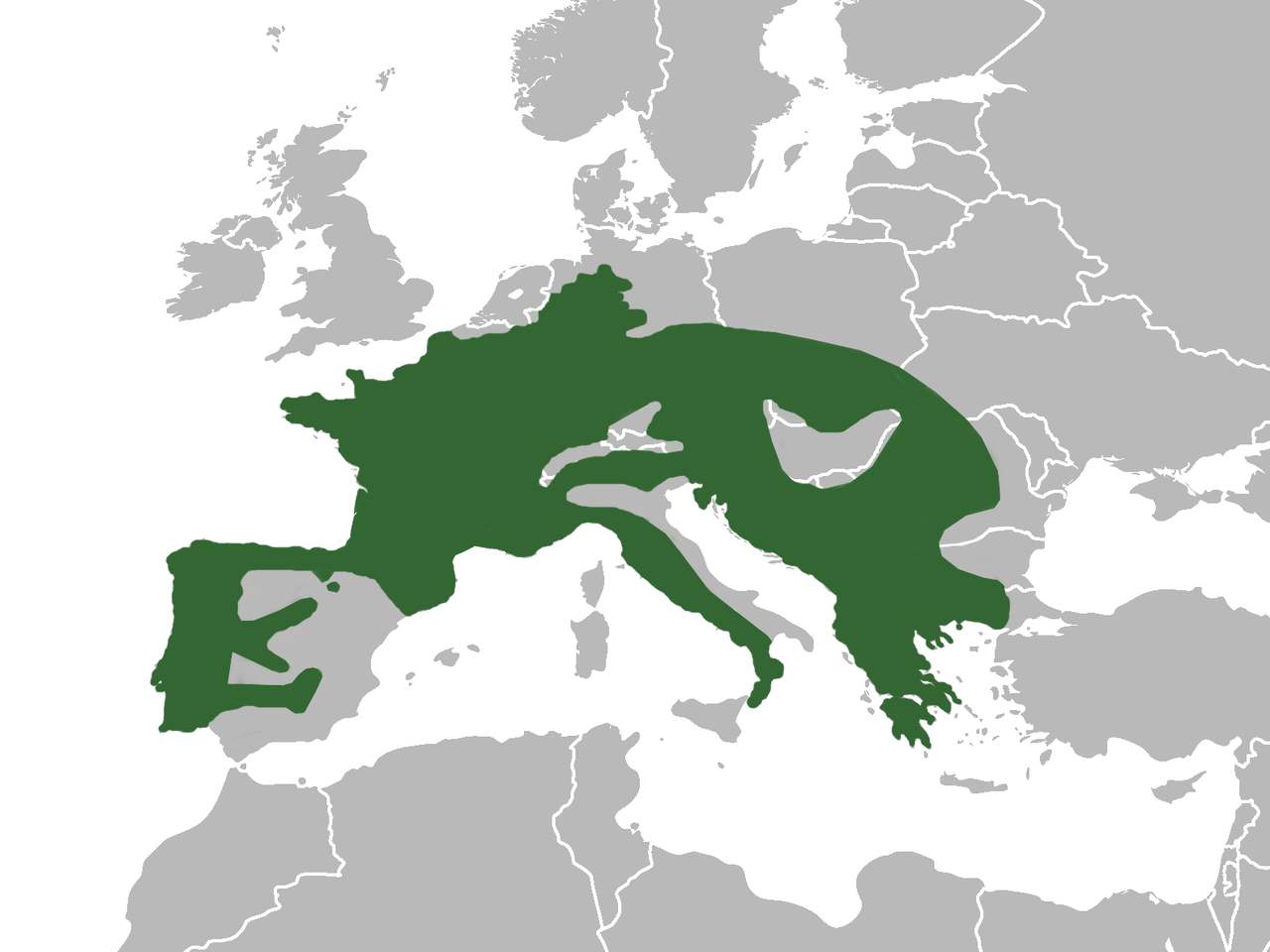
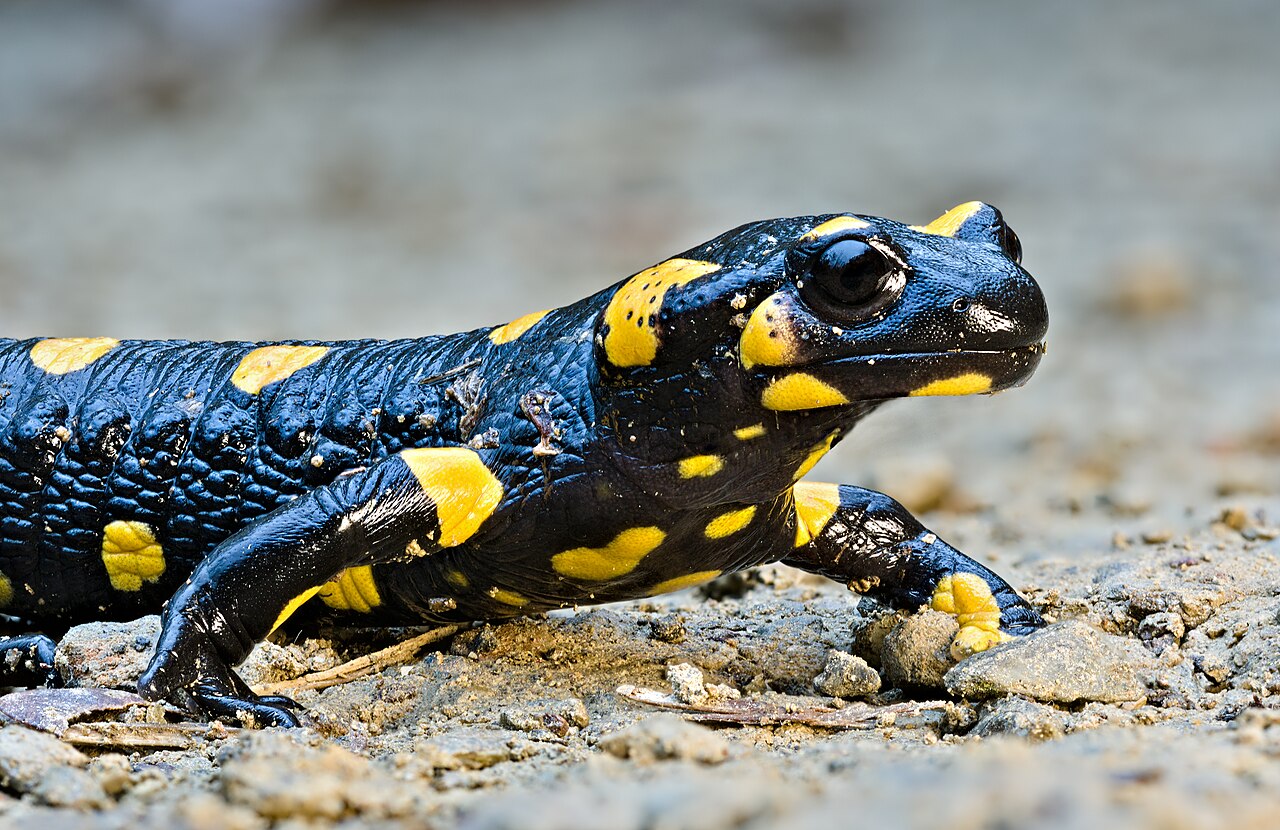
The fire salamander (Salamandra salamandra) is a well-known amphibian of European forests and uplands. It is primarily black with bright yellow, orange or red markings that vary among individuals and subspecies. The striking color pattern functions as a warning signal to predators and is one of the species' most familiar features. For taxonomic and general information see Salamandra salamandra, and for distribution across the continent see European ranges and habitats.
Image gallery
10 Images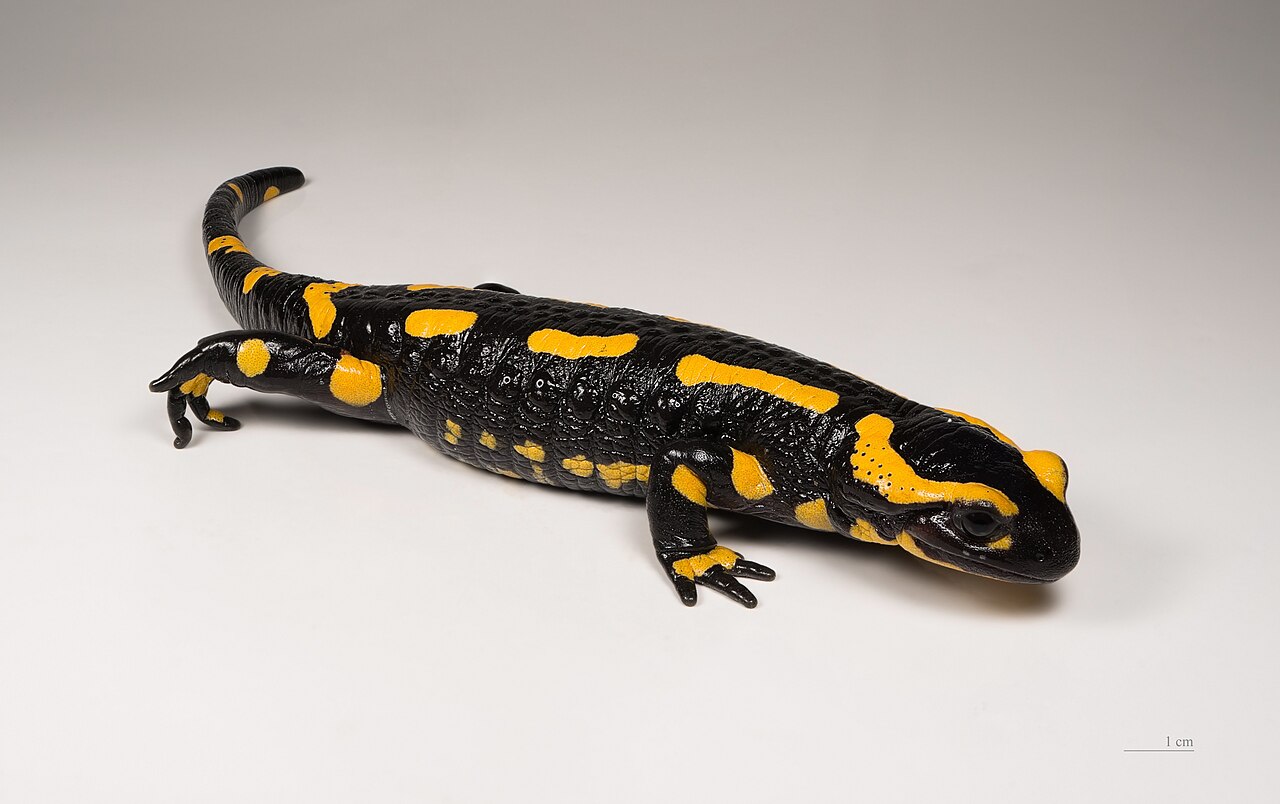




Description and variation
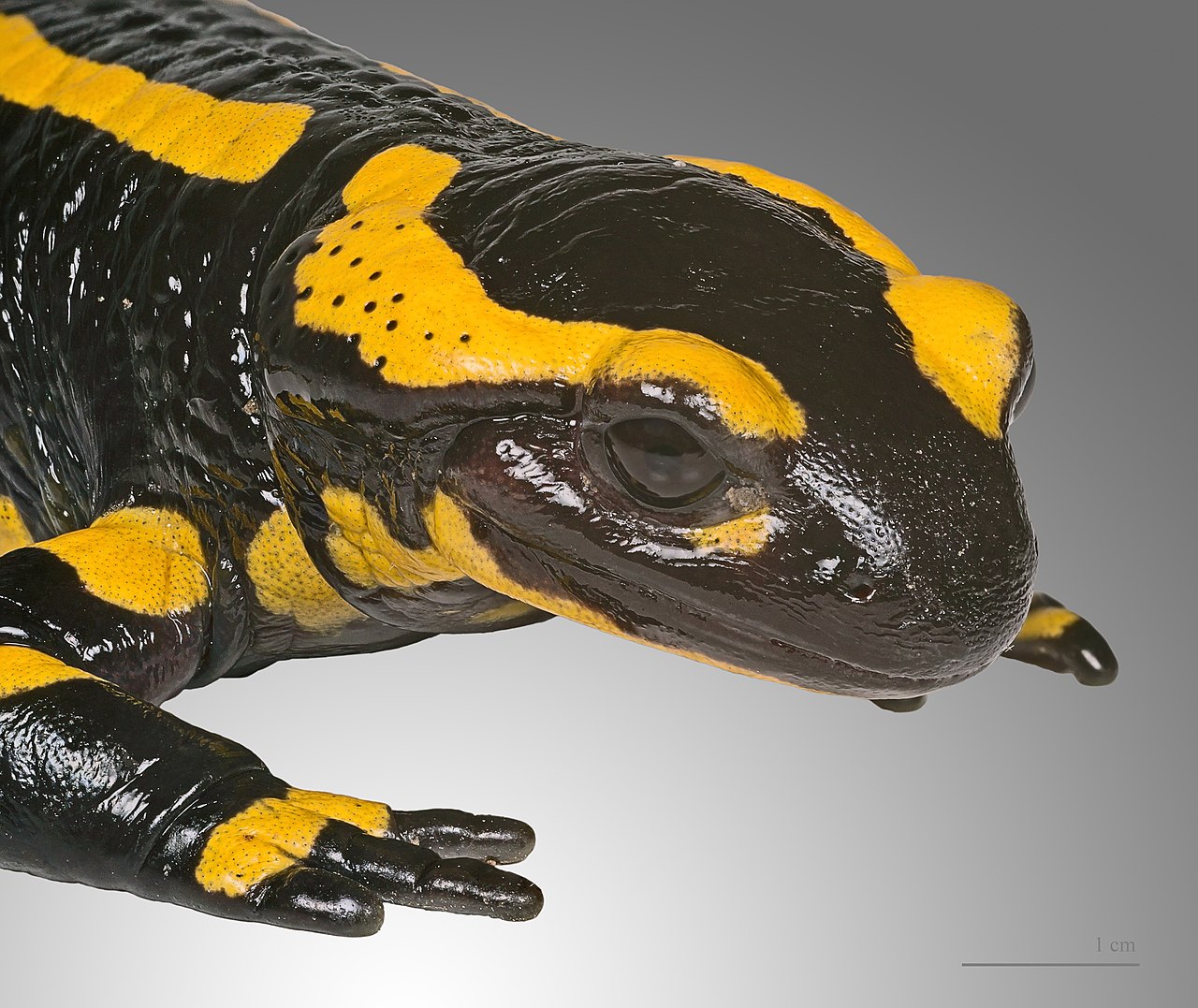
Adults typically have stout bodies, smooth skin and a broad, flattened head. Coloration ranges from mostly black with small yellow spots to predominantly yellow with black markings; shades of orange or red may also appear in some populations. This variation reflects genetic differences between regional subspecies and local adaptation. Males and females are similar in appearance, though males may be slightly smaller on average.
Habitat and behavior
Fire salamanders inhabit moist deciduous and mixed woodlands with ample leaf litter, logs and stone refuges. They are largely terrestrial, active at night or on damp days, and seek shelter under stones, moss or tree roots during dry periods. When breeding, adults return to small streams, ponds or other clean water bodies where larvae develop in aquatic conditions in many populations.
Reproduction and life cycle
Reproductive modes vary: in many populations females deposit live larvae into water (larviposition), while some subspecies give birth to more developed juveniles that require little or no free water. Eggs are retained internally until the larvae are ready to be released. Larvae undergo an aquatic larval stage with gills before metamorphosing into terrestrial juveniles.
Defense, toxins and lifespan
Fire salamanders possess skin glands that produce potent alkaloid toxins; their bright coloration advertises this chemical defense and helps deter predators. These secretions can be irritating or harmful to small animals and occasionally to humans handling them, so handling should be avoided. Fire salamanders are relatively long-lived for amphibians: many survive for a decade or more in the wild, and some captive individuals have been recorded living over fifty years.
Conservation and notable facts
- Although widely distributed across much of Europe, local populations face threats from habitat destruction, pollution, road mortality and introduced pathogens.
- Emerging amphibian diseases, including chytrid fungi, have caused declines in some regions, prompting monitoring and conservation measures.
- Numerous subspecies and regional forms exist, distinguished primarily by color patterns, size and reproductive behavior.
Because of their sensitivity to environmental change and reliance on clean woodland and freshwater habitats, fire salamanders are often used as indicators of ecosystem health. Observations and local conservation actions help protect remaining populations and the forest habitats they depend on.
Questions and answers
Q: What is a fire salamander?
A: A fire salamander is a species of salamander found in Europe.
Q: What does a fire salamander look like?
A: Fire salamanders are black with different kinds of yellow spots or stripes. They can also have shades of red and orange.
Q: Are all fire salamanders the same color?
A: No, some fire salamanders are mostly black while others are mostly yellow. The color depends on the subspecies.
Q: Can fire salamanders live a long time?
A: Yes, fire salamanders can have a very long life. One salamander in the German natural history museum lived for more than 50 years.
Q: Where can fire salamanders be found?
A: Fire salamanders can be found in Europe.
Q: Are fire salamanders dangerous to humans?
A: No, fire salamanders are not dangerous to humans.
Q: Do fire salamanders have any predators?
A: Yes, birds and small mammals are among the predators of fire salamanders.
Related articles
Author
AlegsaOnline.com Fire salamander (Salamandra salamandra) Leandro Alegsa
URL: https://en.alegsaonline.com/art/34472
Sources
- iucnredlist.org : Salamandra salamandra