
Fire drill — evacuation practice and safety procedures
A fire drill is an organized evacuation exercise that prepares occupants to leave a building quickly and safely. This article explains purpose, typical procedures, history, and variations worldwide.
Overview
A fire drill is a planned exercise that simulates an emergency requiring the rapid and orderly evacuation of a building or facility. Its purpose is to familiarise occupants with alarm signals, exit routes, assembly points and basic safety behaviour so that, in the event of a real fire or other emergency, people can leave quickly and with minimal confusion. Fire drills are widely used in schools, workplaces, hospitals, residential blocks, and public venues as a routine part of health and safety practice.
Image gallery
5 Images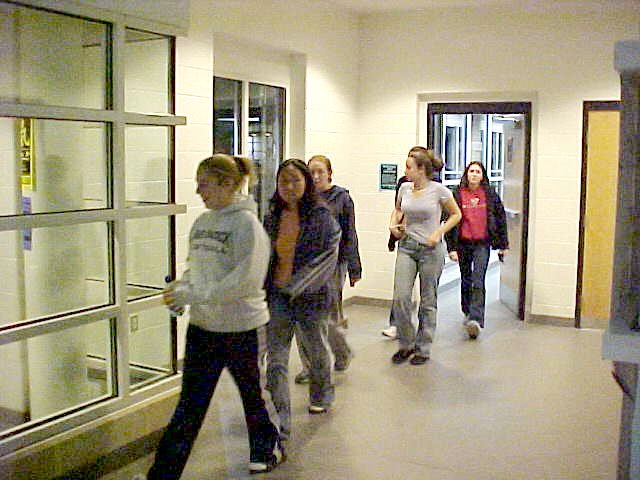


Typical components and procedures
Most drills begin with an audible warning produced by an alarm system: bells, horns, sirens or voice evacuation messages. The alarm may sound as a continuous tone, intermittent pulses or a two‑tone pattern depending on the system. On hearing the alarm, occupants should follow a predetermined set of steps:
- Stop activities immediately and collect any essential items only if directed (e.g., keys, medication).
- Leave belongings behind and proceed calmly to the nearest safe exit, avoiding elevators.
- Follow posted evacuation routes and instructions from designated wardens or staff.
- Assemble at a prearranged external meeting point so that attendance can be checked.
- Remain at the assembly area until a responsible person declares the situation safe or gives further instructions.
In institutional settings such as schools or offices, nominated staff typically take roll calls or use other methods to identify missing persons. Some tests of systems are scheduled and announced in advance to avoid unnecessary disruption; others are unexpected to better replicate real conditions.
History and development
The practice of drilling occupants for emergency exit dates back to early industrial and maritime safety routines when repeated practice proved effective at reducing panic and injuries. Over time, building codes and workplace safety regulations incorporated requirements for emergency planning, alarm systems and regular evacuation exercises. Modern alarm technology has expanded to include voice instructions, visual strobes for people with hearing impairments, and integrated control panels that can signal particular zones.
Uses, frequency and legal context
Authorities and employers set the frequency of drills according to local regulations, the type of occupancy and risk assessment. For example, educational institutions commonly run drills at regular intervals to ensure students and staff know procedures, while large public venues may hold more frequent rehearsals tied to events. Different countries and regions vary in their requirements; some jurisdictions recommend seasonal or termly drills for schools, while others specify annual or monthly frequencies for certain occupancies. For guidance on local rules and good practice, organisations often consult national regulators and industry bodies — see links for regional references such as the UK guidance and US regulations.
Variations and notable settings
Fire drills are adapted to the environment: in multi‑story buildings, stairwell management is emphasised; in healthcare facilities, patient evacuation plans and horizontal evacuation options are considered; on marine vessels the equivalent exercise is known as a muster drill, where passengers are shown lifejacket locations, muster stations and abandonment procedures. Transport settings such as aircraft use preflight safety demonstrations instead of full building evacuation drills, and crews train for rapid brace, evacuation and crew coordination.
Practical tips and common issues
Effective drills are planned, communicated, and followed by post‑exercise review. Common problems include blocked exits, alarm confusion, poor communication and failure to account for people with mobility or sensory impairments. Regular testing of alarm equipment and firefighting appliances, clear signage, accessible escape routes and training for staff who act as marshals all increase the value of a drill. For sector‑specific information, organisations can consult resources for schools (schools), higher education (colleges) and alarm suppliers (alarm systems).
Planned evacuation exercises reduce response times, reveal weaknesses in procedures, and build occupants' confidence. While a drill cannot reproduce every aspect of a real incident, regular practice remains one of the most effective ways to protect lives and improve overall emergency preparedness.
Questions and answers
Q: What is a fire drill?
A: A fire drill is a sudden practice event, where people leave a building. They are practicing what they would do if there was a fire in the building.
Q: How does the fire drill start?
A: The event is started when the fire alarm goes off. The fire alarm sound can either be a continuous metal bell, a horn or a two-tone siren.
Q: What happens during an evacuation?
A: During an evacuation, the entire building is evacuated and everybody leaves the building using the nearest fire exit. At a school, college or university, the teacher or lecturer counts the people outside to find out if anyone is missing.
Q: What happens in case of false alarms?
A: Sometimes people are evacuated when a drill is not scheduled by the school. This is called a false alarm.
Q: How often should organizations in UK conduct drills?
A: According to current UK government laws, any organization in the UK should conduct a fire drill once every year. In addition to sounding the fire alarms for regular drills during term time, regular health and safety checks such as testing of fire alarm systems and extinguishers must be done weekly.
Q: How does it differ from US regulations?
A: In United States different states have laws that say how often schools must have drills - for example many states require one per month with alarms set to different codes such as code 3.
Q: Are there other types of drills besides those conducted in buildings? A: Fire drills commonly take place in schools, colleges and public companies but on public transport such as cruise ships it's called muster drill while on airplanes passengers are told to take safety brace position on hearing "brace" command instead of having an actual drill
Related articles
Author
AlegsaOnline.com Fire drill — evacuation practice and safety procedures Leandro Alegsa
URL: https://en.alegsaonline.com/art/34461
Sources
- commerce.state.wi.us : Fire Drills in Wisconsin Schools: an Opportunity for Excellence