
Fir Park — Motherwell’s football stadium
Fir Park is the long‑standing home ground of Motherwell F.C. in North Lanarkshire, Scotland, noted for its mixed stand sizes, post‑war record attendances and the Phil O'Donnell memorial stand.
Overview
Fir Park is the football stadium used by Motherwell Football Club, situated in Motherwell, North Lanarkshire, Scotland. The ground sits at local coordinates commonly cited on maps and guide pages (map reference). It is a seated venue with an official capacity of around 13,742 spectators and remains one of the better known provincial grounds in Scottish football. The stadium has hosted league fixtures, cup ties and local events since the club established itself there in the late 19th century, and it retains both historic and contemporary features that reflect gradual development across decades.
Image gallery
9 Images




Layout and principal stands
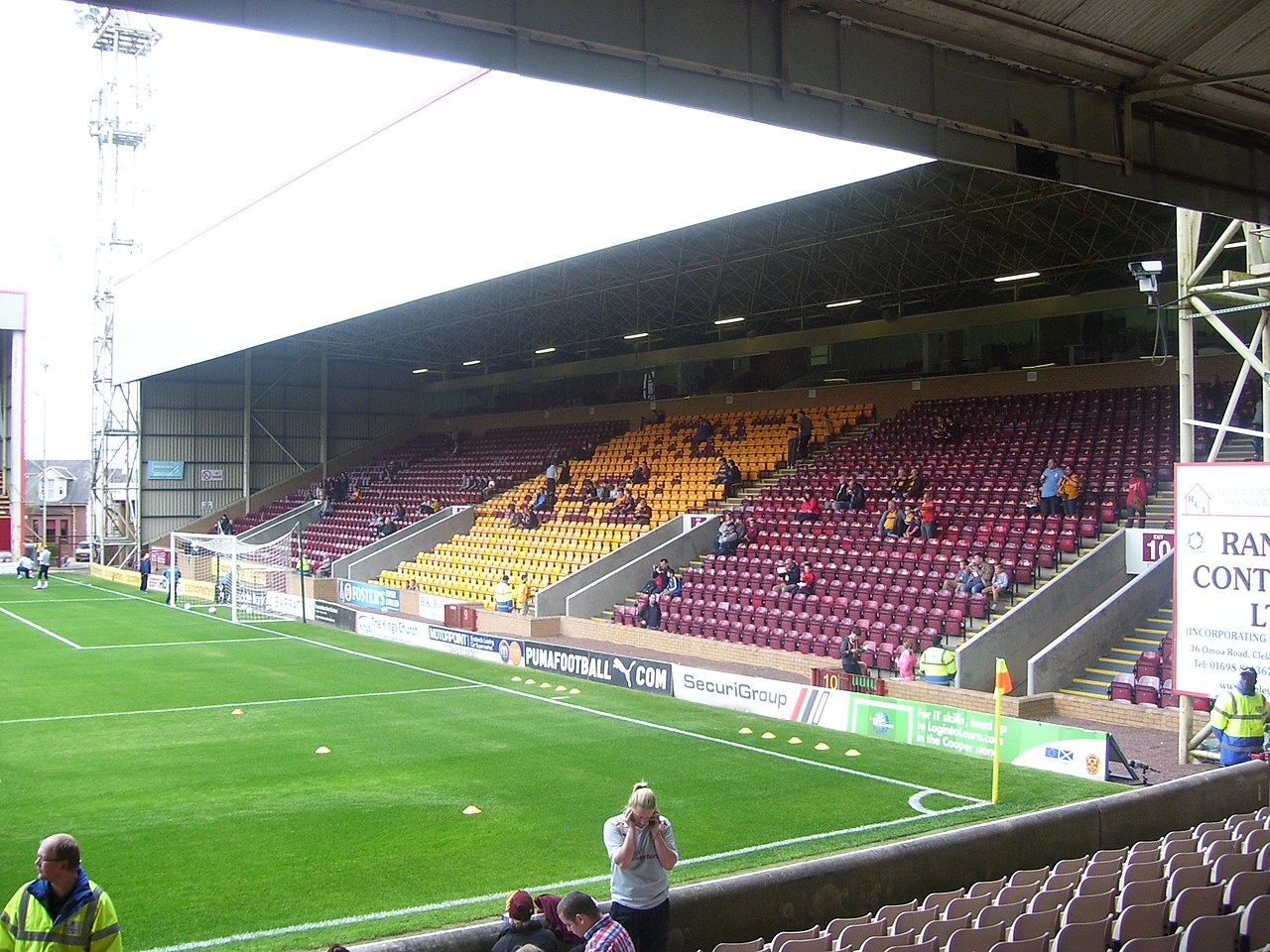
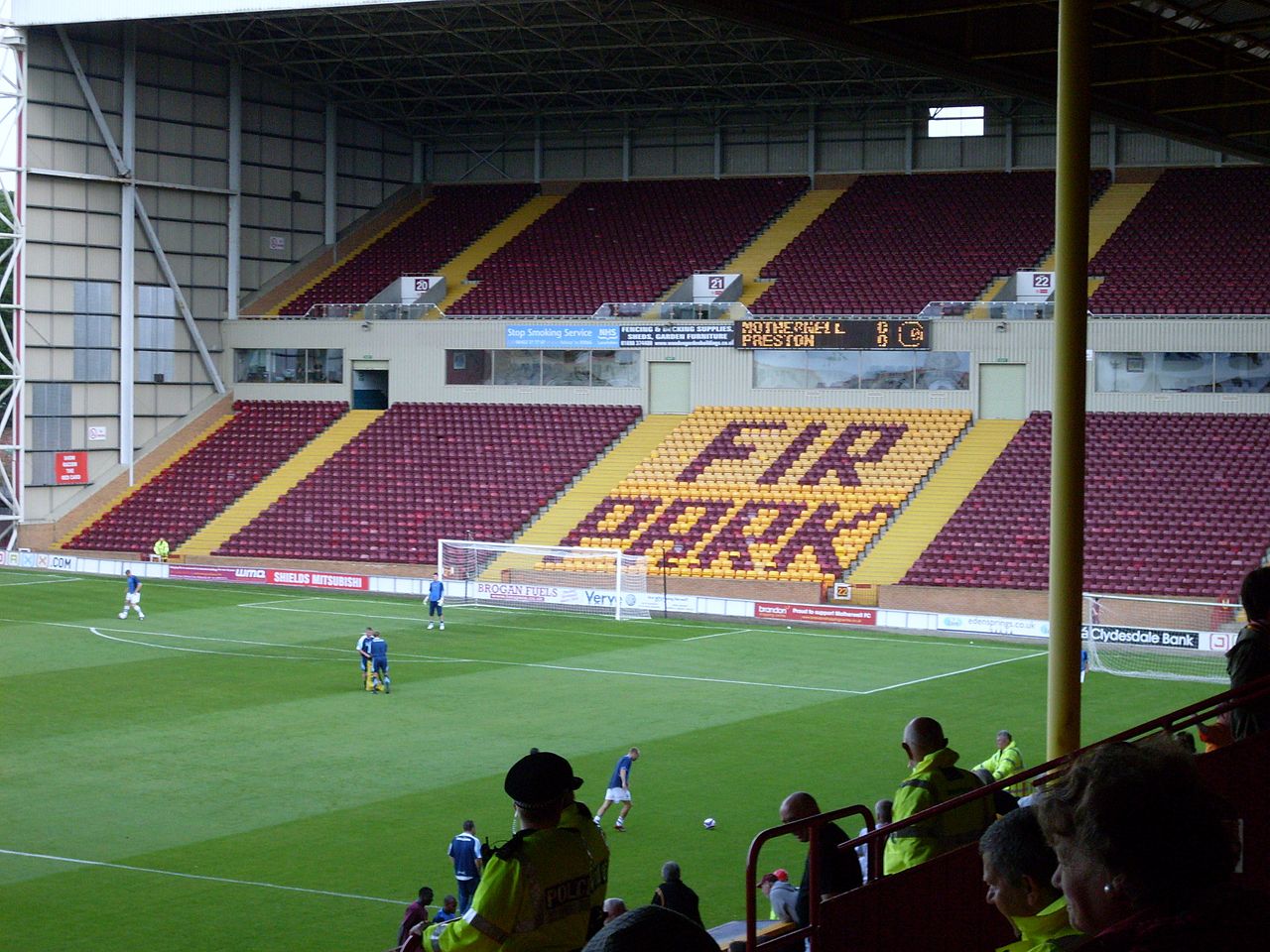
Fir Park presents an asymmetrical profile: one prominent two‑tier stand dominates one side of the pitch while the opposite side and ends are smaller in scale. The major elements of the ground are commonly described as follows:
- South Stand — the large two‑tiered stand on the south side, constructed during a modernisation phase in the early 1990s; it contains much of the club’s seated capacity and hospitality areas (stadium details).
- Davie Cooper Stand — a smaller seated stand named in honour of the former Motherwell and Scotland winger; the stand was completed mid‑1990s and often displays the club’s changing sponsor branding (Davie Cooper tribute).
- East Stand — originally a terrace, later converted to seating to meet safety and league requirements; this side has traditionally attracted many younger and vocal supporters and has displayed various public messages and sponsor signage over time (supporters’ area).
- Phil O'Donnell (Main) Stand — the former main stand was renamed in memory of the club captain who collapsed and died while playing; it remains a focal point for memorial tributes and matchday acknowledgement (Phil O'Donnell memorial).
History and development
Motherwell moved to Fir Park in the 19th century and the venue has been adapted incrementally rather than rebuilt wholesale. Major changes in the 1960s, 1980s and especially the 1990s altered the spectator layout and converted terracing to all‑seater stands in line with modern safety standards. The ground recorded its highest ever attendance in a cup tie in the post‑war period — a crowd of over 35,000 for a Scottish Cup match against Rangers in 1952 — reflecting a different era of stadium design and standing accommodation (record attendance).
Uses, atmosphere and community role
Primarily Fir Park serves as the home for Motherwell F.C., but like many traditional club grounds it also plays a role in the local community: hosting youth matches, charity events and occasional regional fixtures. Matchday atmosphere varies by stand; the East Stand is known for lively, younger fans while the South Stand accommodates a mix of season‑ticket holders and visiting supporters. Sponsorship and advertising have been visible on several stands, with the club’s principal sponsor frequently reflected in large fascia signs (club sponsorship).
Distinctive features and notable facts
Several characteristics make Fir Park distinctive. One unusual aspect is that one side of the traditional main stand does not extend the full length of the pitch: a historic dispute with a neighbouring property during construction in the 1960s limited its size and left an asymmetrical profile that remains today (architectural note). Another notable element was the long‑running display of public messages beneath a stand roof — an example being an anti‑smoking slogan that predated or coincided with national public‑health measures — later replaced by paid advertising when sponsorship changed (signage history).
Access, records and references
Fir Park is accessed from local roads in Motherwell and is familiar to supporters travelling from around Lanarkshire and the wider central belt. The ground is often referenced in club histories and matchday guides; summaries, statistics and visitor information are available from official and fan‑run sources (official club information, matchday guides). Further material that documents key moments, stand names and memorials includes pages and features dedicated to former players and club captains (Davie Cooper, Phil O'Donnell).
For a concise visual orientation and locality resources see the map reference and stadium overview links: location and overview.
Questions and answers
Q: What are the coordinates of Fir Park?
A: The coordinates of Fir Park are 55°46′47.81″N, 3°58′48.28″W.
Q: What is Fir Park?
A: Fir Park is a football stadium in Motherwell, North Lanarkshire, Scotland and is the home of Scottish Premier League club Motherwell F.C..
Q: How many people can the stadium hold?
A: The stadium has a capacity of 13,742 people.
Q: What was the highest attendance for the stadium?
A: The highest attendance for the stadium was 35,632 against Rangers in a 1952 Scottish Cup match.
Q: What stands make up the stadium?
A: The stands that make up Fir Park are two-tiered South Stand, Davie Cooper Stand, East Stand and Phil O'Donnell Stand.
Q: Why does one stand have an unbalanced look?
A: The East Stand has an unbalanced look because in 1962 during construction a nearby houseowner complained about it being built and so it was not completed to its full length as originally planned.
Q: When did smoking ban come into place at Fir Park Stadium?
A:The smoking ban came into place at Fir Park Stadium in 2006.
Related articles
Author
AlegsaOnline.com Fir Park — Motherwell’s football stadium Leandro Alegsa
URL: https://en.alegsaonline.com/art/34453
Sources
- scottishgrounds.co.uk : Motherwell