
Finding Nemo — overview, characters, production, and legacy
A comprehensive encyclopedia entry on the 2003 Pixar film Finding Nemo: its story and characters, production background, critical and commercial reception, awards, and cultural impact.
Overview
Finding Nemo is a 2003 computer-animated feature from Pixar Animation Studios that follows an anxious clownfish's cross-ocean search for his missing son. Combining family-oriented humor with evocative underwater visuals, the film established itself as both a box-office phenomenon and a touchstone in modern animation. Its narrative centers on themes of parenting, loss, resilience, and friendship, rendered through richly designed marine environments and vivid character work.
Image gallery
6 Images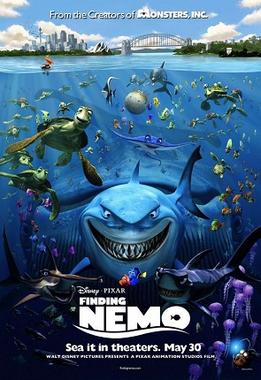




Plot and principal characters
The central plot follows Marlin, a cautious clownfish who becomes separated from his son, Nemo, after a diver captures the boy for a coral-reef aquarium in Sydney. Marlin's journey to find Nemo turns into an odyssey across varied ocean settings. Along the way he is joined by Dory, a forgetful but optimistic blue tang whose loyalty and spontaneity contrast with Marlin's fearfulness. Other characters include aquarium inhabitants, ocean predators and allies that shape the story’s emotional and comedic beats.
- Marlin: the overprotective father whose arc moves from hypervigilance toward trust.
- Nemo: the young fish whose captivity triggers a broader exploration of independence.
- Dory: the amnesiac companion who provides comic relief and unexpected wisdom.
Production and creative development
Developed by a team at Pixar, the film blends realistic animation techniques with stylized character design to make an underwater world both believable and emotionally expressive. Production involved research into marine biology, set design to emulate water lighting and movement, and story development that balanced tension, humor, and heart. The film also represents an important moment in Pixar's catalog, following earlier successes and helping to expand mainstream appreciation for computer animation aimed at broad audiences.
Release and reception
Upon release, the film drew acclaim for its storytelling, character performances, visual design, and emotional depth. It performed strongly at the box office and won industry awards recognizing achievement in animation. Critics and audiences praised the movie for appealing to both children and adults while handling serious themes in an accessible way. Its commercial success contributed to home media sales and later re-releases in updated formats.
Legacy and sequel
Finding Nemo has had a lasting cultural impact: it influenced public interest in marine life, inspired theme park attractions, and remained a high-selling title on home video. The film’s popularity led to a sequel that centers on one of its supporting characters, expanding the original film’s world and continuing themes of memory, family, and belonging.
Distinctions and notable facts
The film is often cited among significant animated features from the early 21st century for its blend of technical craft and emotional storytelling. It earned recognition from industry bodies and is frequently listed in retrospectives of important animated films. In addition to awards, its commercial records, merchandising, and influence on popular perceptions of ocean life are noteworthy aspects of its legacy.
Further reading and links
- Director and creative team
- Studio and distributor information
- Production studio overview
- Design and species references
- Voice cast details
- Child actor and supporting cast
- Voice talent profiles
- Story setting: Sydney and marine context
- Home media and re-release information
- Sequel overview
- Awards and honors
- Critical lists and historical rankings
Questions and answers
Q: What is Finding Nemo?
A: Finding Nemo is a 2003 American computer-animated comedy adventure film written and directed by Andrew Stanton, released by Walt Disney Pictures, and the fifth film produced by Pixar Animation Studios.
Q: What is the story about?
A: The story follows an over-protective clownfish named Marlin (Albert Brooks) who searches for his captured son Nemo (Alexander Gould), along with a regal blue tang named Dory (Ellen DeGeneres) in Sydney Harbour. Along the way, Marlin learns to take risks and let Nemo take care of himself.
Q: When was it first released?
A: It was first released in cinemas in the northern hemisphere summer of 2003.
Q: Was there ever a sequel made?
A: Yes, a sequel titled Finding Dory was released on June 17, 2016.
Q: How did it do critically and commercially?
A: The film received extremely positive reviews and won the Academy Award for Best Animated Feature. It was also the second highest-grossing film of the year, earning a total of $921 million worldwide. Additionally, it is also the best-selling DVD of all time with over 40 million copies sold as of 2011.
Q: Was it ever re-released?
A: Yes, it was re-released for the first time in 3D on September 14th 2012 and then later released on Blu-ray on December 4th 2012.
Q: Was Finding Nemo ever recognized by any organizations or institutions?
A:Yes, In 2008, The American Film Institute named it as one of their Top 10 greatest animated films ever made
Related articles
Author
AlegsaOnline.com Finding Nemo — overview, characters, production, and legacy Leandro Alegsa
URL: https://en.alegsaonline.com/art/34387
Sources
- boxofficemojo.com : "Finding Nemo (2003)"
- afi.com : "Top 10 Animation"
- rottentomatoes.com : "Finding Nemo 3D (2012)"
- metacritic.com : "Finding Nemo"
- rogerebert.suntimes.com : Finding Nemo Review– rogerebert.com
- youtube.com : "Nathan Lane's Favorite Animated Movie? FINDING NEMO"
- abc.net.au : "Acquiring Nemo"
- abc.net.au : "Vanuatu – Saving Nemo"
- foxnews.com : Company Warns of 'Grinding Nemo'
- sydneywater.com.au : "Coastal sewage treatment plants operated by Sydney Water"
- chinadaily.com.cn : authorities hope ``Nemo" will lead Chinese tourists to Australia
- theage.com.au : "Nemo-led recovery hope"
- smh.com.au : "Sydney ignores Nemo"
- ew.com : "Finding Nemo 3D"
- nj.com : "Finding Nemo 3D review"