
Field (physics)
A physical field assigns a measurable quantity to every point in space or spacetime. Fields describe forces, distributions and waves in classical and modern physics, from temperature maps to quantum fields.
A field in physics is a mathematical and physical construct that assigns a value or set of values to every location in space and, in many formulations, to each event in spacetime. In everyday contexts this means a quantity—such as temperature or pressure—has a definite value at every point of a region; in more abstract settings a field can carry direction, magnitude and more complex internal structure. The notion bridges tangible descriptions (for example a wind speed at a site) and foundational theories that explain forces and interactions.
Image gallery
2 Images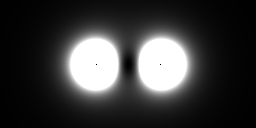

Basic characteristics and types
Fields are classified by the type of value attached to each point. A scalar field assigns a single number (a scalar) to each point, while a vector field gives a vector: an object with direction and magnitude. More generally, fields can be tensors or spinors, carrying multiple components and transformation rules. Fields may vary smoothly or have discontinuities, and they often obey differential relations expressing how they change in space and time. The strength or intensity of a field typically depends on position and sometimes on time.
Mathematical properties and physical interpretation
Common mathematical features include continuity, differentiability and the ability to superpose solutions in linear regimes. Fields can have sources—points or regions that generate the field—or be source-free. In vector fields, one visualizes field lines to indicate direction and relative magnitude. For many force fields the local vector indicates what acceleration a small test mass or charge would experience; for example one can model a gravitational field by a vector field where each vector shows the acceleration on a test particle. In meteorology, scalar fields such as temperature are represented by contours like isotherms and pressure by isobars.
Historical development
The field concept emerged in the 19th century as scientists sought ways to describe action at a distance without instantaneous contact. Michael Faraday popularized the visual and physical idea of a field, while mathematical formulations followed in the work of contemporaries and successors. Later, James Clerk Maxwell unified electric and magnetic phenomena into an electromagnetic field theory, and in the 20th century Einstein recast gravity as the geometry of spacetime—a tensor field. With the rise of quantum theory, fields became the primary entities in quantum field theory, where particles are seen as localized excitations of underlying fields.
Applications and examples
- Classical mechanics and gravity: vector models of gravitational or inertial effects; analysis of orbits and tides.
- Electromagnetism: electric and magnetic fields explain forces on charges and currents and propagate as waves.
- Thermodynamics and fluid dynamics: scalar fields for temperature or pressure and vector fields for velocity of a fluid.
- Modern physics: quantum fields describe particles and interactions in particle physics and condensed matter.
Distinctions and notable facts
Fields can be contrasted by whether they are classical versus quantum, linear versus nonlinear, or gauge-invariant versus gauge-dependent. A single spatial coordinate can host many different fields simultaneously; for instance, an electromagnetic field and a temperature field coexist and interact only through specific coupling mechanisms. Fields are typically defined on physical space or spacetime and may have several components at each point. The vector that represents direction in a vector field is a vector in the mathematical sense, and visualization tools help communicate complex field behavior to engineers and scientists.
Because fields underpin much of theoretical and applied physics, understanding their classification, sources and equations of motion is central to disciplines ranging from weather forecasting to high-energy particle physics. Further readings and introductions are available that develop the formalism and examples in greater detail (overview) and in specialized texts on electromagnetism and quantum field theory (technical) or pedagogical resources for beginners (introductory).
Related topics include potential functions, conservation laws, and the role of symmetry and invariance under transformations—subjects that clarify why certain fields have specific properties and how they can be measured or manipulated in experiments and technology. For general reference and applied perspectives see sources that cover field theory, experimental techniques and computational modeling (methods) and historical accounts of the idea's emergence and refinement (history).
Additional resources and entry points for further study are available online and in academic libraries (advanced) and through educational institutions offering courses on classical and quantum field theories (courses) or introductory physics material (intro).
Questions and answers
Q: What is a field in physics?
A: A field in physics means that a physical quantity is assigned to every point in space.
Q: What is the first person who coined the term "field"?
A: Michael Faraday became the first to coin the term "field" in 1849.
Q: How are scalar fields defined?
A: Scalar fields are defined as fields where there is a number for each point in space.
Q: What are vector fields or tensor fields?
A: Vector fields or tensor fields are more complicated fields where there are more than one number for each point in space.
Q: Can a gravitational field be modeled by a vector field?
A: Yes, a gravitational field can be modeled by a vector field where a vector indicates the acceleration a mass would experience at each point in space.
Q: What are temperature fields and air pressure fields?
A: Temperature fields and air pressure fields are examples of fields that are often illustrated on weather reports by isotherms and isobars by joining up the points of equal temperature or pressure respectively.
Q: Does the strength of a field vary over a region?
A: Yes, the strength of a field usually varies over a region.
Related articles
Author
AlegsaOnline.com Field (physics) Leandro Alegsa
URL: https://en.alegsaonline.com/art/34209