
FG 42 — Fallschirmjäger Rifle of World War II
The FG 42 was a German selective-fire combat rifle developed for paratroopers in 1942. Lightweight and powerful for its weight, it combined features of rifles and machine guns and influenced later small-arms design.
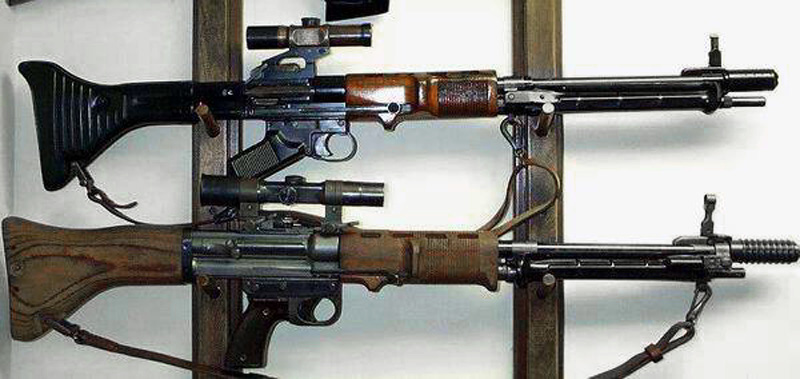
The FG 42 (German name Fallschirmjägergewehr 42) was a German battle rifle developed during Nazi Germany's campaigns in World War II. Conceived to meet the needs of airborne troops, it sought to give paratroopers a single weapon capable of accurate semi-automatic fire at rifle ranges and controlled automatic fire for squad support.
Image gallery
9 Images



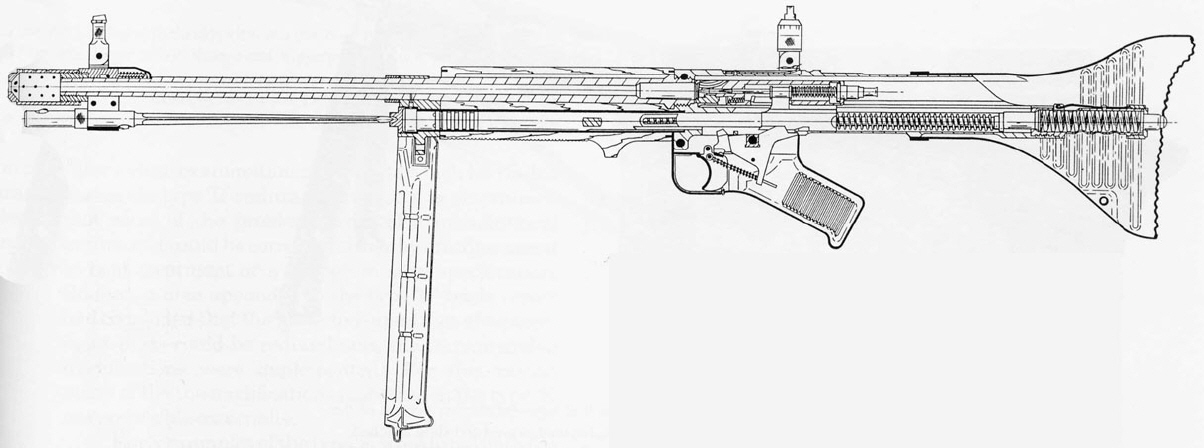
Design characteristics
The FG 42 combined several features that made it unusual for its time. It was a selective-fire weapon with both semi-automatic and full-automatic modes, fed from a detachable box magazine (commonly a 20-round magazine). Designers aimed to balance firepower with the compactness needed by paratroopers: the rifle was relatively light and compact for its ballistic power and could be used from the shoulder or supported with a bipod.
- Role: intended to provide individual automatic fire and rifle-level accuracy, bridging infantry and support functions.
- Feeding and ergonomics: detachable box magazine, provisions for a folding or fixed stock on various prototypes.
- Compared to contemporaries: offered automatic capability and weight comparable to bolt-action service rifles such as the Kar 98k, while delivering firepower approaching that of a light machine gun.
Development and production
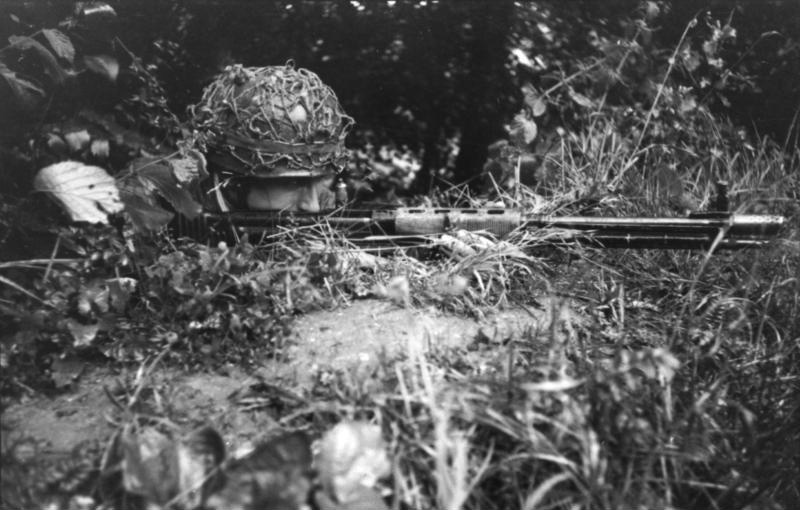
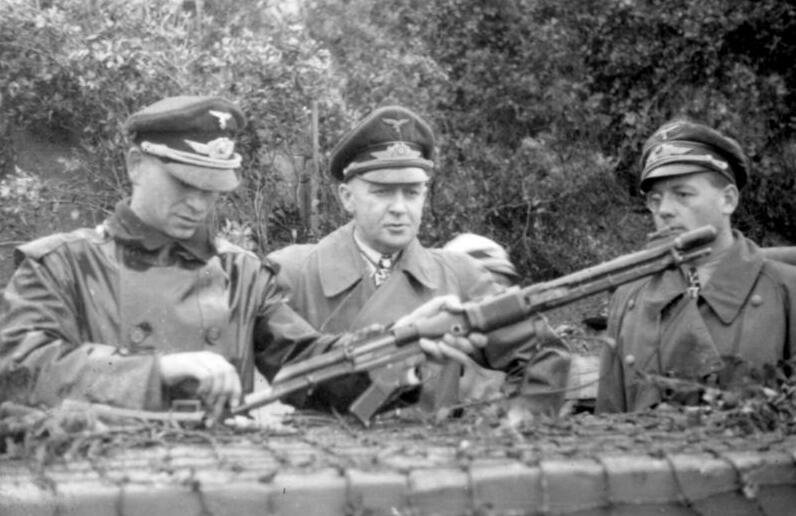
The FG 42 emerged from a specific tactical requirement: airborne infantry needed a compact weapon with sustained firepower after landing. Development began in the early 1940s and the rifle entered production in 1942. Manufacturing was complex and expensive, so only limited numbers were produced. Despite this, it saw frontline use with Fallschirmjäger units where its combination of features proved valuable in combat until the German surrender.
Use and operational impact
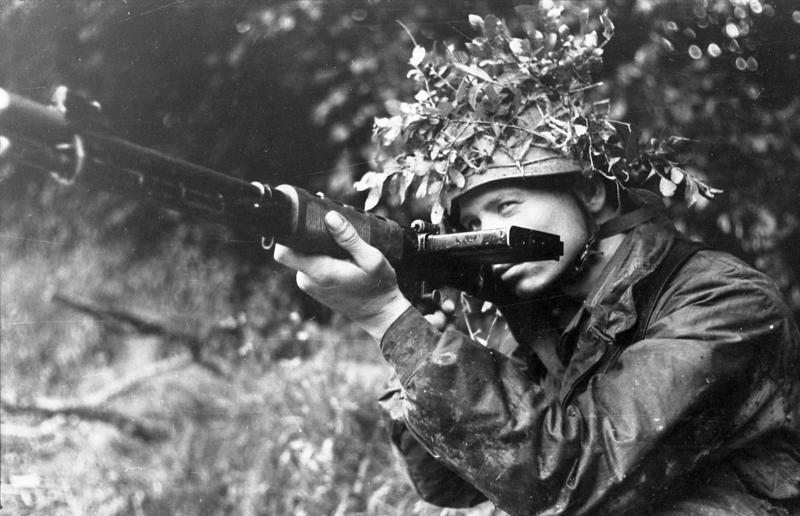
In operational service the FG 42 was praised for its firepower, accuracy, and utility in assault and defensive roles. Paratroopers used it both as a personal battle rifle and—when fired in full-auto from a supported position—as a light support weapon. Its tactical niche and mechanical sophistication made it notable among World War II small arms.
Legacy and notable facts
The FG 42 is often cited as one of the more advanced infantry weapons of its era and has been credited with influencing later concepts for compact, selective-fire combat rifles—an idea that contributed to the broader development of the modern assault rifle. For further contextual reading see sources on its German designation and role: Fallschirmjägergewehr 42, design type battle rifle, period context World War II, and performance comparisons with light machine guns and bolt-action service rifles like the Kar 98k.
The FG 42 remains a subject of interest for military historians and firearms designers because it represents an early attempt to unify multiple battlefield roles in a single weapon tailored to a specialized unit.
Questions and answers
Q: What is the FG 42?
A: The FG 42 is a battle rifle made in Nazi Germany during World War II.
Q: Who was the FG 42 made for?
A: The FG 42 was made for use by Fallschirmjäger airborne infantry in 1942.
Q: Was the FG 42 used in large amounts during the war?
A: No, it was only used in small amounts until the war ended.
Q: What was the power of the FG 42?
A: The FG 42 had the power of a light machine gun.
Q: How does the size of the FG 42 compare to the Kar 98k bolt-action rifle?
A: The FG 42 was no larger than the Kar 98k bolt-action rifle.
Q: Is the FG 42 considered to be an advanced weapon of World War II?
A: Yes, the FG 42 is thought to be one of the most advanced weapons of World War II.
Q: How did the FG 42 influence the development of modern assault rifles?
A: The FG 42 helped shape the modern assault rifle idea.
Author
AlegsaOnline.com FG 42 — Fallschirmjäger Rifle of World War II Leandro Alegsa
URL: https://en.alegsaonline.com/art/34145