
Firozpur district (Ferozepur) — Punjab district in India
Firozpur district in Punjab, India, is a historic border district founded under Firuz Shah Tughluq, notable for agriculture, British-era administration, cultural shrines, and proximity to Pakistan.
Overview
Firozpur (also spelled Ferozepur) is a district in the northwestern Indian state of India. The district has a long recorded history and is often cited as one of the earliest British-established districts in the Punjab region. Local tradition links its foundation to Firuz Shah Tughluq, and it later became formalized as an administrative unit under colonial rule; official district arrangements were established in the early 19th century as a district headquarters administrative center within what was known historically as the Lahore Division before the partition of the subcontinent.
Image gallery
10 Images


History and development
The district's identity was shaped by medieval rulers and by British-era reorganization. Under colonial administration, Firozpur emerged as one of the oldest British districts of Punjab, and town planning, rail links and civil institutions from that period influenced subsequent development. Historical summaries emphasize continuity between pre-colonial settlement, martial and agrarian traditions, and the administrative imprint left by the British period.
Geography, boundaries and towns
Located close to the international boundary with Pakistan, Firozpur district occupies a strategic position on the plains of Punjab. Its principal urban center is the city commonly referred to as Firozpur. Other towns and tehsils include places such as Zira and smaller settlements that support rural agriculture. Because of its border location, cross-border geography and transport networks historically linked the district with cities now in Pakistan, including Lahore, Okara, Kasur and farther afield to Multan, though contemporary cross-border movement is restricted.
Economy and land use
Agriculture is the dominant economic activity in Firozpur. The district's fertile plains support cultivation of staple crops and cash crops such as cotton and various grain crops. In addition to farming and related services, there is small-scale and light manufacturing related to agricultural processing. Commercial growth has sometimes been constrained by security-related and logistical limitations associated with being close to the international border, which affects investment and transport. Typical economic activities include:
- Local commerce and trade centered on regional markets
- Agricultural processing and storage
- Small-scale manufacturing tied to rural needs
Culture, religion and notable sites
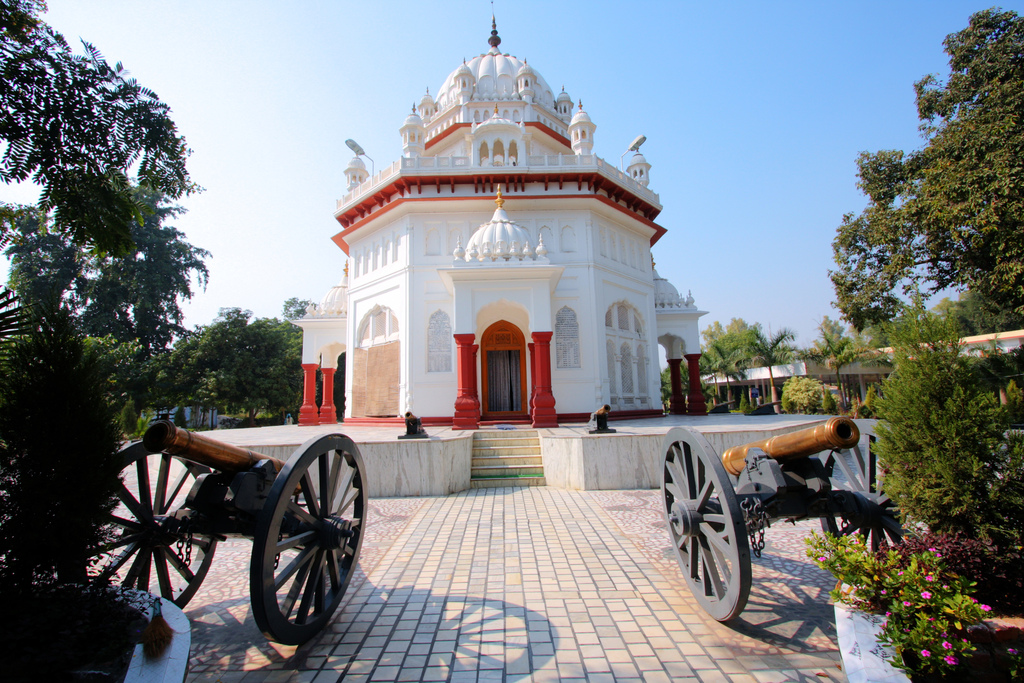
Firozpur district contains a variety of religious and historic sites reflecting the plural heritage of Punjab. The area is noted for several local shrines and old monuments that draw visitors and devotees; references to these places can be found under categories for sacred shrines and historic places. In the town of Zira, there is a Jain Śvētāmbara temple known for its antique brass icons and decorative wall murals; the temple's sculptural icons and architectural details are often mentioned in local heritage descriptions and surveys of the Jain community.
Transport and strategic significance
Transport in the district relies on road and rail links that connect local markets to larger urban centers. Major regional roads and the railway network provide access to surrounding districts and to cross-border routes historically used for trade and travel by road and rail. Proximity to the frontier gives Firozpur a continuing strategic and administrative role, balancing local economic life with national security considerations.
Further reading and resources: For official administrative information and more detailed historical material, see local district references and archives linked in regional catalogs (examples: founding references, district portal, administrative histories and transport summaries).
Questions and answers
Q: What is Ferozepur?
A: Ferozepur is a district in the Indian state of Punjab. It was founded by Firuz Shah Tughluq and is the oldest British district of Punjab.
Q: What division was it part of before?
A: Before, Ferozepur was part of the earstwhile Lahore Division (now in Pakistan).
Q: How can one access other places from Ferozepur?
A: One can access other places such as Lahore, Okara, Kasur, and Multan from Ferozepur by road or rail.
Q: Are there any holy shrines or historic places located in this area?
A: Yes, there are many holy shrines and historic places located in this area. For example, at the city of Zira there is a Jain Swetambar Temple with very old brass icons and beautiful wall murals.
Q: What type of activities take place in this region?
A: In addition to cotton and grain cultivation and agriculture-related services, Firozpur has some light manufacturing. Commercial progress is limited because it is very near the border between India and Pakistan.
Q: Who founded Ferozepur?
A: Ferozepur was founded by Firuz Shah Tughluq.
Related articles
Author
AlegsaOnline.com Firozpur district (Ferozepur) — Punjab district in India Leandro Alegsa
URL: https://en.alegsaonline.com/art/34070