
Berliner Fernsehturm (Berlin TV Tower)
Prominent television tower in central Berlin, completed in 1969; a broadcasting mast, observation platform and rotating restaurant that defines the city's skyline and attracts over a million visitors annually.
Overview
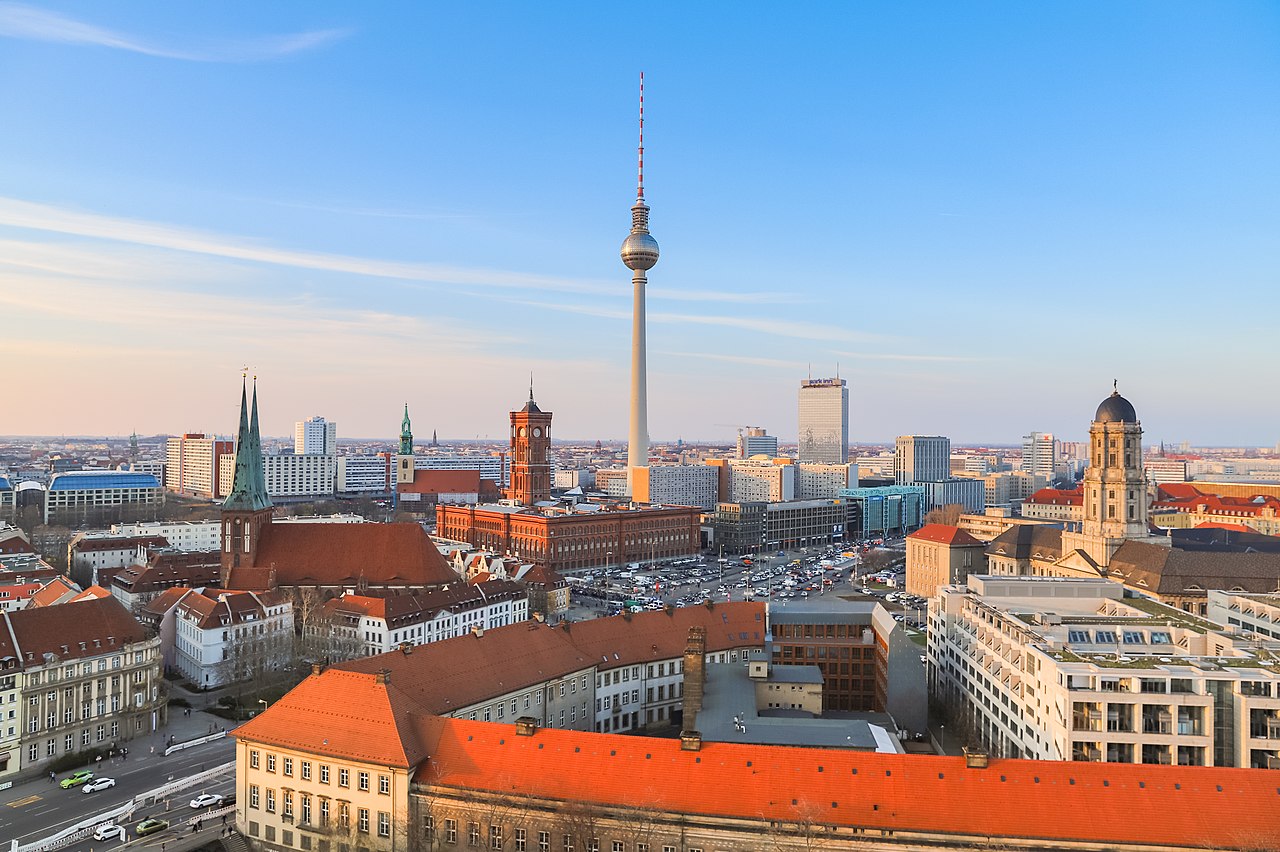
The Berliner Fernsehturm, commonly called the Fernsehturm, is the dominant television tower in central Berlin and one of the city's best-known landmarks. Rising to a height of 368 metres, it stands among the tallest television towers in Europe and is the tallest structure in the immediate urban core. Located in Mitte, the tower has served both technical and symbolic roles since its opening and is a frequent feature in photographic and film depictions of Germany's capital.
Image gallery
10 Images





Design and main features
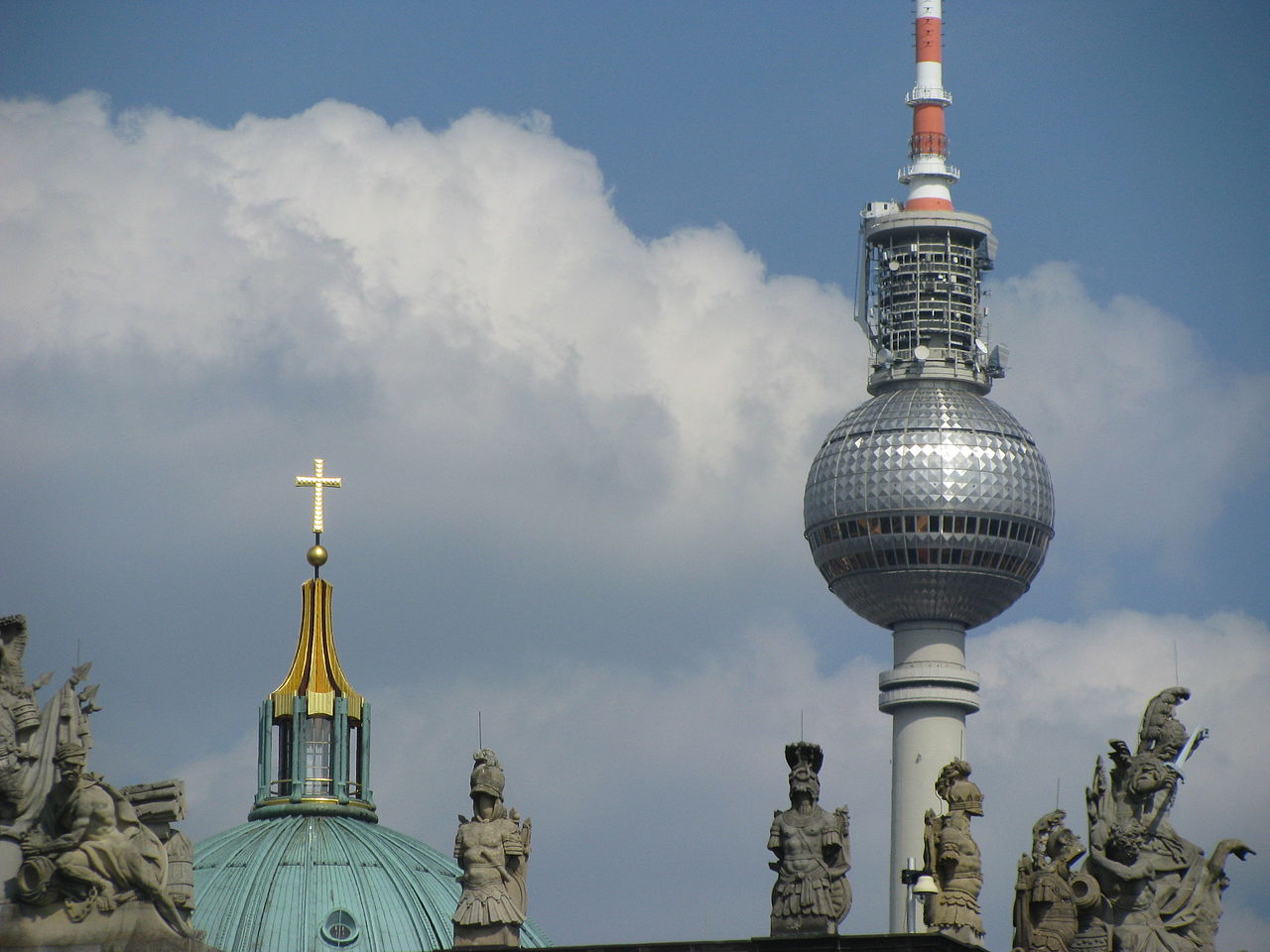
The Fernsehturm combines a slender reinforced-concrete shaft with a stainless-steel-clad sphere that houses public facilities and technical equipment. The sphere contains an observation deck with panoramic views and a revolving restaurant, which together create a public destination as well as a functional broadcasting facility. Above the sphere rises an antenna mast used for television and radio transmissions. The tower's clean lines and futuristic globe reflect the international and space-age architectural influences common to the mid-20th century.
Construction and history
Constructed between 1965 and 1969 by the postal and telecommunications authority of the German Democratic Republic, the tower was officially opened on 3 October 1969. At the time of completion it was among the tallest television towers in the world and rapidly became a visible emblem of the city. Building the tower required clearing parts of the older Marienviertel neighbourhood and was intended both to modernize broadcast infrastructure and to demonstrate technological achievement.
Visiting the tower
Today the Fernsehturm is a major tourist attraction, regularly welcoming more than a million visitors per year. Guests can ascend to the viewing platform to see a sweeping panorama over Alexanderplatz and beyond; on clear days the vista extends across much of Berlin. Many visitors also experience the rotating restaurant in the sphere, which completes a slow revolution while diners enjoy the view. Practical visitor information such as opening hours, ticketing and accessibility is provided on official channels and by local tourism services.
Cultural significance and notable facts
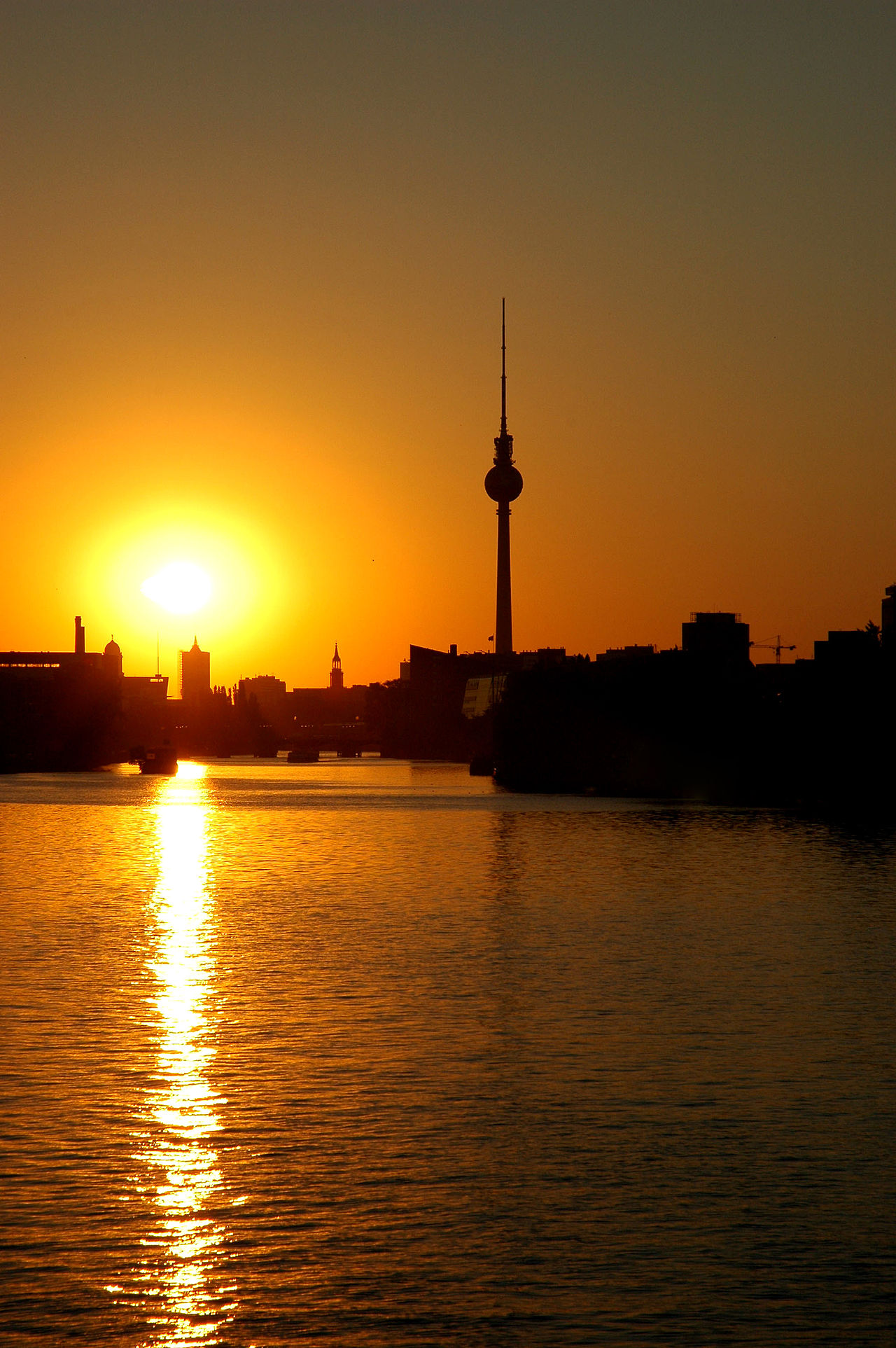
The tower is an instantly recognizable element of Berlin’s skyline. It appears alongside other familiar landmarks — for example the Brandenburg Gate, the Victory Column and the Reichstag — whenever the city's profile is shown in media. Locals sometimes use informal nicknames for the structure; it has also served as a visual marker during the city's postwar and reunification eras. While it was conceived in a different political context, the Fernsehturm today functions primarily as a public attraction, a broadcast site and an architectural symbol of Berlin's layered history.
Technical role and distinctions
Beyond tourism, the tower continues to be a transmission hub for television and radio signals. It replaced earlier, smaller radio masts that had served the city since the early 20th century and offers greater range and reliability. As an urban landmark situated in the central district, the Fernsehturm shapes sightlines across neighbourhoods and remains one of the most visited and photographed structures in the city.
- Height: 368 metres (total structural height).
- Main functions: broadcasting, observation deck, rotating restaurant.
- Construction: 1965–1969; opened 3 October 1969.
- Location: Alexanderplatz area, Mitte district.
For official visitor details and current facilities consult the tower's management or local tourist information, which provide up-to-date guidance on access, events and services.
Questions and answers
Q: What is the Berliner Fernsehturm?
A: The Berliner Fernsehturm is the tallest television tower in central Berlin, Germany at 368 metres (1,207 ft) and the fourth highest television tower in Europe.
Q: Where is the Berliner Fernsehturm located?
A: The Berliner Fernsehturm is located in the park at the television tower in Berlin's Mitte district (Bezirk).
Q: When was the Berliner Fernsehturm completed?
A: The Berliner Fernsehturm was completed in 1969.
Q: Where was the Berliner Fernsehturm built?
A: The Berliner Fernsehturm was built in the park next to the demolished Marienviertel by Deutsche Post in the German Democratic Republic (East Germany).
Q: What is the significance of the Berliner Fernsehturm?
A: The Berliner Fernsehturm is a landmark visible from far away that shapes the skyline of the city. It is often symbolized in movies related to Berlin alongside iconic buildings such as the Brandenburg Gate, the Victory Column, and the Reichstag building.
Q: Is the Berliner Fernsehturm popular with tourists?
A: Yes, the Berliner Fernsehturm is one of the 10 most popular attractions in Germany with over one million visitors annually as of 2021.
Q: How does the height of the Berliner Fernsehturm compare to other towers?
A: The Berliner Fernsehturm is more than 220 meters higher than the old Berlin radio tower from the 1920s in the western part of the city, and was the second highest television tower in the world when it was completed in 1969.
Related articles
Author
AlegsaOnline.com Berliner Fernsehturm (Berlin TV Tower) Leandro Alegsa
URL: https://en.alegsaonline.com/art/34066