
Ferdinand (Uranian moon)
Ferdinand is a distant irregular, retrograde moon of Uranus. Discovered in 2001, briefly lost, and recovered in 2003, it is the outermost known retrograde non-spherical satellite of Uranus and named from Shakespeare.
Overview
Ferdinand is an irregular natural satellite of Uranus that follows a distant, retrograde orbit and is non-spherical in shape. It is notable for being the outermost known retrograde, non-spheroidal moon of Uranus. Irregular moons like Ferdinand are thought to be captured objects rather than bodies that formed in place, and they typically have eccentric, inclined orbits and small, heavily cratered surfaces.
Image gallery
5 Images
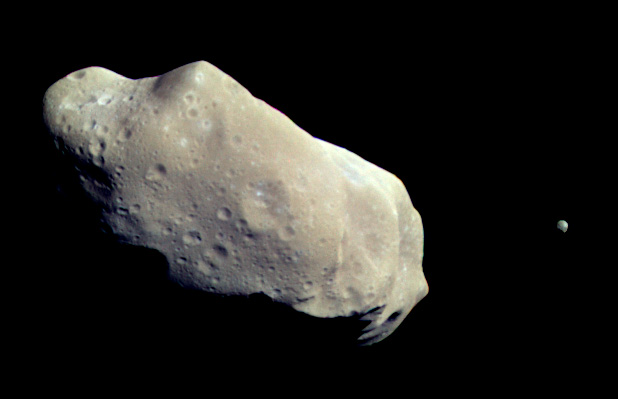


Discovery and recovery
Ferdinand was first identified in images taken in August 2001 by a team of astronomers led by Matthew J. Holman, John J. Kavelaars, Dan Milisavljevic, and Brett J. Gladman, and temporarily designated S/2001 U 2. Initial follow-up detections were made in the months that followed, but the object was lost from reliable tracking after the early observations. It was rediscovered in September 2003 from archival images taken by David C. Jewitt and Scott S. Sheppard, with confirming observations by Holman. Contemporary notices and catalog entries summarize these events (see the original discovery note discovery announcement and the recovery report recovery images).
Orbit and physical characteristics
As an irregular satellite, Ferdinand orbits Uranus at a great distance compared with the planet's regular moons. Its motion is retrograde, meaning it travels around Uranus in the opposite direction to the planet's rotation. Such distant, inclined orbits suggest a history of capture or dynamical scattering. Ferdinand is small and non-spherical, and like other irregular moons it is faint and challenging to observe directly; most physical properties (shape, rotation, surface composition) are inferred from limited photometric data rather than close spacecraft inspection. For compiled orbital parameters and observational details consult published tables and survey pages observational data.
Name and cultural reference
After its orbit was confirmed, the moon received the permanent designation Uranus XXIV and the name Ferdinand, taken from the young prince in William Shakespeare's play The Tempest. The International Astronomical Union follows a convention of naming Uranian moons after characters from the works of Shakespeare and Alexander Pope, and the choice of name follows this tradition; see the naming citation for more context naming citation and the original play The Tempest.
Significance and observation
Ferdinand highlights both the dynamical complexity of the outer Uranian system and the practical challenges of tracking faint, distant satellites. Its temporary loss and later recovery underline how follow-up observations and archival image searches are important for confirming small, distant bodies. Astronomers continue to monitor Ferdinand and similar irregular moons to refine orbital models, study capture scenarios, and improve understanding of the population of small bodies around the giant planets. For general reference and ongoing updates, consult dedicated survey resources and mission planning documents survey summary and data archive.
- Type: Irregular, retrograde satellite of Uranus
- Discovery: 2001 (recovered 2003)
- Designation: S/2001 U 2; Uranus XXIV
- Name origin: Character from Shakespeare's The Tempest
Questions and answers
Q: What is Ferdinand?
A: Ferdinand is a moon of Uranus.
Q: When was Ferdinand first discovered?
A: Ferdinand was first discovered on August 13, 2001.
Q: Who discovered Ferdinand?
A: Ferdinand was discovered by Matthew J. Holman, John J. Kavelaars, Dan Milisavljevic, and Brett J. Gladman.
Q: What is unique about Ferdinand?
A: Ferdinand is the farthest retrograde non-spherical moon of Uranus.
Q: Was Ferdinand lost at one point?
A: Yes, Ferdinand was lost after being seen multiple times but was eventually refound.
Q: Who rediscovered Ferdinand?
A: Ferdinand was rediscovered by Scott S. Sheppard on images taken by David C. Jewitt and himself.
Q: Why was Ferdinand named after the son of the King of Naples in The Tempest?
A: Ferdinand was named after the son of the King of Naples in William Shakespeare's play The Tempest because Uranus' moons are named after characters in works by Shakespeare and Alexander Pope.
Related articles
Author
AlegsaOnline.com Ferdinand (Uranian moon) Leandro Alegsa
URL: https://en.alegsaonline.com/art/34007
Sources
- arxiv.org : Preprint
- cfa-www.harvard.edu : cfa-www.harvard.edu/iau/NatSats/NaturalSatellites.html
- ssd.jpl.nasa.gov : ssd.jpl.nasa.gov/?sat_elem