
Abd al‑Rahman al‑Sufi (Azophi) — Persian Astronomer and Author of the Book of Fixed Stars
10th‑century Persian astronomer Abd al‑Rahman al‑Sufi (903–986), known as al‑Sufi or Azophi, wrote the Book of Fixed Stars and recorded early observations such as the Andromeda 'cloud'; his work influenced medieval astronomy.
Overview
Abd al‑Rahman al‑Sufi (903–986), often called al‑Sufi or Azophi, was a Persian astronomer whose work stands among the most important observational compilations of the 10th century. He is best known for the Book of Fixed Stars, a systematic catalogue that combined Ptolemaic star lore with independent naked‑eye observations and constellation diagrams. Two modern astronomical features commemorate him: the lunar crater Azophi and the minor planet 12621 Alsufi.
Image gallery
5 Images


Life and context
Al‑Sufi lived and worked in the intellectual world of the medieval Islamic east. Precise details of his biography are limited in surviving sources; what is well attested is his role as an active observer and compiler who used previous Greek material as a foundation while updating it through direct observation. His name appears in Arabic sources and is rendered in Persian forms explained in some biographical notes: see the Persian form for variants.
The Book of Fixed Stars
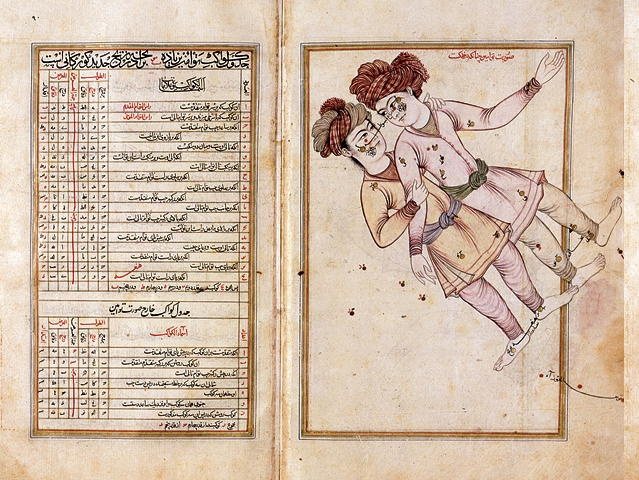
Completed about 964, the Book of Fixed Stars presents a star catalogue based on the 48 classical constellations familiar from Ptolemy, but with important additions. Al‑Sufi gave positions for bright stars, assigned relative magnitudes, described apparent colour, and supplied constellation figures showing both the Greco‑Roman outlines and how the patterns appear to an observer facing the sky. He compared Ptolemy’s longitudes and latitudes with his own observations and noted discrepancies that could arise from observational error or long‑term effects such as precession.
Notable observations
Among al‑Sufi’s notable contributions is one of the earliest clear descriptions of the Andromeda Galaxy as a "small cloud" visible to the naked eye, which he distinguished from ordinary stars. He also discussed the Milky Way and listed star names, some of which entered later Arabic and European usage. His visual assessments of brightness and colour helped later catalogues that relied on human perception rather than telescopic measurement.
Method and illustrations
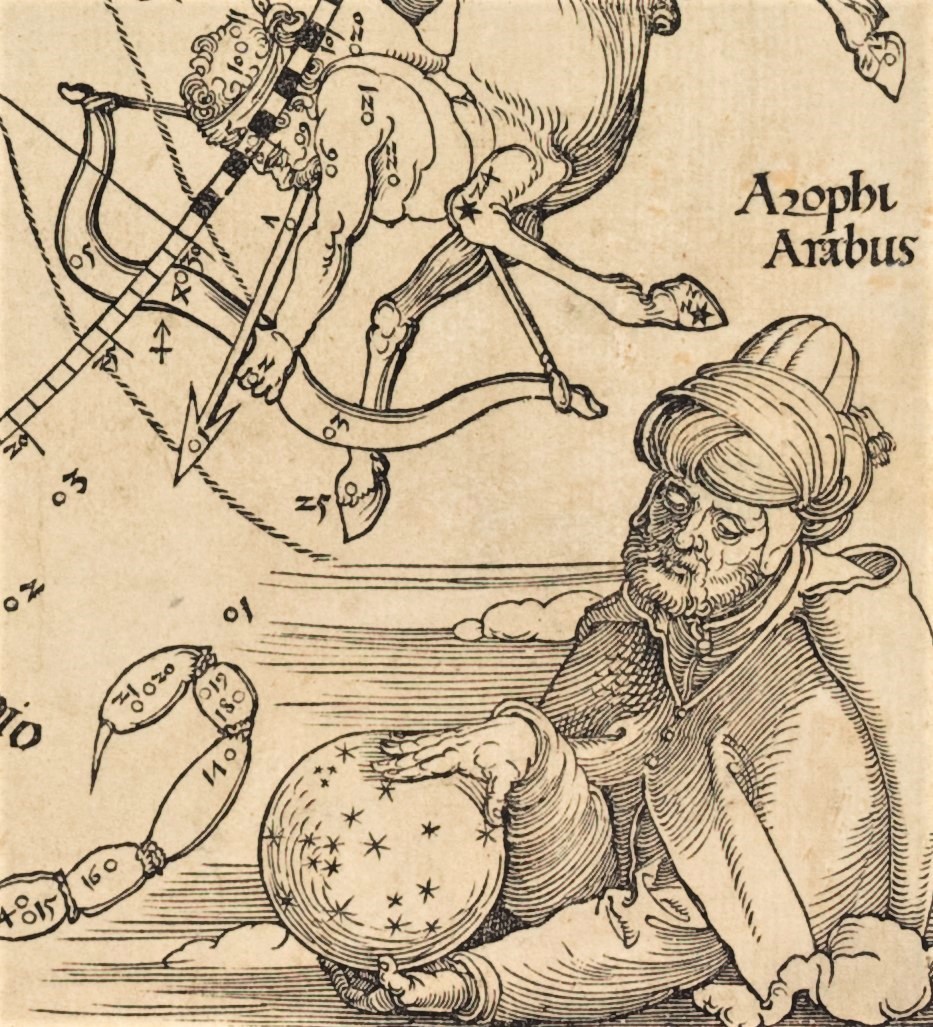
Al‑Sufi’s book is striking for its use of text together with illustrations. Surviving manuscripts often show two views for each constellation: the classical human or animal figure and a chart of the stars as seen from Earth. These images are a key source for historians studying medieval stellar cartography and the transmission of astronomical iconography.
Transmission and influence
The book circulated widely in manuscript form across the Islamic world; copies with colored drawings survive in several libraries. Its material influenced contemporary and later Islamic astronomers and, through manuscript transmission and occasional translations or references, became known to European scholars in later centuries. Modern historians consult critical editions and translations to trace this transmission; see related resources for further reading.
Legacy
- Al‑Sufi is remembered for reconciling classical data with new observation and for recording visual attributes of stars used by later catalogues.
- He reported the Andromeda "cloud," an early record of a non‑stellar fuzzy object visible without optics.
- His name is commemorated in lunar and minor‑planet nomenclature; his status as an influential medieval astronomer is noted in modern studies of the history of astronomy. For a concise account of his role as an astronomer, consult overview resources.
Modern scholarship
Critical editions, translations, and manuscript facsimiles have made al‑Sufi’s work accessible to researchers. Manuscript studies show variations in illustration style and marginal notes reflecting long use and local practices. Scholars continue to study his measurements and descriptions to understand medieval observational technique and the movement of astronomical knowledge between cultures.
Questions and answers
Q: Who was Abd al-Rahman al-Sufi?
A: Abd al-Rahman al-Sufi was a Persian astronomer.
Q: What book did al-Sufi write and when did he write it?
A: Al-Sufi wrote his Book of Fixed Stars in 964, in text and pictures.
Q: Which celestial body and object are named after al-Sufi?
A: The lunar crater Azophi and the minor planet 12621 Alsufi are named after al-Sufi.
Q: In what language did al-Sufi write his Book of Fixed Stars?
A: Al-Sufi wrote his Book of Fixed Stars in text and pictures.
Q: What is the significance of al-Sufi's Book of Fixed Stars?
A: Al-Sufi's Book of Fixed Stars is significant as it contains valuable information and illustrations of the fixed stars in the night sky.
Q: When was Abd al-Rahman al-Sufi born and when did he die?
A: Abd al-Rahman al-Sufi was born on December 7, 903, and died on May 25, 986.
Q: What was al-Sufi's field of expertise?
A: Al-Sufi's field of expertise was astronomy.
Tags
Related articles
Author
AlegsaOnline.com Abd al‑Rahman al‑Sufi (Azophi) — Persian Astronomer and Author of the Book of Fixed Stars Leandro Alegsa
URL: https://en.alegsaonline.com/art/340
Sources
- messier.obspm.fr : "Observatoire de Paris (Abd-al-Rahman Al Sufi)"
- messier.obspm.fr : "Observatoire de Paris (LMC)"
- muslimheritage.com : "Using an Astrolabe"