
Fenghuang: the Chinese mythic bird and its cultural roles
Fenghuang (鳳凰, Fènghuáng) is a prominent bird in Chinese mythology symbolizing virtue, the empress, harmony, and auspicious events; often paired with the dragon in art and ritual.
Overview
The Fenghuang is a legendary bird of East Asian myth, widely translated as the "Chinese phoenix." In Chinese writing it appears as 鳳凰 and in romanization as Fènghuáng. It belongs to a class of mythological birds that play symbolic roles in cosmology and court ritual. Unlike the Western phoenix, the Fenghuang is best understood as an enduring emblem of virtue, social order and harmony rather than a creature that dies and is reborn.
Image gallery
10 Images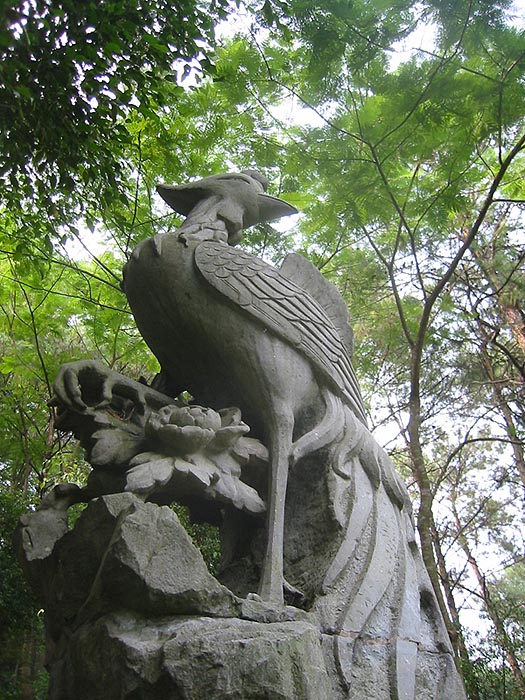


Characteristics and iconography
Depictions of the Fenghuang combine features taken from many birds and sometimes other animals: a graceful crested head, long flowing tail feathers and a radiant, multicolored plumage. Artists have emphasized balance and elegance rather than naturalism. In decorative programmes it is often shown with stylized clouds, peonies, or other auspicious motifs. A short list of symbolic attributes includes:
- Harmony: a balance of yin and yang qualities.
- Virtue: associated with moral excellence and propriety.
- Auspice: its appearance presages a favorable era or the presence of a benevolent ruler.
History and development
References to birdlike spirits appear in early Chinese texts and art from bronze-age to imperial periods. Over centuries the Fenghuang's image evolved from regional bird-motifs into a fixed cosmological sign. During imperial times it became an attribute of the empress and of female power in ceremonial dress, while the ruler was linked with the dragon.
Cultural uses and examples
The Fenghuang appears across media: bronze mirrors, textiles, court robes, ceramics, temple sculptures and modern logos. It serves as a motif at weddings and in designs that emphasize feminine virtue or marital harmony. Paired imagery—dragon and phoenix—symbolizes the union of sovereign couple and complementary forces in nature.
Notable distinctions and related creatures
Within the broader set of revered beings the Fenghuang is often listed alongside the dragon, the qilin, and the tortoise, forming a quartet or quintet of auspicious animals in Chinese tradition. Historically some sources treated feng (鳳) and huang (凰) as distinct male and female birds; later usage fused them into a single, composite symbol representing balanced qualities rather than a literal species.
As an enduring emblem, the Fenghuang continues to appear in contemporary art, fashion and civic symbolism, where it conveys continuity with a long cultural heritage and ideals of refinement, prosperity and harmony.
Gallery
· Fenghuang ornaments and pictures
· 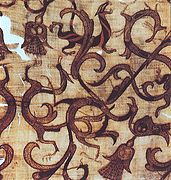
Fenghuang, Long, Tiger - 4th century B.C., 1999
· 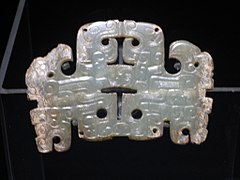
Fenghuang and Long - Jade from spring and autumn period, 2006
· 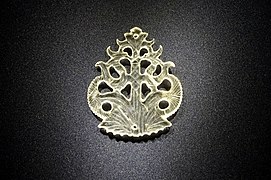
Fenghuang Pendant - Rock Crystal Southern Song Time, 2016
· 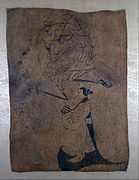
Fenghuang - Hunan, 2013
· 
Image - Qing, 2009
· Fenghuang figures
· 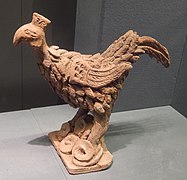
Fenghuang clay figure - Han period - Beijing, 2013
· 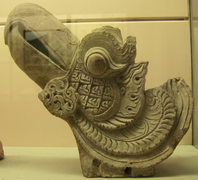
Fenghuang deco - Hồ dynasty - Vietnam, 2007
· 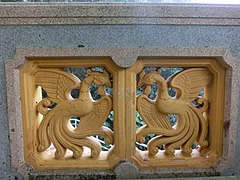
Fenghuang brick - Hong Kong, 2013
· 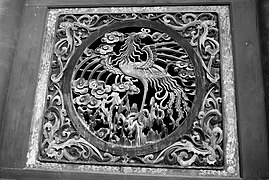
Fenghuang wood carving - Fuxi Temple, Tianshui 2012
Related articles
Author
AlegsaOnline.com Fenghuang: the Chinese mythic bird and its cultural roles Leandro Alegsa
URL: https://en.alegsaonline.com/art/33980