
Fellows of the Royal Society
Senior members elected to the Royal Society for substantial contributions to natural knowledge. Covers categories, selection, history, significance, and notable examples of Fellows, Foreign Members and Honorary Fellows.
The Fellowship of the Royal Society is an honor conferred by the Royal Society of London on individuals judged to have advanced natural knowledge. Recipients come from disciplines such as the physical and life sciences, mathematics, engineering and medicine. Election to the Fellowship recognizes a body of work that has materially improved understanding, created new techniques, or opened important directions for research.
Image gallery
6 Images


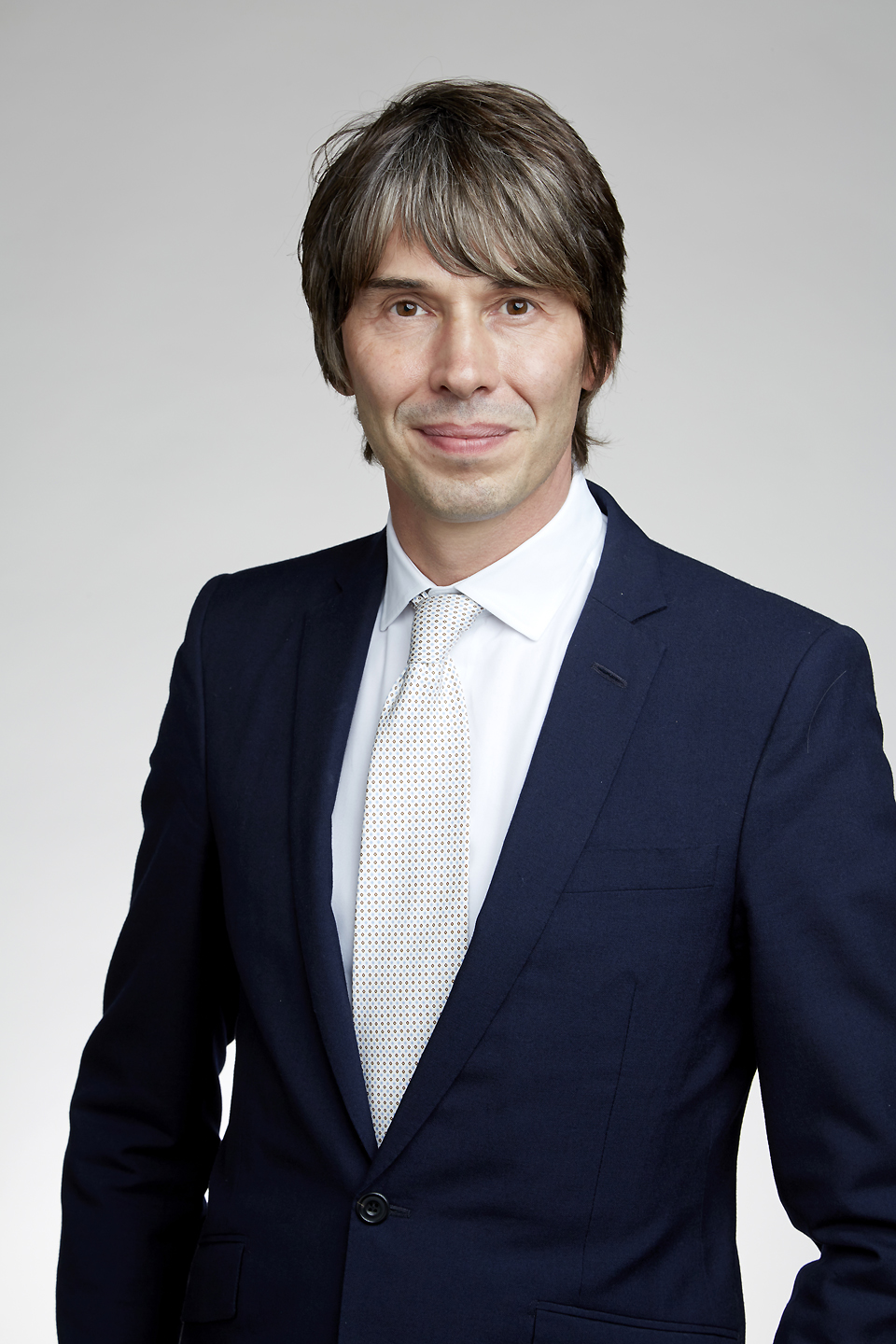


Categories and postnominals
There are several formal categories within the Royal Society that reflect different relationships to the United Kingdom and to the Society itself:
- Fellows (FRS) — typically scientists and engineers who are citizens or residents of the UK, Commonwealth or Republic of Ireland, elected for sustained contributions to science.
- Foreign Members (ForMemRS) — eminent researchers from outside the UK who have made exceptional contributions to science.
- Honorary Fellows (HonFRS) — individuals who have rendered conspicuous service to the cause of science, though they may not be career researchers.
Selection and election
Fellows are proposed and supported by existing Fellows, then evaluated through subject-based committees and final ballots. The process is peer-driven and competitive: nominees are assessed on originality, influence and the significance of their published work or technical achievements. Successful candidates are formally elected at meetings of the Society and may use the appropriate postnominal letters (for example, FRS) after their names.
Historical background
The Royal Society, founded in the 1660s, is the oldest continuously operating scientific academy in the world. Its Fellowship has included many figures who shaped modern science. Among the earliest elected were Isaac Newton; in later centuries the roll has included Charles Darwin, Michael Faraday and Ernest Rutherford. The list of Fellows also embraces mathematicians, engineers and medical scientists whose work transformed their fields.
Significance and influence
Election to the Fellowship is widely regarded as one of the highest recognitions in the scientific community. It signals peer acknowledgement of sustained excellence and can amplify an individual’s influence in research priorities, public debate and policy advisory roles. The Fellowship has long overlapped with other major honours: many Fellows have also been Nobel Laureates and recipients of other international awards. The press and institutions commonly describe Fellowship as a lifetime achievement honour for a scientist’s body of work.
Examples and notable facts
Historical and contemporary Fellows include experimentalists, theoreticians and interdisciplinary innovators. The Fellowship roster has grown over centuries to include thousands of members worldwide. The Society makes annual announcements of new Fellows, Foreign Members and Honorary Fellows; these lists illustrate both the breadth of disciplines represented and the international reach of modern science.
While nomination is open only to existing Fellows, the Society aims for a Fellowship that reflects the full range of scientific endeavour, from foundational theory to applied engineering and medicine. For many recipients, the honour accompanies ongoing engagement with the Society’s scientific meetings, publications and public activities.
Questions and answers
Q: What is the Fellowship of the Royal Society?
A: The Fellowship of the Royal Society is an award granted by the judges of the Royal Society of London to individuals who have made a substantial contribution to the improvement of natural knowledge, including mathematics, engineering science, and medical science.
Q: Who are some of the people that have been awarded the Fellowship of the Royal Society throughout history?
A: Some of the people who have been awarded the Fellowship of the Royal Society throughout history include Isaac Newton, Charles Darwin, Michael Faraday, Ernest Rutherford, Srinivasa Ramanujan, Albert Einstein, Winston Churchill, Subrahmanyan Chandrasekhar, Dorothy Hodgkin, Alan Turing, Francis Crick, Stephen Hawking, Tim Hunt, Elizabeth Blackburn, Tim Berners-Lee, Venkatraman Ramakrishnan, Atta-ur Rahman, Andre Geim, James Dyson, Ajay Kumar Sood, Subhash Khot, and Elon Musk.
Q: What is the significance of being awarded the Fellowship of the Royal Society?
A: Being awarded the Fellowship of the Royal Society is a significant honor. It is awarded to individuals who have made a substantial contribution to the improvement of natural knowledge, and has been described by The Guardian newspaper as "the equivalent of a lifetime achievement Oscar."
Q: When was Isaac Newton elected as a fellow of the Royal Society?
A: Isaac Newton was one of the earliest fellows of the Royal Society, elected in 1672.
Q: How many living fellows, foreign and honorary members are there as of October 2018?
A: As of October 2018, there are approximately 1689 living Fellows, Foreign and Honorary Members.
Q: How many Nobel Laureates have been awarded the Fellowship of the Royal Society since 1900?
A: Over 280 Nobel Laureates have been awarded the Fellowship of the Royal Society since 1900.
Q: What other prestigious institutions celebrate the announcement of the Fellowship of the Royal Society each year?
A: Several institutions celebrate the announcement of the Fellowship of the Royal Society each year, according to The Guardian newspaper.
Related articles
Author
AlegsaOnline.com Fellows of the Royal Society Leandro Alegsa
URL: https://en.alegsaonline.com/art/33942