
Fax (Facsimile): Transmission of scanned documents over telephone and digital networks
Fax (facsimile) is the transmission of scanned printed material over telephone or digital networks to produce a paper or electronic copy. This article covers operation, standards, uses, and modern implementations.
Overview
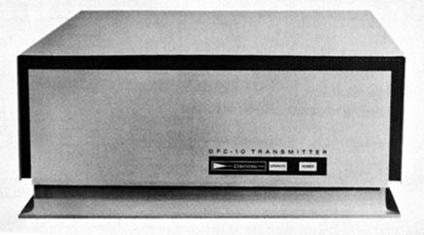
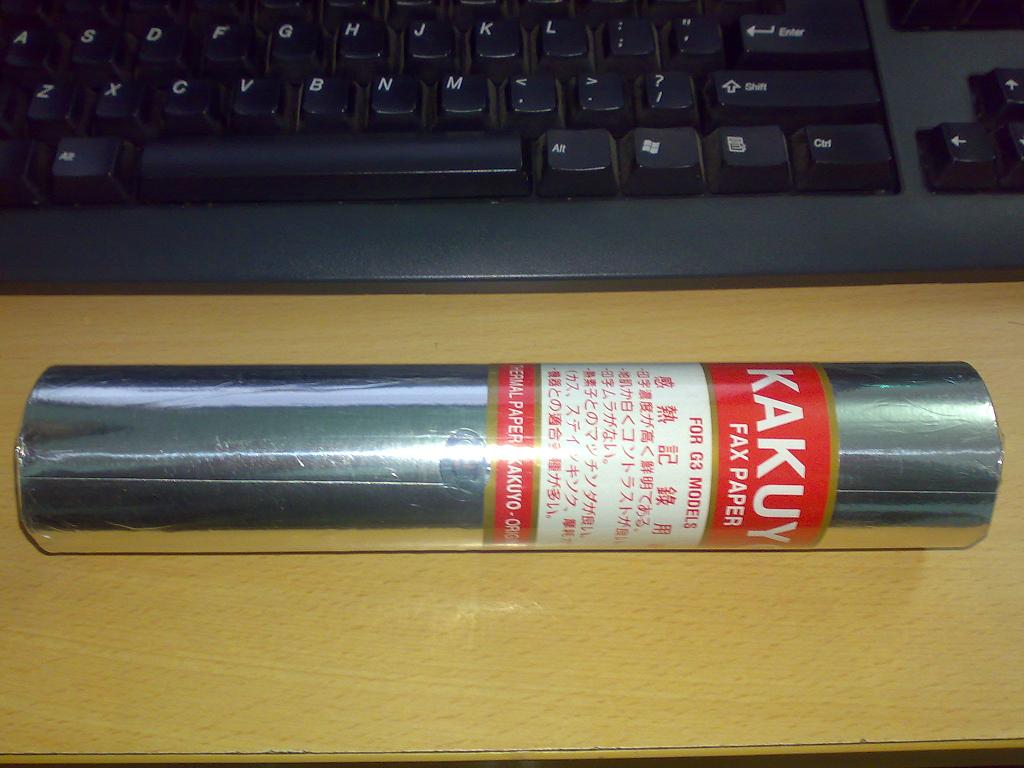
Fax, short for facsimile or telecopying, is the transmission of scanned printed material—text and images—so that a reproduction can be made at a remote receiving device. Originally designed to operate over the public switched telephone network, fax technology has been adapted to work with digital networks and hybrid services. Traditional hardware includes dedicated fax machines and multifunction printers; modern delivery options include fax servers and internet-based faxing.
Image gallery
10 Images




How fax works
At its simplest, a fax transmission follows these basic steps: the original paper document is scanned by the sender's device into a raster or bitmap representation; that bitmap is encoded and often compressed; the encoded data are modulated into a signal suitable for the transport medium (historically an audio channel on a telephone line); the receiving equipment demodulates and decodes the data, reconstructing the bitmap and producing a printed or digital output. Scanning typically converts areas of ink and paper into pixels, while encoding reduces redundancy to speed transmission and save line time.
Protocols and compression
Standardized signalling and error-handling protocols allow equipment from different manufacturers to interoperate. Common protocols and profiles developed for traditional faxing include line negotiation, data compression and page framing. Compression schemes widely used in facsimile systems include Modified Huffman (MH), Modified READ (MR) and Modified Modified READ (MMR), which are optimized for black-and-white text and simple graphics. In digital networks, dedicated fax signalling standards exist to preserve fidelity when bridging between telephone and IP networks.
Evolution and digital adaptation
Fax evolved from early mechanical and electrical experiments in the 19th and early 20th centuries into practical office machines in the mid-20th century. The most common implementations in the late 20th century were designed for the telephone network and optimized for transmitting pages reliably over analog lines. With the rise of packet networks, two broad adaptation paths emerged: services that convert between telephone-based fax and email or file formats, and protocols that transport fax over IP in real time. These modern approaches allow fax to be sent and received without a dedicated analog line or to be archived as electronic files.
Uses and practical advantages
Fax remains in use because it provides a familiar workflow for exchanging paper originals, signatures and forms. In many business and administrative contexts a faxed document with a handwritten signature is accepted as a straightforward record. For organizations with established processes or regulatory needs, fax can simplify transmission of paper-based documents into existing archives. Hybrid deployments combine fax reception with electronic distribution: for example, a fax server can receive calls, store pages as digital files and forward attachments to users by email.
Security, legal considerations and alternatives
Security concerns apply regardless of transport: plain telephone-based fax travels in the clear over circuit paths and can be intercepted in theory; internet delivery can be exposed if not protected. Where confidentiality matters, encryption and secure transport controls are advisable: encrypted file attachments, virtual private networks or secure fax gateways can mitigate interception risks—see resources on encryption. Legal recognition of purely electronic signatures differs between jurisdictions. In some places a faxed paper copy bearing a handwritten signature retains particular evidentiary weight; check local rules and guidance about electronic signature acceptance.
Modern implementations and services
Contemporary solutions include multifunction devices that send and receive faxes, centralized fax servers that consolidate lines and distribute documents electronically, and cloud or hosted services that accept faxes and deliver pages as email attachments or to document management systems. Many of these services act as gateways between traditional telephone-based fax and internet-delivered files, offering convenience for organizations that want to retain fax capabilities while reducing physical paper handling. Internet-based options can be particularly useful for mobile and remote users because they remove the need for an on-site phone line and paper storage—see examples of internet-based and hybrid fax services.
Limitations and best practices
- Fax is optimized for legibility of printed matter rather than high-resolution photographic reproduction, so image quality is limited compared with modern scanning.
- Compatibility and call setup depend on standard signalling; older machines and very new digital-only services may require gateways or configuration to interoperate.
- To protect sensitive transmissions, use authenticated gateways, encrypted storage and controlled access to received files.
- Consider replacing routine paper exchanges with secure electronic document management when legal and operational requirements permit.
Although its role has diminished in many sectors, fax continues to serve particular needs where paper originals, signatures or established workflows remain important. For operational details, configuration guidance and up-to-date compatibility information, consult vendor documentation and industry standards resources that explain interfacing between telephone networks and IP-based services.
Further reading: standards bodies and telecommunications references provide technical specifications and migration strategies for organizations planning to integrate fax functionality into modern digital workflows. For legal and compliance questions, consult local regulations concerning electronic signature law and records retention, and consider secure alternatives or encryption best practices discussed under encryption and privacy guidance.
Vendor and service listings typically describe whether a solution uses an on-premises line, a hosted gateway, or pure internet delivery and how it handles archival formats and integration with email and document management systems. For providers and product details, see comparative information on internet-based fax offerings and whitepapers about centralized fax server deployments.
Questions and answers
Q: What is fax and what does it stand for?
A: Fax is the transmission of scanned printed material (both text and images) to a telephone number connected to a printer or other output device. It stands for facsimile.
Q: How is a document transmitted through a fax machine?
A: The document is scanned with a fax machine or a telecopier, which turns the contents into a bitmap. Then the bitmap is sent through the telephone system. The receiving fax machine reconverts the coded image and prints a paper copy.
Q: What are some advantages of using fax machines?
A: Fax machines provide a secure way to transmit sensitive material, which if sent over the internet may be intercepted. In some countries, faxed contracts with copies of signatures are recognized by law, while electronic signatures are not.
Q: How can internet messages be made secure?
A: Internet messages can be made secure through encryption, which is a secret coding system.
Q: Why has fax technology faced competition from internet-based methods?
A: Fax technology has faced competition from internet-based methods because they are often more convenient and cost-effective.
Q: How have standalone fax machines been replaced in many businesses?
A: Standalone fax machines have been replaced by fax servers which receive and store incoming faxes electronically. The servers route them to users on paper or via a secure email, eliminating unnecessary printouts and reducing the number of inbound phone lines needed by an office.
Q: What does a telecopier do?
A: A telecopier is another name for a fax machine, which scans printed material and transmits it through the telephone system.
Related articles
Author
AlegsaOnline.com Fax (Facsimile): Transmission of scanned documents over telephone and digital networks Leandro Alegsa
URL: https://en.alegsaonline.com/art/33689
Sources
- searchnetworking.techtarget.com : "What is fax? - Definition from WhatIs.com"
- itisgalileiroma.it : "CASELLI"
- chem.ch.huji.ac.il : "The Hebrew University of Jerusalem - Giovanni Caselli biography"