
Fawlty Towers
British sitcom created by John Cleese and Connie Booth, set in a dysfunctional seaside hotel. Two short series (1975, 1979), 12 episodes, widely praised for farce, character comedy and lasting influence.
Overview
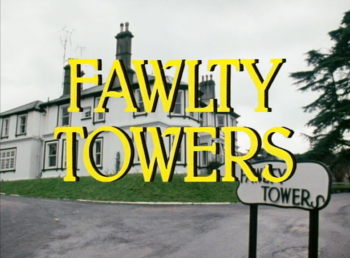
Fawlty Towers is a landmark British television sitcom created and written by John Cleese and Connie Booth. Set in a small, chaotic hotel in the seaside town of Torquay, it follows the misadventures of the ill-tempered proprietor Basil Fawlty and the staff and guests who make the business a constant source of trouble. The programme first aired in two short series and has been celebrated for its tightly written farce and memorable characters. The original run was transmitted by the BBC network.
Image gallery
5 Images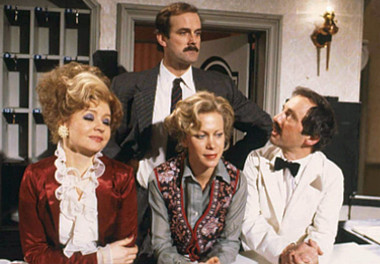


Setting and principal characters
The action is confined almost entirely to the hotel, a stage-like space that amplifies misunderstandings and social friction. Central figures include:
- Basil Fawlty, the snobbish, quick-tempered owner whose attempts to preserve respectability repeatedly backfire.
- Sybil Fawlty, his practical and sarcastic wife, who often controls the hotel's finances and keeps Basil in check.
- Manuel, a well-meaning but confused Spanish waiter whose language difficulties fuel much of the comedy.
- Polly, the level‑headed receptionist and general fixer who tries to limit the damage.
These characters are played with precise comic timing and contrasting temperaments, creating recurring dynamics that drive each episode.
Format and comic style
Each episode is a self-contained half-hour story built around escalating misunderstandings, physical comedy and social satire. The humour mixes farce—doors slamming, frantic exits and entrances, rapidly escalating lies—with sharper observations about class, hospitality and pretension. Dialogue is often rapid-fire; plots depend on strict timing and the actors’ control of pace and expression.
Production and broadcast history
Only twelve episodes were produced: six in 1975 and six in 1979. Despite the small number, the series has stayed in the public eye through repeated broadcasts and home media. The show was developed for television by its creators and produced for the BBC broadcaster, filmed largely in studio sets that represented the hotel. It is closely associated with the town of Torquay in Devon Devon, where the fictional hotel is located, and the coastal setting informs much of the atmosphere.
Reception, influence and legacy
Fawlty Towers is widely regarded as one of the most influential British sitcoms. Critics and audiences praise its compact scripts and expertly calibrated performances; it is frequently cited in lists of top television comedies. The series inspired adaptations and attempts to recreate its formula in other countries and has shaped generations of sitcom writing and performance. Though short-lived, its impact on comic pacing and character-driven farce is disproportionate to its episode count.
Notable episodes and availability
Certain episodes have become especially well known for encapsulating the show's themes and style. Individual instalments are often discussed in studies of television comedy and taught as examples of plot construction in farce. The series continues to be available through various broadcast, streaming and home-video releases, and remains a frequent point of reference for both fans and creators of situational comedy. For more background and resources, see related programme pages and archives here and here. Additional materials and commentary are available via media guides and scholarly collections source and source; historical production notes and interviews can be found at editorial repositories Devon archive and broadcaster archive.
Questions and answers
Q: What is Fawlty Towers?
A: Fawlty Towers is a British television sitcom.
Q: When was Fawlty Towers broadcasted by the BBC?
A: Fawlty Towers was broadcasted by the BBC in two series, one in 1975 and the other in 1979.
Q: How many episodes of Fawlty Towers were broadcasted?
A: Only twelve episodes of Fawlty Towers were ever broadcasted.
Q: Is Fawlty Towers still popular today?
A: Yes, Fawlty Towers is still liked by millions of people.
Q: Has Fawlty Towers influenced other comedies?
A: Yes, Fawlty Towers has influenced other comedies.
Q: Where is Fawlty Towers set?
A: Fawlty Towers is set in a hotel in the coastal Devon town of Torquay.
Q: Can you describe Fawlty Towers in a few words?
A: Fawlty Towers is a classic British comedy about a hotel in Torquay, loved by millions and influential on other comedies too.
Related articles
Author
AlegsaOnline.com Fawlty Towers Leandro Alegsa
URL: https://en.alegsaonline.com/art/33688