
Fauvism: the early 20th-century 'wild beasts' painting movement
Fauvism was a brief but influential modern art movement (c.1905–1910) known for vivid, nonnaturalistic color, simplified forms, and bold brushwork led by Henri Matisse and André Derain.
Overview
Fauvism was an avant-garde painting movement centered in France during the opening years of the twentieth century. Its practitioners prioritized strong, often nonnaturalistic color, vigorous brushwork, and simplified forms to achieve direct visual and emotional impact. The name was given derisively by a critic—literally meaning "the wild beasts"—and it stuck as a label for a group of artists who pushed color and form beyond the conventions of academic painting. The movement is commonly dated to about 1905–1910, though its ideas persisted in various artists’ later work.
Image gallery
10 Images


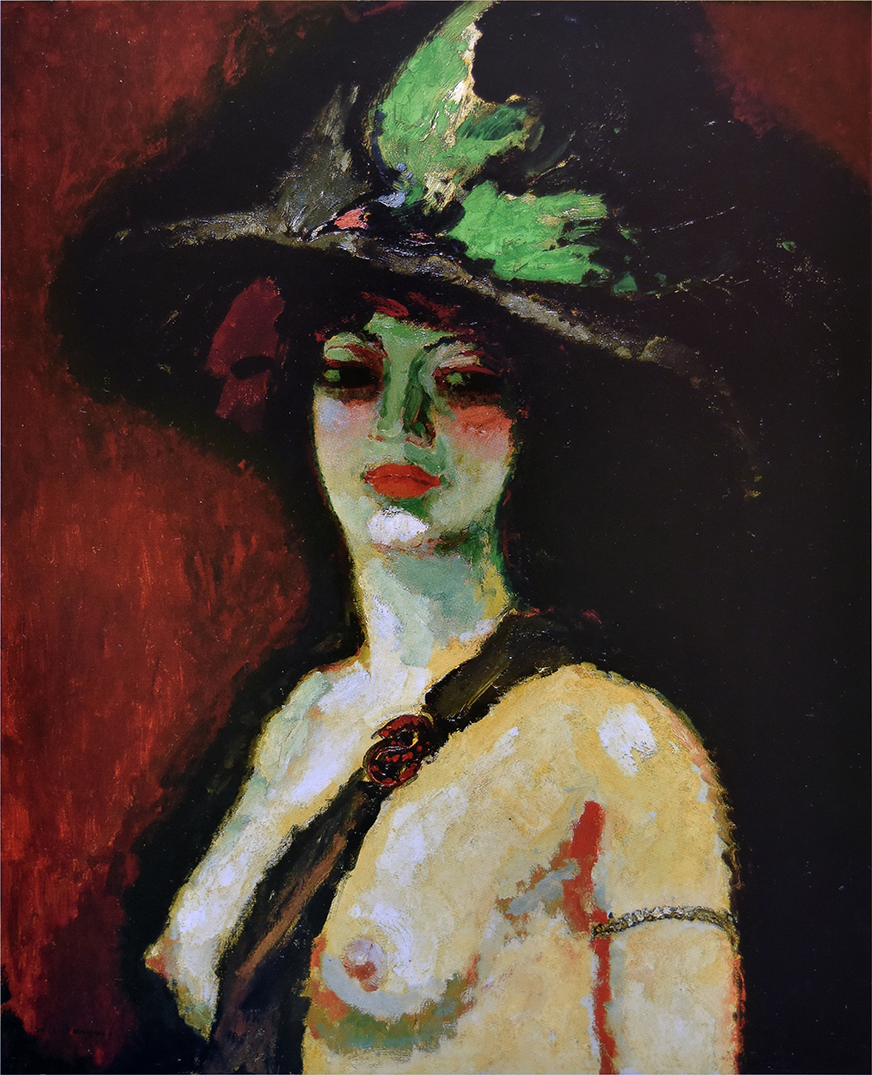


Key characteristics
Fauvist paintings are recognizable through a set of repeating traits: the use of pure, saturated color applied straight from the tube; flattened spatial relationships and reduced modelling; energetic, visible brushstrokes; and an emphasis on composition and decorative effect over photographic accuracy. Color was used for expressive or compositional reasons rather than to describe light realistically. This approach often created flattened planes and bold outlines, giving subjects a deliberately simplified, sometimes ornamental appearance.
Origins and development
The movement grew out of earlier experiments in color and form found in Post-Impressionism. Artists admired the intense palettes of Vincent van Gogh and the expressive simplifications of Paul Gauguin. Fauvist ideas crystallized around the first Salon d'Automne exhibition in Paris in 1905, where a cluster of works by young painters provoked strong reactions. A critic’s phrase that the display resembled a cage of "wild beasts" gave the group its common name. Although the painters exhibited together only for a few years, their daring use of color marked a clear break with 19th-century academic standards and contributed to the broader shift toward modernism in European painting.
Notable artists
- Henri Matisse — often seen as the movement’s leading figure, known for his rhythmic, color-driven compositions.
- André Derain — collaborated with Matisse in some key early works and advanced bold landscape color.
- Maurice de Vlaminck, Raoul Dufy, Othon Friesz, Georges Braque (early), and Aristarkh Lentulov — among other painters associated with Fauvist techniques and exhibitions.
- Les Fauves as a label connected these artists despite differences in individual aims and subsequent careers.
Influence and legacy
Although the Fauvist grouping was short-lived, its impact outlasted the formal alliance. The movement legitimized color as an independent expressive tool and opened paths toward later developments such as Expressionism, Cubism’s concerns with form, and various strands of decorative modernism. Many artists who never identified strictly as Fauvists absorbed its lessons about chromatic freedom and compositional simplification. Art education and modernist aesthetics in the decades that followed often referenced the Fauves’ experiments in color and surface.
Reception, distinctions, and notable facts
Contemporary responses ranged from outrage to admiration. Critics who dismissed the works for their rawness unintentionally popularized the group’s reputation. Fauvism differs from related movements by placing unusually strong emphasis on color as a structural element rather than on symbolic content alone. Connections to Post-Impressionism are clear, and the movement forms one thread in the larger narrative of early 20th-century innovation in painting. For further reading about modern art contexts, see general resources on modern art and on influential precursors such as Van Gogh and Gauguin.
Why it matters
Fauvism helped to liberate artists from literal representation and to demonstrate how color, shape, and brushwork can directly convey mood and structure. The movement’s concise, vivid visual language remains a touchstone for artists and students exploring the expressive possibilities of paint.
Questions and answers
Q: What does Fauvism mean?
A: Fauvism means The Wild Beasts in French.
Q: Who were the leaders of the Fauvist movement?
A: The Fauvist movement was led by painters Henri Matisse and André Derain.
Q: Who influenced the Fauves in their use of bright colors?
A: The Fauves were influenced by the bright colors used by Post-Impressionists Vincent van Gogh and Paul Gauguin.
Q: When did the Fauvist movement begin and end?
A: The Fauvist movement began around 1900 and continued beyond 1910, but the group was only together for three years, 1905–1907.
Q: How many exhibitions did the Fauves have together?
A: The Fauves had three exhibitions together.
Q: Has the influence of the Fauvist movement continued until the present day?
A: Yes, the influence of the Fauvist movement has continued until the present day.
Q: Can you name an artist who was not a fauvist but was influenced by the Fauves?
A: Aristarkh Lentulov is one good example of an artist who was not a fauvist but was influenced by the Fauves.
Related articles
Author
AlegsaOnline.com Fauvism: the early 20th-century 'wild beasts' painting movement Leandro Alegsa
URL: https://en.alegsaonline.com/art/33680