
Fasciola hepatica: the common liver fluke
Fasciola hepatica is a widely distributed parasitic trematode that infects livers of mammals, causing fascioliasis in livestock and humans. Overview, life cycle, disease, diagnosis, control, and significance.
Overview
Fasciola hepatica, commonly called the common liver fluke, is a parasitic trematode or flatworm in the phylum Platyhelminthes. It lives principally in the bile ducts and liver parenchyma of a variety of vertebrate hosts and is the agent of the disease known as fascioliasis. Recognized globally, F. hepatica affects both domesticated animals and people and has been listed among neglected tropical diseases by public health organizations.
Image gallery
10 Images




Biology and life cycle
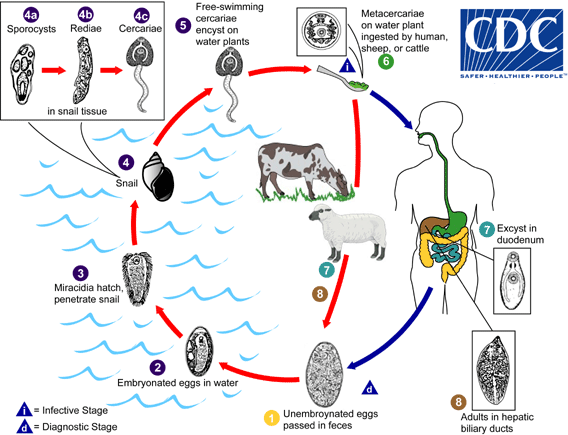
Adults are flattened, leaf-shaped worms a few centimeters in length. Their life cycle requires two environments: a vertebrate definitive host and aquatic or semi-aquatic gastropod snails that serve as intermediate hosts. Eggs are shed in the feces of infected mammals and, after hatching in water, release larvae that infect suitable freshwater snails. Within snails the parasite multiplies and develops into infective stages that emerge and encyst on aquatic vegetation or other surfaces as metacercariae. Vertebrates become infected by ingesting these encysted forms, most often on raw water plants such as watercress or on contaminated water.
Hosts, distribution and key features
F. hepatica infects the livers of many mammals, including sheep, cattle, and humans. It has a cosmopolitan distribution, occurring in temperate and tropical regions wherever the life cycle can be completed. Among its notable biological characteristics are the ability to migrate through liver tissue during early infection, a long lifespan in the bile ducts of some hosts, and the production of large numbers of eggs that sustain transmission in grazing environments.
Human and animal disease
Fascioliasis typically progresses through an acute (hepatic) phase—when larvae migrate through the liver producing inflammation, fever, and pain—and a chronic (biliary) phase when adult flukes live in the bile ducts, potentially causing biliary obstruction, cholangitis, and nutritional impacts. In livestock, heavy infections can lead to weight loss, reduced milk yield, and liver condemnation at slaughter, producing significant economic losses. Human illness ranges from mild, transient symptoms to severe disease, and eosinophilia and elevated liver enzymes are common laboratory findings.
Diagnosis, treatment and control
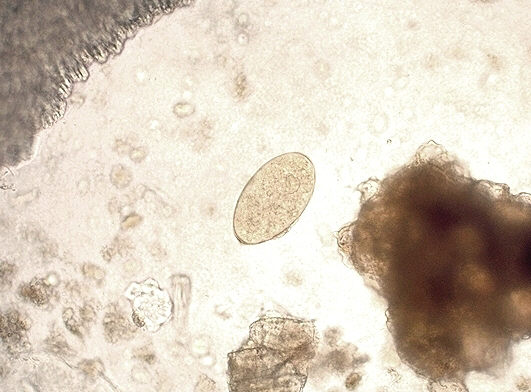
Diagnosis may combine clinical signs, imaging, serological tests, and demonstration of eggs in stool or bile during the chronic phase. Effective anthelmintic drugs exist; triclabendazole is regarded as the drug of choice in many settings because it is active against both immature and adult stages. Control strategies focus on regular treatment of livestock, management of grazing to reduce access to contaminated water plants, snail habitat reduction, and public health education to prevent consumption of raw aquatic vegetables.
History, significance and distinctions
Fasciola hepatica has been recognized for centuries as an important animal parasite and has played a central role in parasitology research because of its size, accessibility, and impact on agriculture. It is often compared with Fasciola gigantica, a related species with similar biology but differing geographic range and morphology. Continued attention is given to its veterinary importance, zoonotic potential, and the development of resistance to treatment in some regions. For further reading on parasitology fundamentals and control measures, see resources on trematodes and livestock health: livestock parasites, liver disease, and general trematode biology via mammalian hosts and trematode life cycles.
Questions and answers
Q: What is Fasciola hepatica?
A: Fasciola hepatica is a parasitic trematode (fluke or flatworm) that infects the livers of various mammals, including humans.
Q: What disease is caused by Fasciola hepatica?
A: Fasciola hepatica causes fascioliasis.
Q: What is the phylum of Fasciola hepatica?
A: Fasciola hepatica belongs to the phylum Platyhelminthes.
Q: Is Fasciola hepatica a neglected tropical disease?
A: Yes, Fasciola hepatica has been classified as a neglected tropical disease.
Q: What animals are commonly affected by Fasciola hepatica?
A: Fasciola hepatica is an important parasite of sheep and cattle and causes great economic losses in these animals.
Q: What is the worldwide distribution of Fasciola hepatica?
A: Fasciola hepatica is distributed worldwide.
Q: Why has Fasciola hepatica been the subject of many scientific investigations?
A: Because of its size and economic importance, Fasciola hepatica has been the subject of many scientific investigations and may be the best-known of any trematode species.
Related articles
Author
AlegsaOnline.com Fasciola hepatica: the common liver fluke Leandro Alegsa
URL: https://en.alegsaonline.com/art/33590
Sources
- cdc.gov : "Neglected Tropical Diseases"