
Farhiyo Farah Ibrahim — Somali refugee and women's rights activist
Somali refugee and activist based in Dadaab, Kenya, known for campaigning against female genital mutilation and forced marriage; recipient of the 2008 International Women of Courage Award.
Overview
Farhiyo Farah Ibrahim is a Somali refugee and women's rights campaigner who has worked to reduce female genital mutilation (FGM) and forced marriage in the Dadaab refugee complex in north‑eastern Kenya. Her work combines education, counseling and community outreach inside a large refugee setting, and has been recognized internationally. In 2008 she was a recipient of the International Women of Courage Award, an honor presented to women who show exceptional leadership and bravery in advancing human rights and social change.
Image gallery
2 Images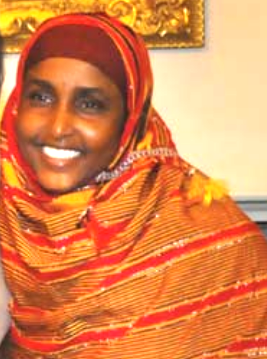

Background and early work
After arriving in Kenya as a refugee, Farhiyo became involved in reproductive health education. In 2002 she took a post with the National Council of Churches in Kenya, teaching about reproductive health and related issues. Later she worked as an interpreter in the Dadaab camps, helping bridge language and cultural gaps between aid workers and residents. In 2005 she participated in a leadership training program in Naivasha that helped strengthen her skills for community organizing and advocacy.
Areas of activism and methods
Farhiyo focuses on two interlinked issues common in some refugee contexts: opposition to female genital mutilation and prevention of forced or early marriage. Her approach blends education, personal counseling and cooperation with humanitarian organizations. Typical activities include community discussions, sensitization sessions for parents and youth, and referrals to services for survivors of abuse. She has worked with local and international NGOs to provide information on reproductive health and legal rights.
Organisations and collaborations
- National Council of Churches in Kenya — early reproductive health outreach and community education; see related resource.
- CARE — worked to distribute reproductive health information and support programs for refugees; see CARE programs.
- Dadaab refugee complex — primary location of her work and community engagement; more on the area at Dadaab and national context at Kenya.
Recognition and significance
Her courage and leadership were acknowledged with the International Women of Courage Award in 2008. That recognition highlighted the challenges faced by refugee women who oppose entrenched practices and who organize within camps where resources and protection can be limited. Activists like Farhiyo are often instrumental in changing attitudes at the community level by offering alternatives and support to those at risk.
Challenges and impact
Working inside refugee settings presents many obstacles: social pressure, security risks, limited access to education and health services, and tensions between traditional practices and rights‑based approaches. Farhiyo’s work demonstrates common strategies used by local advocates — combining culturally sensitive dialogue with referrals to aid agencies, and building alliances with international organizations to increase protection and services for women and girls.
Further reading and context
For broader information about the issues Farhiyo addresses, see resources on female genital mutilation and forced marriage (FGM resources, forced marriage) and on refugee situations and humanitarian responses (Dadaab, Kenya context). These topics intersect with public health, human rights and refugee protection, and remain priorities for many aid organizations and community leaders.
Questions and answers
Q: Who is Farhiyo Farah Ibrahim?
A: Farhiyo Farah Ibrahim is a Somali refugee and women’s rights activist.
Q: What are some of the issues Farhiyo Farah Ibrahim fights against in the Dadaab refugee camp?
A: Farhiyo Farah Ibrahim fights against female genital mutilation and forced marriage in the Dadaab refugee camp.
Q: What award did Farhiyo Farah Ibrahim receive in 2008?
A: In 2008, Farhiyo Farah Ibrahim received the International Women of Courage Award.
Q: Where did Farhiyo Farah Ibrahim work in 2002?
A: In 2002, Farhiyo Farah Ibrahim worked for the National Council of Churches in Kenya, teaching people about reproductive health.
Q: Why did Farhiyo Farah Ibrahim take a job as an interpreter in Dadaab?
A: Farhiyo Farah Ibrahim took a job as an interpreter in Dadaab after she was attacked.
Q: What did Farhiyo Farah Ibrahim do in Naivasha in Western Kenya in 2005?
A: In 2005, Farhiyo Farah Ibrahim went to a leadership program in the town of Naivasha in Western Kenya.
Q: What is CARE and how is it involved with Farhiyo Farah Ibrahim's work?
A: CARE is an international NGO that helps refugees. Farhiyo Farah Ibrahim worked for CARE, giving people information about reproductive health.
Related articles
Author
AlegsaOnline.com Farhiyo Farah Ibrahim — Somali refugee and women's rights activist Leandro Alegsa
URL: https://en.alegsaonline.com/art/33532
Sources
- 2001-2009.state.gov : "International Women of Courage Award Ceremony: 2008"
- iipdigital.usembassy.gov : "Somali Woman Champions Women's Rights in Africa - IIP Digital"
- unhcr.org : "Somali refugee wins US State Department award for courage"