
Fabergé egg
A Fabergé egg is a jeweled, enameled decorative egg created by Peter Carl Fabergé and his workshop between 1885 and 1917, best known for the imperial Easter eggs made for the Russian tsars and their families.
The Fabergé egg is a type of highly ornamental, jewel-set egg produced by the House of Fabergé in Saint Petersburg from the late 19th century until the First World War. Conceived by master goldsmith Peter Carl Fabergé and executed by skilled artisans in his workshop, these objects combine precious metals, guilloché enamel, gemstones and miniature mechanical surprises to form unique works of decorative art.
Image gallery
10 Images


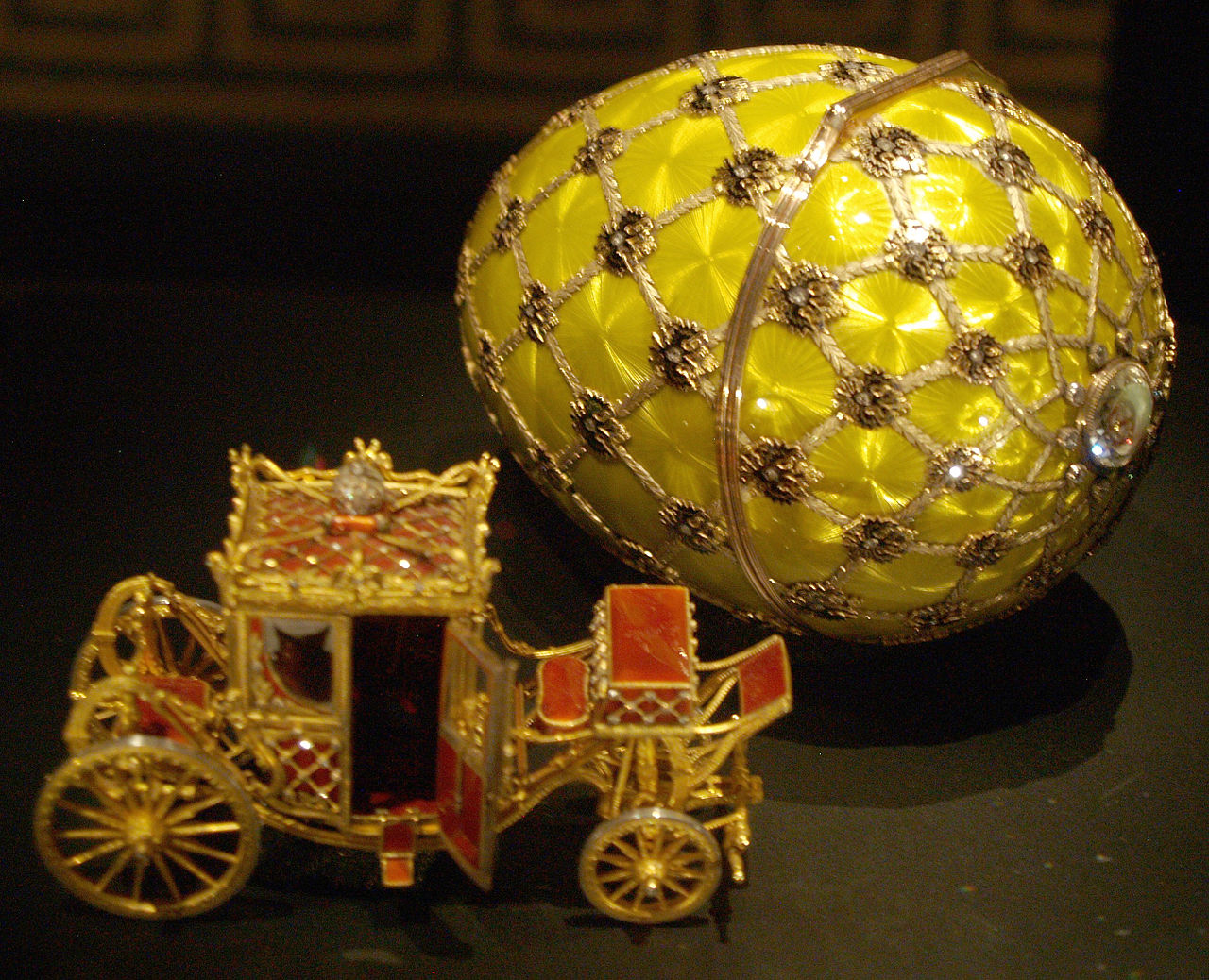


Characteristics and construction
Fabergé eggs typically feature an outer shell of gold and enamel, often worked with guilloché (engine-turning) and inset with diamonds, pearls, rubies or other gems. Many contain a "surprise"—a small, movable or hidden object such as a miniature portrait, a tiny mechanical model, or a further jewel-encrusted element. The design and technique vary widely between pieces, reflecting both traditional Russian decorative arts and Western European influences.
History and patrons
The most celebrated series was commissioned by the Russian imperial family. Emperors Alexander III and Nicholas II presented these eggs as Easter gifts to their wives and mothers, establishing the so-called imperial eggs as symbols of courtly luxury. The association with the Romanovs and the imperial court helped make Fabergé eggs internationally famous. Production effectively ceased after the upheavals of the Russian Revolution.
Numbers, survival and legacy
The House of Fabergé produced dozens of presentation eggs for the imperial family and private clients; sources commonly cite around fifty-two imperial eggs, of which the majority survive in museums and private collections. Because of their rarity, condition and provenance, surviving eggs are highly prized by collectors and cultural institutions, and several are displayed as highlights in national collections.
Notable examples and cultural importance
- Examples include early presentation pieces and later masterpieces noted for their engineering or narrative themes.
- Beyond their material value, Fabergé eggs are studied as exemplars of late imperial Russian taste, technical craftsmanship, and the social rituals of gift-giving at court.
Today Fabergé eggs continue to attract scholarly attention and public fascination. They appear in exhibitions, auction records and popular culture as icons of luxury and of a vanished era in Russian history. For further background on the Romanov commissions and examples, see entries related to the Russian tsars and the events surrounding the early 20th century.
Questions and answers
Q: What is a Fabergé egg?
A: A Fabergé egg is a jewelled egg made by Peter Carl Fabergé and his company between 1885 and 1917.
Q: Who were the eggs made for?
A: The most famous Fabergé eggs were made for the Russian Tsars Alexander III and Nicholas II as Easter gifts for their wives and mothers.
Q: What are the 'Imperial' Fabergé eggs?
A: The 'Imperial' Fabergé eggs are the eggs made for the Russian Tsars and their families.
Q: How many imperial eggs did the House of Fabergé make?
A: The House of Fabergé made about 52 imperial eggs.
Q: How many imperial eggs have survived?
A: Of the 52 imperial eggs made by the House of Fabergé, 46 have survived.
Q: Were there more imperial eggs planned?
A: Yes, two more imperial eggs were planned for Easter 1918, but they were not delivered due to the Russian Revolution.
Q: What is the significance of the Fabergé eggs?
A: The Fabergé eggs are significant as they were created as one of a kind gifts for the royal family during a time of immense wealth and extravagance in Russia. They have become symbols of luxury and craftsmanship.
Related articles
Author
AlegsaOnline.com Fabergé egg Leandro Alegsa
URL: https://en.alegsaonline.com/art/33169