
Extraterrestrial sky: appearance, causes, and observed examples
An overview of skies as seen from worlds other than Earth: how atmospheres, light scattering, satellites and rings shape their appearance, with observed examples and methods for prediction.
Overview
In astronomy the term "extraterrestrial sky" refers to the view of outer space from the surface of a planet, moon or other solid body other than Earth. These skies can look dramatically different from one another depending on local conditions. The phrase extraterrestrial sky is used both for skies directly photographed by human explorers and for theoretical or simulated skies based on physical models.
Image gallery
10 Images




Observed examples
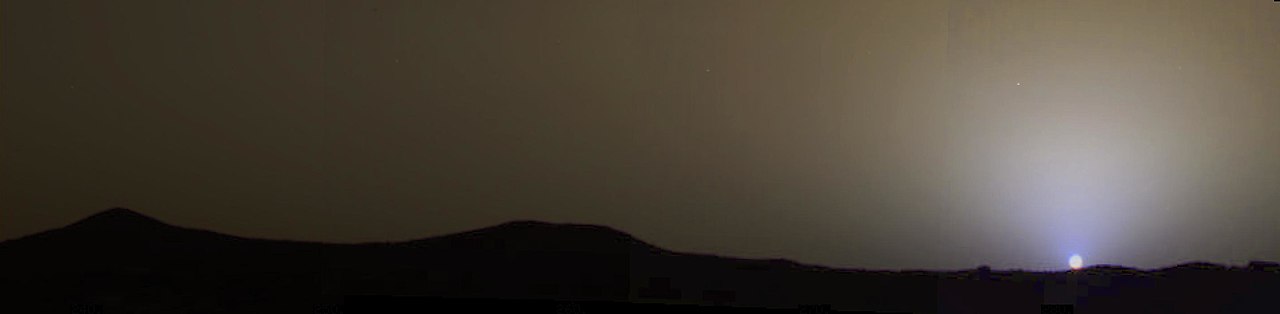
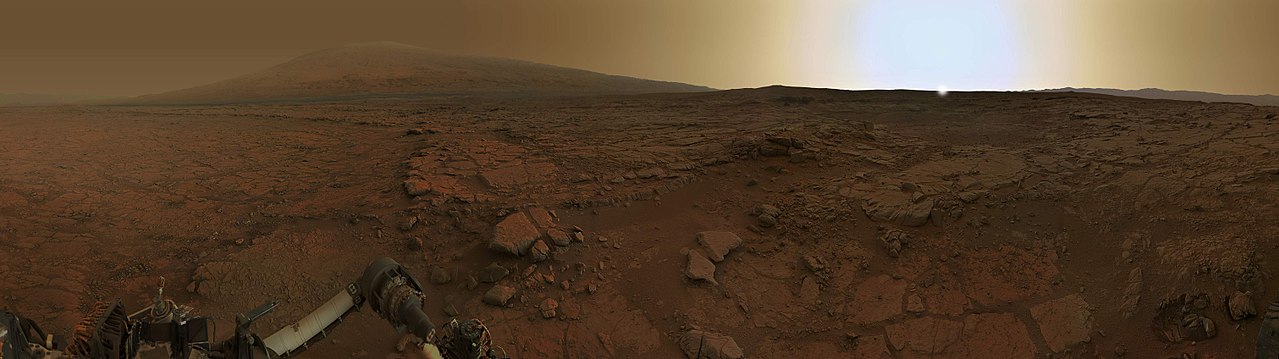
The only extraterrestrial sky seen directly by humans is the Moon, photographed and described by astronauts. Robotic landers and probes have returned pictures and data from the surfaces of other worlds: bright, sulfur‑clouded scenes on Venus; thin, dusty reddish skies and suns that appear small on Mars; and the orange, hazy twilight on Saturn's moon Titan. Many of these images arrived thanks to a history of dedicated space probes designed to survive surface conditions and relay views back to Earth.
Physical causes of appearance
The main factors that determine how an extraterrestrial sky looks are the presence and nature of an atmosphere, the composition and density of that atmosphere, and the geometry of local light sources. Atmospheric composition affects which wavelengths are scattered or absorbed. Particulates and chemical aerosols produce haze and muted detail, while clouds of droplets or ice (clouds) change brightness, color and contrast. On airless bodies the sky is effectively black, and the Sun, stars and any nearby objects are visible without atmospheric diffusion.
Features visible in other skies
Beyond atmospheric effects, many celestial features alter a sky's character. These include:
- Nearby natural satellites that can dominate part of the sky.
- Planetary rings, which can form brilliant arcs or broad bands overhead.
- Bright components of multiple-star systems or directionally bright regions from scattered starlight (star systems).
- Extended objects such as nebulas visible in very dark skies, and other bodies within the planetary system like nearby planets or belts of debris.
Prediction and simulation
Where direct observation is not available, scientists simulate skies by combining orbital geometry, stellar positions and atmospheric physics. Computer models can recreate sunrise and sunset color gradients, the relative apparent size of a sun or moons, and the scattering that produces red, blue or orange tints. These simulations are used for scientific planning, mission design, public outreach and artistic renderings that aim to show how an alien sky might appear to a human observer.
Importance and notable distinctions
Studying extraterrestrial skies matters for navigation, climate studies, surface operations and astronaut safety. Skies reveal atmospheric composition, aerosol loading, and weather patterns and help interpreters infer surface conditions from orbit. Notable distinctions include how thin atmospheres yield sharp shadows and star visibility, while thick or clouded atmospheres diffuse light and hide celestial details. Multiple moons or prominent rings can make an alien nightscape unlike anything seen from Earth, and sunrise colors may reverse expectations due to different scattering behaviors.
Further reading and resources
Readers who want to compare images and data can consult mission archives and educational portals that gather surface photographs, spectral measurements and simulated panoramas from exploratory missions and telescopes. Select mission pages and educational sites provide both raw images and annotated interpretations for the skies of planets, moons and modeled exoplanets.
Questions and answers
Q: What is an extraterrestrial sky?
A: An extraterrestrial sky is a view of outer space from the surface of a planet (or related body in space) other than Earth.
Q: Which extraterrestrial sky has been directly observed and photographed by astronauts?
A: The only extraterrestrial sky that has been directly observed and photographed by astronauts is that of the Moon.
Q: How do extraterrestrial skies vary?
A: Extraterrestrial skies seem to vary because of a number of reasons, such as the atmosphere's density and chemical composition which can contribute to differences in color, opacity (including haze) and the presence of clouds. Astronomical objects may also be visible and can include natural satellites, rings, star systems and nebulas and other planetary system bodies.
Q: Can we simulate an appearance for skies that have not been directly or indirectly observed?
A: Yes, their appearance can be simulated based on known factors, such as the position of astronomical objects relative to the surface and atmospheric composition.
Q: What are some examples of astronomical objects that may be visible in an extraterrestrial sky?
A: Astronomical objects that may be visible in an extraterrestrial sky can include natural satellites, rings, star systems and nebulas and other planetary system bodies.
Q: Are there any planets besides Earth where we have seen photographs taken from its surface?
A: Yes, photographs have been taken from the surface of Venus, Mars and Titan by space probes designed to land on those surfaces.
Related articles
Author
AlegsaOnline.com Extraterrestrial sky: appearance, causes, and observed examples Leandro Alegsa
URL: https://en.alegsaonline.com/art/33030
Sources
- books.google.com : "The Starry Universe"