
Exploration of Neptune
History and future of Neptune exploration: Voyager 2 flyby, what we learned about the ice giant and Triton, scientific goals, challenges of missions, and proposed orbiter concepts.
The exploration of Neptune began in earnest when the spacecraft Voyager 2 performed the only close flyby of the planet on August 25, 1989. That encounter remains the primary source of in situ data for Neptune and its system. As an ice giant with no solid surface, Neptune cannot be landed upon in a conventional sense, so study relies on flybys, orbiters, atmospheric probes and observations from Earth-based and space telescopes.
Image gallery
9 Images
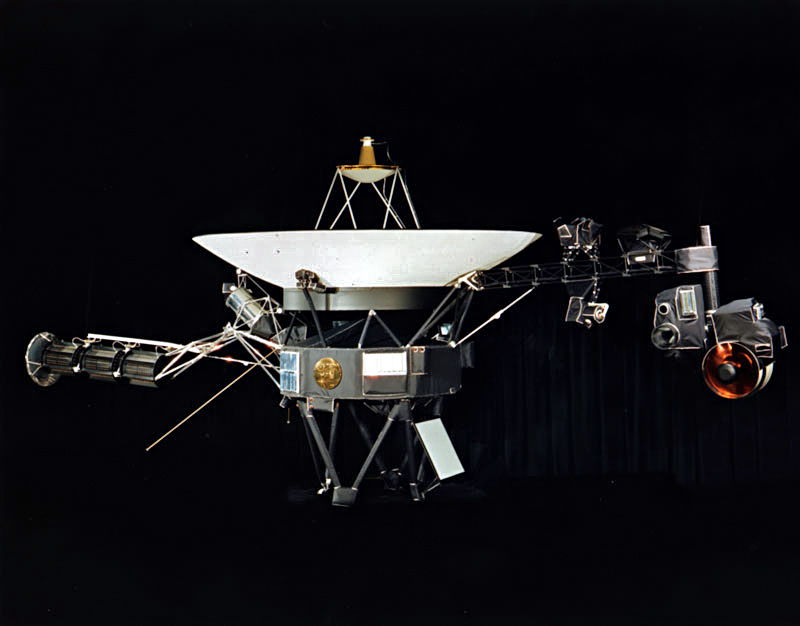


Voyager 2: what was learned
Voyager 2 returned the first detailed images of Neptune, revealing a dynamic atmosphere with high-speed winds and large storm systems. The mission detected faint ring structures and a magnetosphere shaped by the planet's internal magnetic field. Voyager 2 also discovered or characterized many of Neptune's moons, most notably Triton, a large, geologically active satellite with a retrograde orbit and unusual surface features.
Neptune's characteristics affecting exploration
Neptune is classified as an ice giant, dominated by hydrogen, helium and compounds such as water, ammonia and methane that behave differently under high pressure. Its atmosphere shows striking weather phenomena and exceptionally strong winds. The planet's distance from the Sun makes communication and power a major engineering constraint: spacecraft require long cruise times and reliable power sources, typically radioisotope thermoelectric generators (RTGs).
Why return to Neptune and Triton?
Neptune represents a class of planets that is common in exoplanet surveys but poorly sampled by spacecraft. Returning missions would refine models of planetary formation, interior structure, atmospheric dynamics and magnetospheres. Triton is a world of special interest because its retrograde orbit implies capture, its surface shows signs of recent activity, and some evidence points to the possibility of a subsurface ocean—an intriguing target for studies of planetary geology and astrobiological potential.
Future mission concepts and status
NASA has studied concepts for a Neptune Orbiter that could place a spacecraft in orbit around Neptune, deploy atmospheric probes and possibly send a lander to Triton. Proposals have discussed launch opportunities in the early 2030s to mid-2030s, though precise schedules and funding remain tentative. For the latest strategic planning and mission studies see NASA.
Key scientific goals and mission challenges
- Measure Neptune's internal structure and heat flow to understand ice giant formation.
- Characterize atmospheric composition, circulation and seasonal changes.
- Map rings and small moons to learn about system evolution.
- Investigate Triton's geology, volatile transport, and potential subsurface ocean.
Challenges for any Neptune mission include the long transit time, strict mass and power limits, the need for sensitive instruments able to operate at low solar illumination, and the requirement for robust communications across great distance. Advances in propulsion, power systems and autonomous operations will improve prospects for a return mission that could transform our understanding of the outer Solar System.
Questions and answers
Q: When did the exploration of Neptune begin?
A: The exploration of Neptune started on August 25, 1989, when Voyager 2 became the first and so-far only spacecraft to visit the planet.
Q: Is it possible to land on Neptune?
A: No, it is not possible to land on Neptune as it doesn't have a solid land on its surface.
Q: Is there a plan to send another spacecraft to study Neptune?
A: Yes, NASA is planning to send another spacecraft known as the Neptune Orbiter to study more about Neptune.
Q: What will the Neptune Orbiter do?
A: The Neptune Orbiter would release atmospheric probes and possibly release a Triton Lander.
Q: When is the Neptune Orbiter planned to be launched?
A: The Neptune Orbiter is planned to be probably launched on 2035, and the earliest possible launch date is 2030.
Q: What may eliminate the proposal of launching the Neptune Orbiter?
A: Budget cuts may eliminate the proposal of launching the Neptune Orbiter.
Q: How many spacecraft have visited Neptune so far?
A: Only one spacecraft, Voyager 2, has visited Neptune so far.
Related articles
Author
AlegsaOnline.com Exploration of Neptune Leandro Alegsa
URL: https://en.alegsaonline.com/art/32983