
Evening Prayer (Anglican) — Evensong
Evening Prayer, often called Evensong when sung, is the Anglican evening liturgy of psalms, canticles, readings and prayers, offered in sung or said forms across cathedrals, collegiate chapels and parish churches.
Overview
Evening Prayer, commonly known as Evensong when sung, is the Anglican service appointed for the late afternoon or evening. It brings together psalmody, scriptural canticles, short readings, responses and intercessions. The service may be celebrated publicly with choir and clergy or observed as a quieter, spoken office for smaller congregations gathering for worship. In many places it is part of the daily rhythm of prayer and is valued both for devotion and for its musical tradition.
Image gallery
7 Images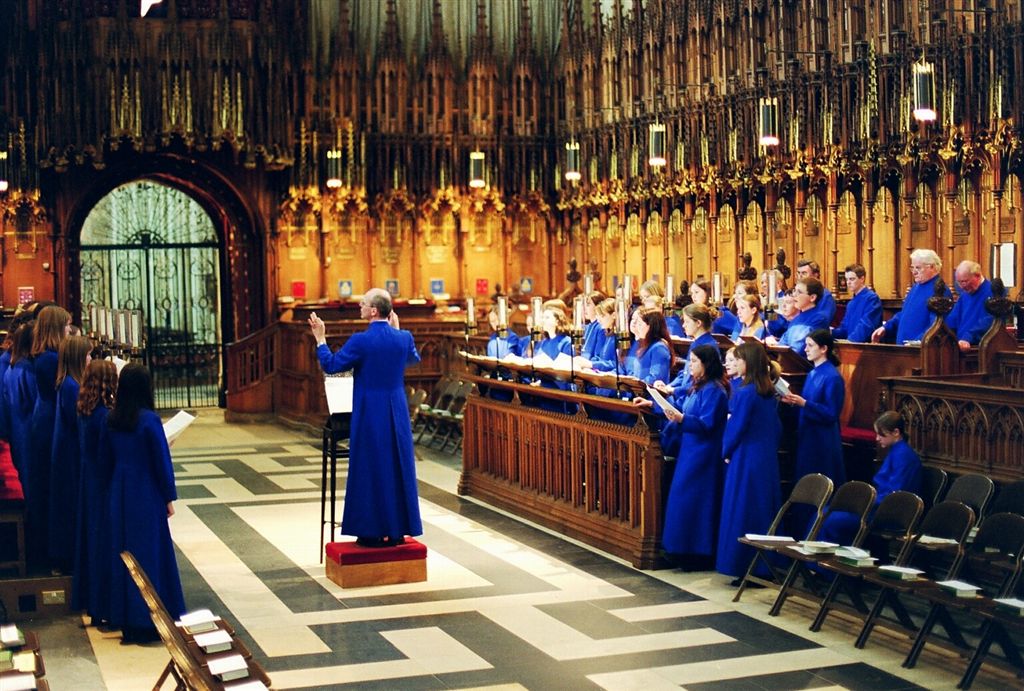


Structure and typical order
The structure of Evening Prayer is compact and recognisable across Anglican books of worship. A typical order includes:
- an opening sentence and a penitential act with absolution;
- psalms sung or said from the Psalter;
- one or more short readings from Scripture with responses;
- canticles, most commonly the Magnificat (the Song of Mary) and the Nunc Dimittis (the Song of Simeon);
- an anthem or motet performed by the choir;
- prayers of intercession, the Lord's Prayer and concluding prayers or a blessing;
- a voluntary or organ piece often closes the service.
In sung Evensong the choir frequently sings much of the liturgy, while in a cathedral setting the congregation may be quieter and listen; in parish practice there is often greater congregational participation and a final hymn.
Texts and liturgical sources
The modern Anglican form was shaped by the vernacular reforms of the 16th century, especially the Book of Common Prayer, which consolidated older Latin offices into services suitable for parish use. Contemporary prayer books and supplementary liturgical resources preserve the basic pattern while allowing variations in language and musical setting. Canticles and psalms remain central, maintaining continuity with historic monastic offices such as Vespers and Compline.
History and development
Although its immediate form derives from the Reformation-era consolidation of offices, Evensong preserves elements from medieval monastic practice: an ordered series of psalms, scriptural canticles and response-based worship. Over successive centuries the sung office developed a distinct choral tradition, especially within cathedrals and university chapels, where choirs grew in size and repertory. The tradition was further enriched in the 19th and 20th centuries by composers and choral scholars who produced settings of canticles, anthems and service music still in use today.
Musical tradition and repertoire
Evensong is an important vehicle for Anglican choral music. Choirs—often comprising professional, volunteer or choral scholars—sing settings of the Magnificat and Nunc Dimittis, psalm settings and anthems by composers from different eras. The repertoire ranges from early polyphony to contemporary works, and many cathedral services attract listeners for the quality of their music. In collegiate and university contexts the practice of daily sung Evensong has fostered a rich interchange between worship and musical training.
Practice and variations
Practice varies widely across the Anglican Communion. In many British cathedrals and historic chapels a choir sings Evensong most days, with clergy and lay clerks leading parts of the service and the congregation often listening. In other places the service is adapted for a parish congregation and may be largely spoken, with music limited to hymns and occasional anthems. The role of priests and lay ministers varies: some parts are sung by the choir alone, others led by clergy with congregational responses. Many parishes encourage the wider congregation to join in plainsong, metrical psalmody or hymns.
Occasions and cultural role
Evensong is used on ordinary days, Sundays and special feast days; it may also be offered as a more contemplative alternative to the principal Eucharist. In urban cathedrals Evensong frequently attracts visitors and tourists who come to hear the choir and to experience the liturgy. Broadcasts and recordings of Evensong have helped to broaden its audience beyond regular worshippers, contributing to its reputation as both a devotional act and a form of choral art.
Continuity and adaptation
The distinctions between "sung Evensong" and "said Evening Prayer," between cathedral or collegiate practice and parish worship, and between traditional and modern language forms help the service remain adaptable. While maintaining core elements—psalms, canticles, readings and prayer—Evensong continues to evolve in language, musical style and local custom, enabling it to meet pastoral, devotional and cultural needs in diverse settings.
For further information on local schedules and musical programmes, many cathedrals and chapels publish details online and in printed leaflets; parish notices often indicate whether a particular service will be sung or said. See also resources on liturgy and choral practice that discuss Evensong in historical and contemporary contexts.
Service information • Worship resources • Cathedral schedules • University chapels • Historic chapels • Clergy roles • Congregational participation • Hymnody and song
Questions and answers
Q: What is Evening Prayer?
A: Evening Prayer, also known as Evensong, is a traditional service in the Anglican Church where people come to worship in the late afternoon or early evening.
Q: Where is it sung nearly every day of the week?
A: In cathedrals in Britain and in some of the old university chapels, Evensong is sung nearly every day of the week.
Q: Who usually sings in cathedrals during Evensong?
A: In cathedrals, usually only the choir and the priests sing during Evensong while the congregation listens.
Q: Is there any participation for the congregation during Evensong?
A: There is usually only one hymn at the end in which the congregation can join in during Evensong.
Q: Does the congregation have more singing to participate in during Evensong in churches?
A: Yes, in churches, the congregation typically has more singing to participate in during Evensong.
Q: Is there ever a day when there is no choir and everything is spoken during Evensong in cathedrals?
A: Yes, there is usually one day of the week when there is no choir and everything is spoken during Evensong in cathedrals.
Q: What kind of service is Evensong?
A: Evensong is a service in the Anglican Church where people come to worship in the late afternoon or early evening.
Related articles
Author
AlegsaOnline.com Evening Prayer (Anglican) — Evensong Leandro Alegsa
URL: https://en.alegsaonline.com/art/32751