
Euryale — one of the Gorgons in Greek mythology
Euryale, sister of Medusa and Stheno, is a Gorgon in Greek myth known for serpentine hair, a petrifying aspect, and loud, mournful cries after Medusa's death.
Overview
Euryale is one of the three Gorgons of ancient Greek myth, usually named alongside her sisters Stheno and the better-known Medusa. In the surviving tradition the three sisters form a striking triad: monstrous yet compelling figures whose attributes and stories informed religious, artistic and literary expression across antiquity and into later western culture.
Image gallery
3 Images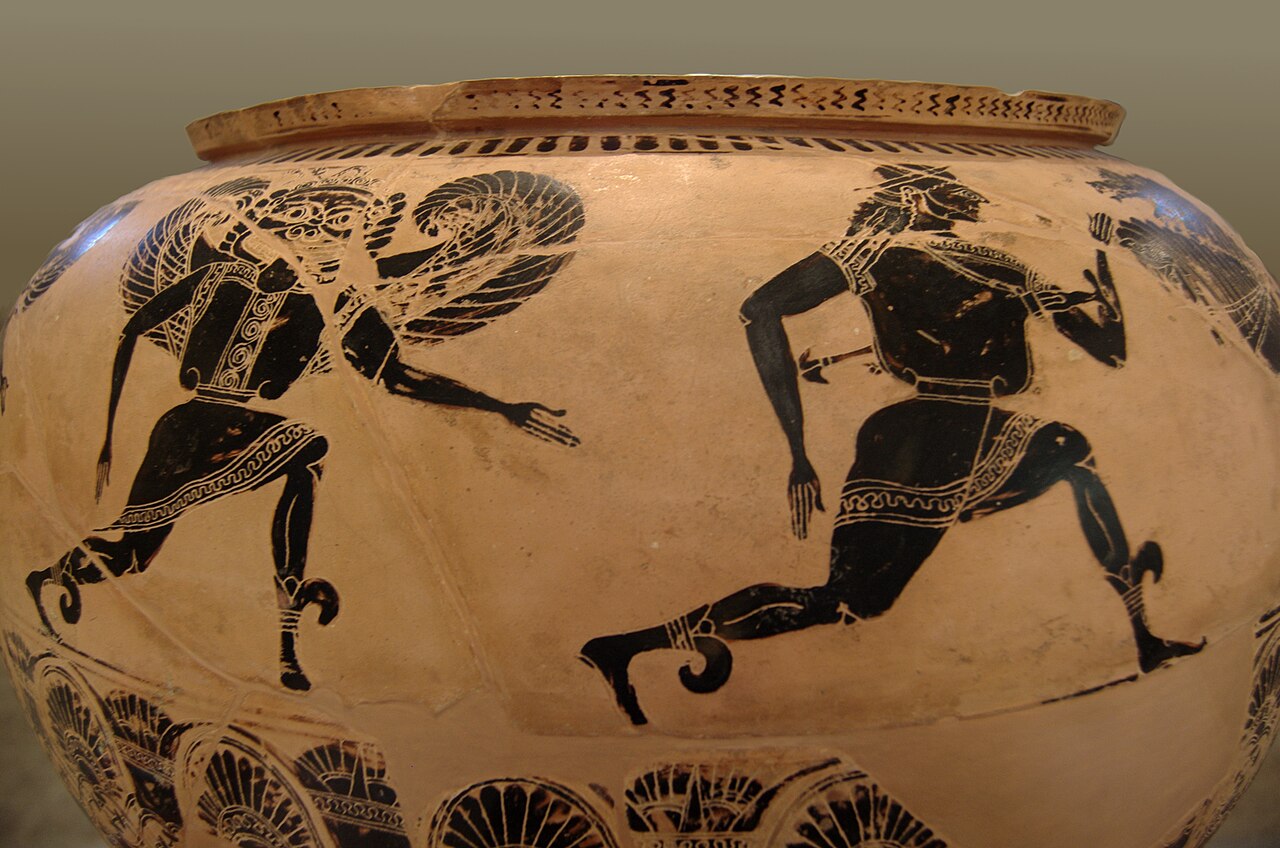


Origins and family
Most classical genealogies present the Gorgons as daughters of the sea deities Phorcys and Ceto, members of a wider family of marine and chthonic monsters. Ancient authors are not uniform in detail, but a common theme is that the sisters were once mortal and beautiful before becoming the snake-haired figures known from art and myth. Accounts vary about whether all three were made monstrous at the same time and whether the transformation was a punishment, a curse or part of a more complex divine interaction.
Mythic narrative and key episodes
A frequently cited version of events explains that Medusa, once a priestess who had taken a vow of chastity, was violated by Poseidon in the temple of the goddess Athena. Outraged or dishonored, Athena is said in some tellings to have transformed Medusa and, in some variants, her watching sisters into beings with serpents for hair and a petrifying aspect. Mythographers differ on whether Stheno and Euryale were made immortal while Medusa remained mortal; this variation explains why the hero Perseus could later beget the famous narrative of Medusa’s beheading.
Euryale's character and role
Euryale is less individually prominent than Medusa in most ancient narratives, but she appears as a distinct personality in later retellings and commentaries. She is often described as particularly fierce and notable for her loud, piercing cries of grief. After Medusa’s death, many sources emphasize Euryale’s lamentation and rage: her mourning becomes a lasting trait associated with the surviving sister. In some traditions she is allied with Stheno in avenging or mourning the slain sibling; in others the sisters remain remote, banished to an island or cavernous abode away from human society.
Appearance, powers and symbolism
Iconographically the Gorgons are identified by snakes in place of hair, fangs or protruding tusks in some archaic representations, and a visage designed to alarm. The most famous attribute is the ability to turn onlookers to stone, a power associated chiefly with Medusa but often attributed to the sisters in collective accounts. As protective emblems, stylized Gorgon heads (the gorgoneion) were used widely on shields, doors, pottery and architectural elements as apotropaic devices intended to ward off harm.
Sources and later reception
- Ancient literature: the Gorgons appear across a range of classical sources, with narrative details preserved in mythographers, poets and dramatists.
- Visual art: imagery from the Archaic and Classical periods preserves earlier ideas about their appearance and function.
- Later culture: medieval, Renaissance and modern authors and artists often reinterpreted the sisters, sometimes emphasizing the tragic or victimized aspects of Medusa while treating Euryale and Stheno as enduring figures of grief and ferocity.
Because the surviving corpus of myth is varied and sometimes contradictory, scholars stress caution: Euryale’s attributes and precise role change with authorial purpose and period. Nonetheless, across those variations she remains a recognizable member of the Gorgonic trio, an emblem of both menace and sorrow. For concise summaries and further reading on the Gorgons and their place in Greek myth see standard references and commentaries that compile ancient testimonia and iconography; many modern accounts discuss the sisters together and separately, exploring themes of punishment, protection and later reinterpretation.
References in literature and art continue to inspire reinterpretations of Euryale’s image, often focusing on her enduring voice of lament and the complex moral questions raised by the circumstances that led to the sisters’ transformation.
Further reading may be consulted through general guides to Greek myth and specialized works on iconography, where the Gorgons are treated as both mythical beings and cultural symbols.
Questions and answers
Q: Who is Euryale in Greek myth?
A: Euryale is one of the gorgons in Greek myth, along with her sisters Stheno and Medusa.
Q: What happened to Medusa to turn her into a monster?
A: Medusa was turned into a monster with snakes for hair and a killer gaze by Athena as punishment for being raped by Poseidon.
Q: What was the consequence of Medusa's transformation that distinguished her from her sisters?
A: While Medusa's sisters were immortal, she herself was not.
Q: Who killed Medusa?
A: Perseus killed Medusa.
Q: What is Euryale well known for?
A: Euryale is well known for her loud cries, particularly after her younger sister's death.
Q: What is the story behind Medusa taking a vow of chastity and being raped?
A: Medusa was a priestess in the temple of Athena and took a vow of chastity. However, she was raped by Poseidon, which angered Athena and led to her punishment.
Q: Where were the gorgon sisters banished to?
A: The gorgon sisters were banished to a remote island.
Related articles
Author
AlegsaOnline.com Euryale — one of the Gorgons in Greek mythology Leandro Alegsa
URL: https://en.alegsaonline.com/art/32662